Bank of Israel Holds Interest Rate at 3.25% Amid Political and Economic Uncertainty
Bank of Israel Governor Amir Yaron warns that political deadlock harms the economy as the central bank holds its interest rate at 3.25%, drawing disappointment from business leaders.
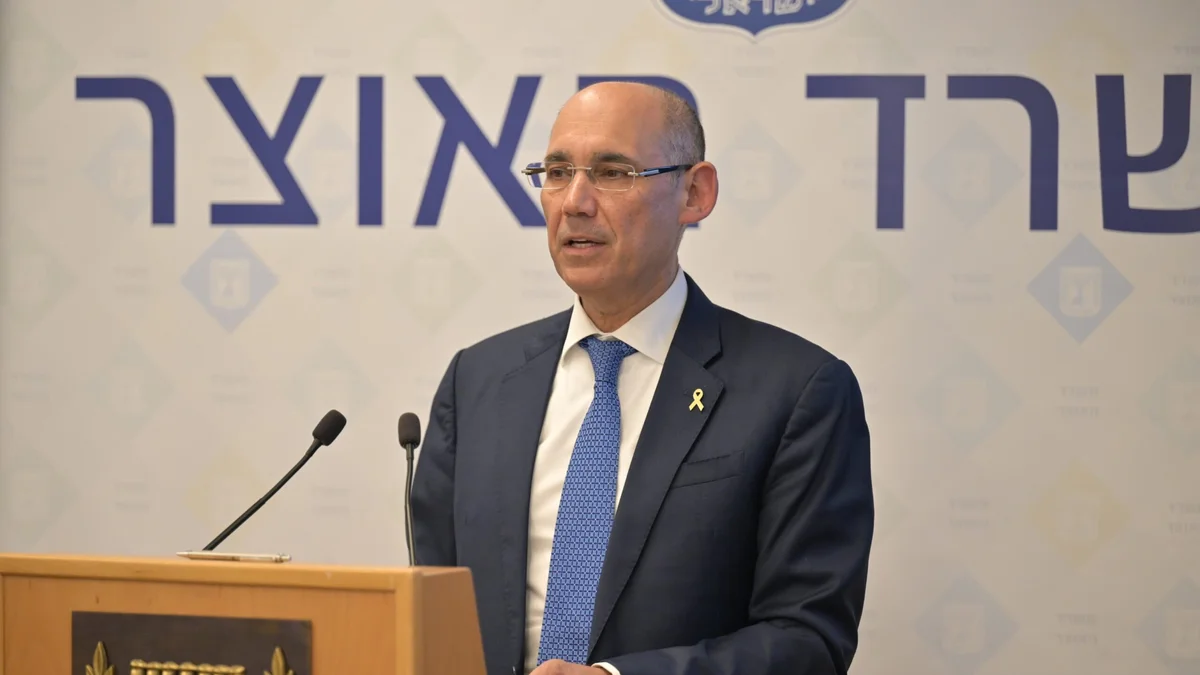
Bank of Israel Governor Professor Amir Yaron warned that the ongoing political deadlock and mounting uncertainty are exacting a heavy toll on the Israeli economy, stressing that a stable government must be established without delay. Speaking after the Monetary Committee decided to hold the benchmark interest rate steady at 3.25% per year, the Governor emphasized that prolonged political ambiguity is harming the private sector and wasting precious time.
According to Professor Yaron, the country faces significant budgetary challenges over the coming years that demand long-term fiscal planning rather than piecemeal fixes. He noted that after several years, the economy must transition to a multi-year program featuring a declining debt trajectory to fund national security needs while boosting efficiency, igniting growth engines, and implementing equitable tax adjustments.
Monetary Policy and Inflation Pressures
The central bank's decision to pause its sequence of interest rate cuts stems from global uncertainty and renewed inflationary concerns, fueled in part by a 7.6% surge in the US dollar against the shekel since the previous monetary decision. The Governor explained that after five consecutive rate reductions, policymakers are adopting a cautious stance amid global volatility rather than reacting to a single low monthly index reading. Inflation expectations remain within the target band, hovering slightly above 2% on a one-year horizon.
Professor Yaron highlighted that robust economic activity and low unemployment support a prudent approach. While central banks worldwide face currency depreciation and tightening cycles, the Bank of Israel's research department projects that the benchmark rate could decline gradually over the course of 2027 if inflation trends continue to moderate.
Tech Sector Correction and Banking Competition
Addressing sharp volatility across global equity markets, the Governor sought to distinguish the current environment from historical crashes. He noted that unlike the dot-com bust or the 2008 financial crisis, contemporary technology companies benefit from positive cash flows and expanding operations amid the artificial intelligence revolution, suggesting the current downturn reflects a market correction rather than structural collapse.
Turning to the domestic banking sector, Professor Yaron observed that previous interest rate cuts have begun cooling record-breaking profits and lowering return on equity and credit costs. He reaffirmed the bank's commitment to fostering a stable yet more competitive financial system, pointing to upcoming structural reforms that will enable credit card companies to operate as full-fledged banks to benefit consumers.
Business Sector Reaction
The decision to leave the interest rate unchanged drew sharp criticism from the business community. Roee Cohen, president of Lahav, the Israel Chamber of Independent Organizations and Businesses, expressed deep disappointment with the central bank's stance.
"The entire business sector is disappointed. Despite the uncertainty, this was the time to act with courage rather than hesitation and lower the interest rate. Unfortunately, the Governor is missing another opportunity to provide a much-needed boost to the economy."
Cohen argued that annual inflation figures justified a measured quarter-point reduction to alleviate financing pressures on small and medium-sized enterprises, asserting that current market conditions warranted immediate monetary relief.