"No trip will compare to this": The female officers who manage sensitive operations in Judea and Samaria
They sit alongside brigade commanders, receive intelligence, coordinate between the IDF, Shin Bet, and police, and accompany every operation down to the soldier on the front line. The special operations officers of the Judea and Samaria Division discuss the non-stop pace and the personal price: "Friday dinners and meetings with friends are negligible. In the end, this is the job."

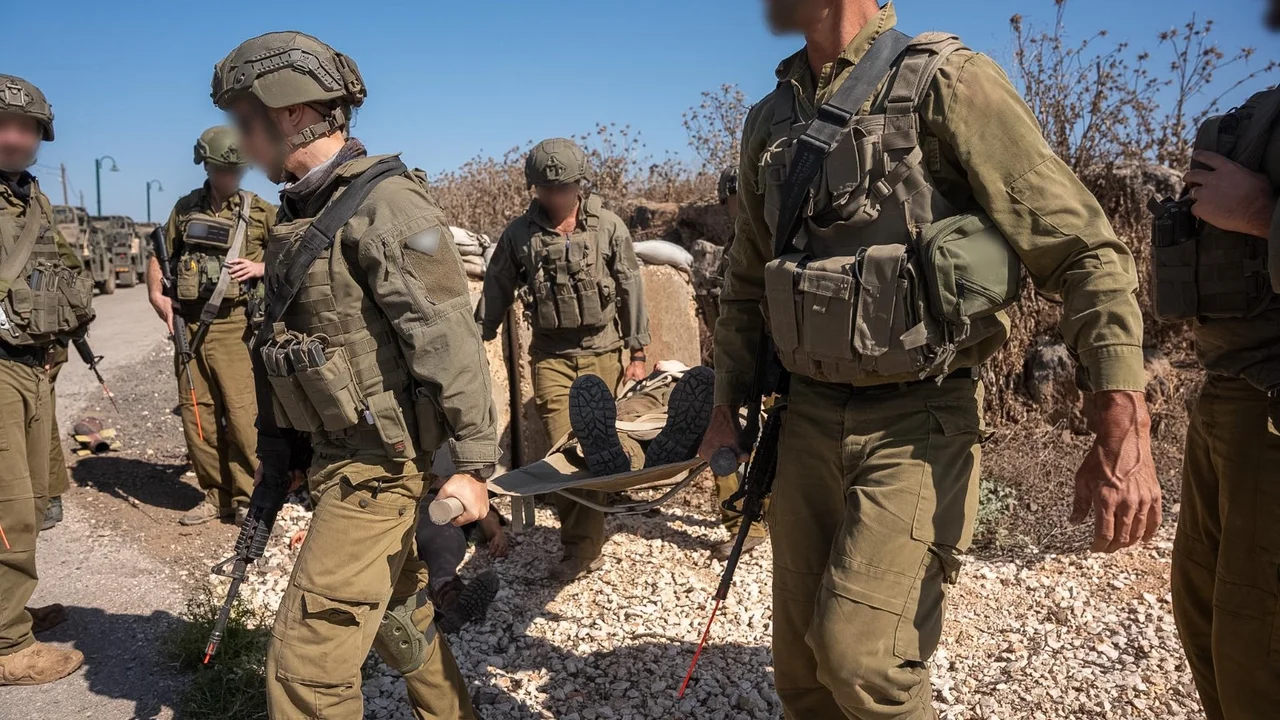
The IDF's special operations officers perform one of the most significant roles in the Judea and Samaria Division. They receive advance intelligence on targets and coordinate all operations carried out in their sectors. Over the past three years, with a change in the Central Command's concept, the IDF has launched more activities to neutralize and prevent terrorist infrastructure operating in the area.
Lieutenant P. is the special operations officer of the Ephraim Brigade, which operates in Tulkarm, Qalqilya, and Salfit. P. began her military service in the training branch but wanted to experience the operational world. "I have been in the position for nine months; I wanted to experience the operational world, including counter-terrorism and the interfaces," she said. Their role is to be the right hand of the sector brigade commander, from planning the activity to coordinating with all participating units from the IDF, the police, or the Shin Bet. "A month and a half ago, we arrested a terrorist who was a partner in the attack in which Ido Zoldan (of blessed memory) was murdered in 2007. The activity required closing intelligence loops and managing medical or logistical aspects so that nothing would go wrong," P. said.
High-pace unit
One of the units working non-stop is the Duvdevan unit, which specializes in arrest operations. The special operations officer of Duvdevan is Captain A., 23, from Tel Aviv, who is finishing two years in the position. "There is a difference between a special operations officer in a unit and in a regional brigade in terms of coordination. I have to think down to the soldier at the edge," A. said. As the only woman in a male-dominated unit, she faces no obstacles. "I work 24/7 with company commanders and fighters. This is a unit that works at a high pace and everything is on me. I have no deputy, and I often have to cancel personal plans, but I understand the meaning. Friday dinners and meetings with friends are negligible. In the end, this is the job."
A. has been serving for nearly seven years. One of the reasons she stayed in the army is the October 7 massacre. During her service, A. went through a family tragedy: her cousin, Sergeant Amitai Alon (of blessed memory), was killed in the UAV disaster at the Golani training base. Despite the news, A. decided to put her grief aside to complete a critical operation. "I understood that there is an important activity, I need to behave normally, and when everything is over, I will be able to mourn Amitai," she recalled.
"I am the executive arm"
Captain H., 24, from the Jezreel Valley, is the special operations officer of the Etzion Brigade. "I am the executive arm; when there is an event in the sector, I have to choose from the bank of targets the activity I want to carry out," H. said. One of the events she remembers is the demolition of the house of the terrorist who murdered Shalev Zvuloni (of blessed memory). "The daily work brings satisfaction, whether it is closing circles on stone throwers or cooperating with intelligence officers. Even the small things give a sense of satisfaction," she said. H. believes that women should enlist, adding: "This role requires good human relations and patience. You have to maneuver between many factors and find quick solutions, and that is the advantage that a woman can bring."