On the verge of escalation: Russia threatens a large-scale attack on Ukraine's energy infrastructure
Moscow has announced it is preparing for large-scale strikes against Ukraine's energy infrastructure in response to Ukrainian attacks on Russian territory. Meanwhile, the death toll from a strike on an ammunition depot near Kyiv has risen to 38, with four people still missing.
Russia has announced that it is preparing for large-scale strikes against Ukraine's energy infrastructure in response to what it defines as Kyiv's attacks on Russian territory. At the same time, the death toll from a Russian strike on an ammunition depot near the Ukrainian capital has risen to 38, as reported yesterday, Sunday.
The Russian Ministry of Defense stated that the armed forces of Russia "have begun preparations for massive strikes on Ukraine's energy infrastructure" in response to what Moscow defines as ongoing attacks against civilian infrastructure and fuel and energy facilities in Russia. The threat raises concerns of a repeat of last winter's events, when Russia bombed power plants and energy facilities in Ukraine, leaving millions of people without electricity and heating in sub-zero temperatures. In recent months, both sides have intensified long-range strikes, hitting warehouses, refineries, ports, and vessels, alongside an increase in the number of civilian casualties.
Death toll rises to 38
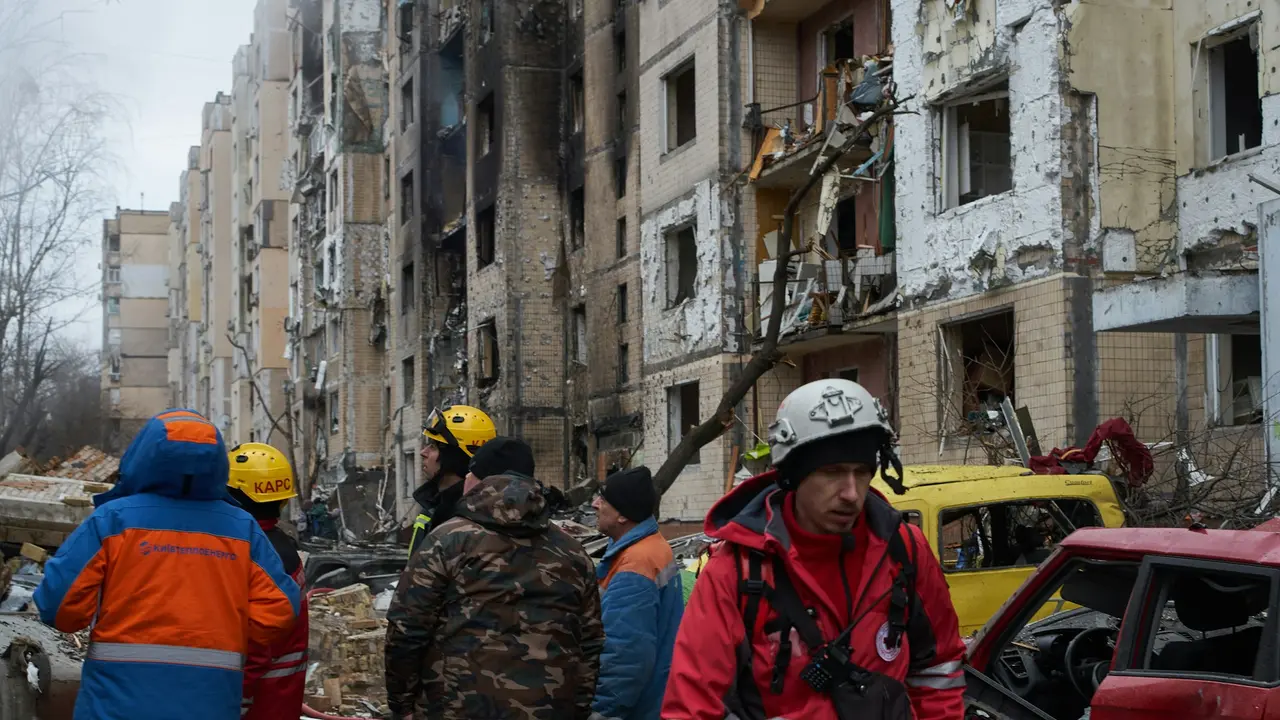
President of Ukraine Volodymyr Zelensky announced that the death toll from the Russian drone attack on Saturday on an ammunition depot in the village of Myla, in the Bucha district near Kyiv, has risen to 38. Another 20 people were injured, and four are still missing. According to him, "the scale of contamination in the area is significant," while emergency forces continue to extinguish fires and sappers are working to clear the scene. The attack caused a massive explosion and secondary detonations, with flames spreading to nearby residential areas. According to local authorities, about 50 buildings were damaged and more than 380 residents were evacuated. Among the dead was Taras Didych, the head of the nearby village of Dmytrivka. The Ukrainian prosecutor's office has opened an investigation into suspected negligence, which will focus on why explosives were stored so close to residential houses.
Three days of heavy attacks
The attack in Myla occurred after the third consecutive day of Russian aerial bombardments—some of the most prolonged since the spring. The Russian army announced that it also struck a cement and asbestos factory in Kyiv, claiming its warehouses were used to store explosives, as well as a site for the production of drones and ammunition. According to the Ukrainian Air Force, Russia launched two Iskander-M ballistic missiles and 130 drones of various types between Saturday night and Sunday morning.
Ukraine, for its part, attacked a refinery in northwestern Russia with drones, causing a fire, according to local authorities. The Kirishi refinery in the Leningrad region is the second largest in Russia, with the capacity to process about 20 million tons of crude oil per year for the production of jet fuel and diesel. Recently, Kyiv has increased attacks against Russia's energy and oil infrastructure, including refineries, pumping stations, and storage facilities, as part of a strategy that, according to Ukrainian officials, is intended to exert economic pressure on Moscow to bring about an end to the war.