Weaponizing satellites: Future warfare may take place outside the atmosphere
In the US, the issue of offensive space is at the top of Washington's priority list, and in Israel, too, there are those who aspire for the country to be a "leading country in the field of offensive space." Who is threatened by a nuclear warhead in space, and why does China scare the US more than Russia?
The global satellite market, both civilian and military, is growing - and with it the fear of threats. In light of this, the commander of the US Space Command, General Stephen Whiting, recently announced at a conference in Alabama that the development of anti-satellite weapons is high on Washington's priority list. According to him, such means, some of which are expected to be based on various types of satellites, are essential for deterring enemies and dealing with attacks.
Space weapons are expected to threaten satellites, and thus could also damage imaging, communication, or any technology that fundamentally depends on space. Beyond that, plans to diversify missile threats from space to Earth could be revealed.
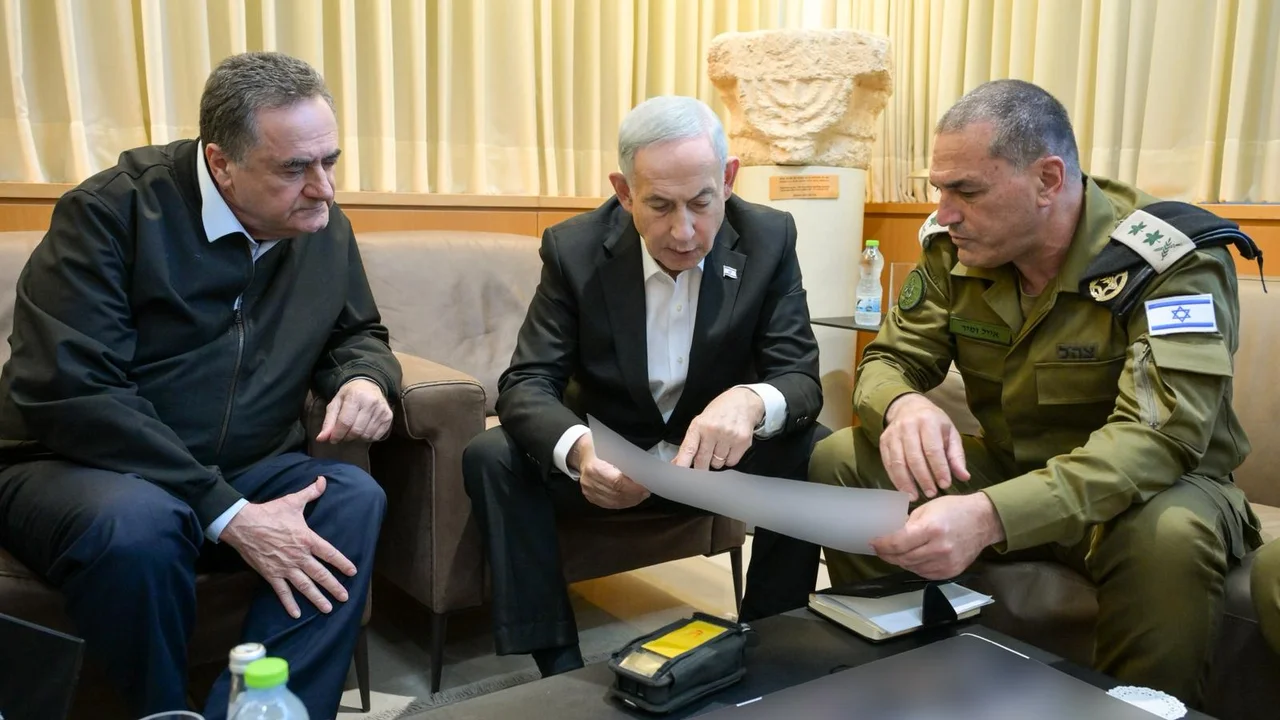
In Israel, the public was exposed to the field when Defense Minister Israel Katz said earlier this year that Israel aspires to be "one of the three leading countries in the world in the field of offensive space," but those who have long been in the space arms race are the superpowers: the US, Russia, and China.
SpaceX, owned by Elon Musk, for example, celebrated an impressive milestone last Friday, crossing the threshold of 11,000 satellites in space, far more than any other operator in space. Starlink's gap with the rest of the market is so large that for comparison - in second place is "OneWeb" with only about 650.
Russia and China's capabilities
The multitude of interests and the ability to harm enemies or rivals, all the more so following the growth of satellites in the global market, encourages intensification in the field.
In general, the field of air defense and missile technology in space and within Earth is intertwined, as reflected by the Arrow 3 system of Israel Aerospace Industries, which intercepts ballistic missiles outside the atmosphere. At the same time, there is a fear that powers like Russia will use their nuclear weapon capabilities to place them in space, and that the development of the laser field within Earth will soon also be used outwards against satellites. Another significant aspect is interference with the help of space, as the average Israeli citizen knows from various navigation apps during escalations. These are divided into two: jamming - blocking the operator's communication with the device; or, spoofing - disrupting satellite navigation signals.
Another player that has not been hiding its attempts to advance in the field for 20 years is China, which worries the Americans even more. The concerns about the Chinese are similar to those about the Russians on a professional level, but in terms of volume - they threaten many times more than Moscow. While there are about 11.6 thousand American satellites in space, more than a thousand Chinese ones are scattered. Much more than Russia, which operates with about 220, or Israel with about 25. This is according to "Orbital Radar."
Israel is also in the picture
In the order of President Donald Trump from last year, which was intended to ensure American superiority in space, an entire chapter was dedicated to the subject of space security and defense, including the development and presentation of a prototype of a missile defense system by 2028, and the examination of deploying nuclear weapons in space.
Data from the Stockholm International Peace Research Institute (SIPRI) shows that the US currently holds about 3,700 nuclear warheads, compared to Russia, which holds 4,400. China stands at about 620, much more than the European powers France (290) and Britain (225).
The threat of nuclear weapons and lasers placed on satellites in space sounds like something out of Star Wars, but public American statements illustrate how the threat is around the corner, whether in the accusation of the American administration two years ago that Russia is developing a nuclear weapon against satellites, or in official statements from Washington that concern Beijing.
The threats from space will only grow with the growth of the satellite market in the world, which "Fortune" estimated at a total of 20.59 billion dollars in 2025. In their view, the market is expected to grow already this year to a value of about 23.17 billion dollars, and with an average annual growth rate (CAGR) of 12.53% will reach about 59.58 billion dollars in 2034.
Taking part in that growth is Israel, which in July and September 2025 launched two satellites into space: Dror 1 and Ofek 19. The first, which was launched with the help of SpaceX's Falcon 9, is Israel's national communication satellite, and is intended to provide an advanced communication response for the State of Israel, including in the field of security. The second launch was of an observation satellite, intended to strengthen Israel's tracking capability in the Middle East.