AMD Third-Quarter Revenue Surges 45% to $13.38 Billion on AI Demand
Advanced Micro Devices posted strong third-quarter 2026 results, beating revenue and profit forecasts driven by a 97% surge in data center sales despite a drop in gaming.
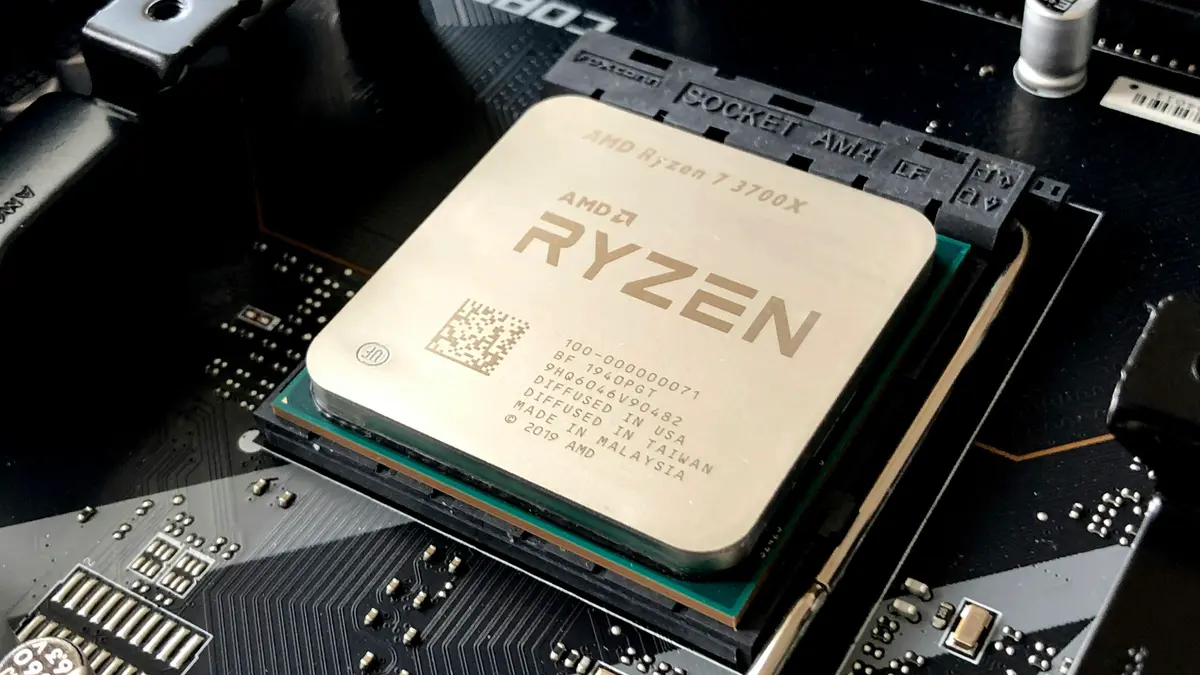
Advanced Micro Devices (AMD) reported its third-quarter 2026 financial results on Tuesday after the closing bell on Wall Street, surpassing analysts' expectations in both revenue and profit. The primary growth driver was the data center segment, which saw revenues surge by 97% year-over-year, fueled by soaring demand for processors and chips dedicated to artificial intelligence infrastructure.
AMD's total revenue reached $13.38 billion, outperforming the $13.08 billion consensus forecast compiled by Bloomberg and representing a roughly 45% increase from $9.2 billion in the same period last year. Earnings per share came in at $2.09, beating the analysts' estimate of $1.97 and up from $1.20 a year earlier. Following the earnings release, the stock initially climbed more than 4% in after-hours trading and later extended its gains to approximately 8.6%.
Data Centers Drive Record Growth
Revenue from AMD's data center division hit a record $8.5 billion, compared to $4.34 billion in the prior-year quarter and above the projected $8.19 billion. The division now accounts for about 64% of the company's total revenue, highlighting a fundamental shift in its core business focus.
AMD CEO Lisa Su noted that demand for Instinct and EPYC products continues to strengthen, with the company anticipating further acceleration in the fourth quarter driven by the expanded production of the Helios platform and Venice processors. She emphasized that the company's product portfolio, combined with strong customer relationships and supply chain partnerships, provides strong confidence in delivering robust revenue growth and margin expansion in the coming years.
Gaming and Client Segments Face Headwinds
Despite impressive momentum in AI infrastructure, the report also highlighted weaknesses in other segments. Client division revenue totaled $2.9 billion, falling short of analysts' expectations of $3.06 billion. Meanwhile, the gaming division experienced a sharp 40% drop in revenue year-over-year to $773 million, though this still exceeded the consensus estimate of $655 million.
Industry analysts note that weakness in the consumer space is partly linked to rising costs for memory and storage components, which make computers and gaming hardware more expensive and dampen consumer demand. AMD's report follows closely after competitor Intel posted better-than-expected third-quarter results but issued a disappointing forward outlook, triggering a nearly 29% plunge in Intel shares over concerns regarding the PC market.
Overall, the financial results from both semiconductor giants illustrate a widening divergence across the chip industry: while artificial intelligence infrastructure demand accelerates at a historic pace, traditional personal computing and gaming markets continue to navigate cost pressures and sluggish demand.