Jeff Bezos's Bankruptcy Warning to Amazon and Wall Street's Tech Giants
Jeff Bezos's past warning about corporate complacency highlights the volatility of Wall Street giants, as historical market leaders frequently cede dominance to emerging tech innovators.
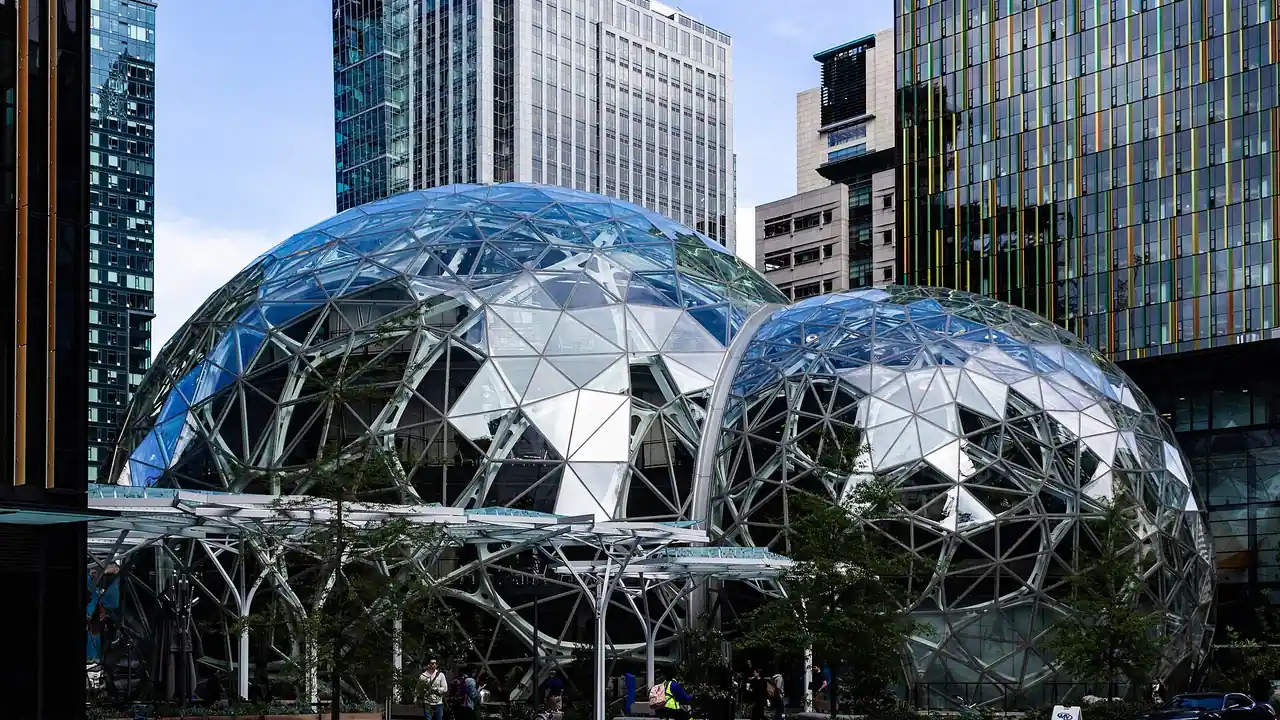
In November 2018, when Amazon already ranked among the largest corporations globally, founder Jeff Bezos delivered a stark warning to his workforce: he estimated that the e-commerce titan would eventually fail and go bankrupt. Bezos was not pointing to an imminent financial collapse, but rather warning against the dangers of corporate complacency. Recent market reviews revisited that prediction during a milestone year in which Amazon captured the top spot globally in terms of corporate revenue.
Amazon shares recently closed with a 4% gain, reflecting a market valuation of approximately 2.75 trillion dollars, while year-to-date gains stand at 10.1%. Bezos's perspective holds particular resonance today, as investors increasingly allocate substantial capital into a narrow cohort of mega-cap technology firms. This concentration raises a fundamental question for Wall Street: will current market leaders maintain dominance over the coming decades, or will historical turnover repeat itself?
Historical Volatility Among Market Leaders
At the close of 2000, following the bursting of the dot-com bubble, the largest constituent in the S&P 500 index was General Electric, an industrial conglomerate long hailed as a benchmark for corporate management. ExxonMobil occupied the second position, followed by Pfizer, Cisco, and Citigroup. A decade later, the top tier of the index looked entirely different, with none of the top five companies from 2000 remaining in the leading tier, while the 2010 top five retained only Apple and Microsoft.
General Electric eventually fragmented into three independent entities spanning aviation, energy, and healthcare. Cisco reaped massive rewards from anticipated internet adoption, yet failed to secure the overarching economic dominance suggested by its bubble-era valuations. Similarly, Intel represents a cautionary tale: its chipmaking dominance faltered as computing shifted from personal computers to smartphones and artificial intelligence. These precedents offer a vital lesson for Nvidia investors, demonstrating that accurately identifying a technological revolution does not guarantee selecting the firm that captures the most enduring economic value.
Adaptation Versus Complacency
Microsoft illustrates a contrasting trajectory, successfully avoiding the fate of many competitors. Under the leadership of Satya Nadella, the firm transitioned its core personal computer software model toward cloud computing growth engines and established a central role in artificial intelligence. Today, eight of the ten largest companies in the S&P 500 index are tied to the technology revolution, with the combined market capitalization of the Magnificent Seven alone reaching roughly 21.8 trillion dollars.
Academic research examining over 25,000 public companies across North America over six decades concluded that the risk of corporate dissolution does not decrease as a firm matures. Amazon currently operates far from such a fate, projecting capital expenditures of approximately 220 billion dollars this year, largely directed toward cloud computing and artificial intelligence infrastructure. Chief Executive Officer Andy Jassy projects that within five to ten years, the company could operate two distinct business segments, each generating annual revenues of one trillion dollars. Whether Amazon expands further or faces competition from firms not yet founded, the landscape of Wall Street remains inherently dynamic.