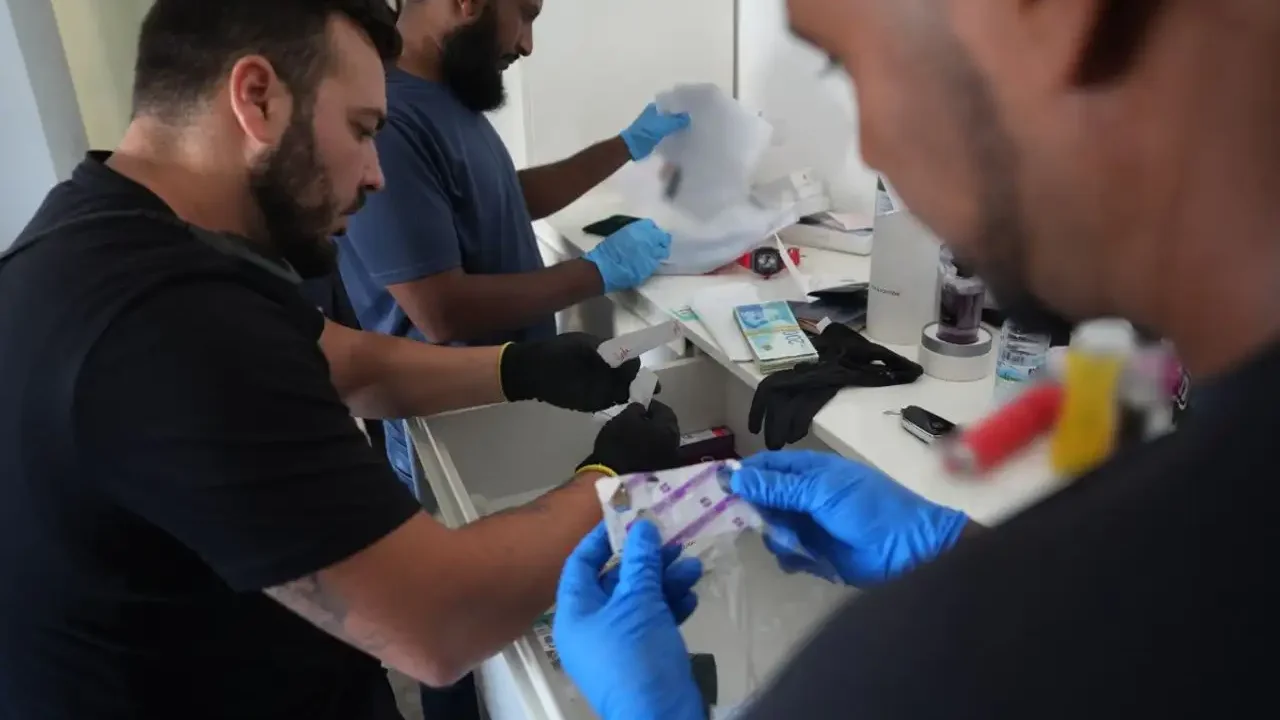
Indictment: This is how the Abu Ghanem family took over apartments through threats and shooting
An 82-year-old woman, threatened real estate agents, and homeowners who, according to the indictment, realized they had no choice. The prosecution claims that Ismail Abu Ghanem and six others took over five apartments in Ramla through extortion, violence, and protection money collection, and then hid the ownership through fraud and money laundering of millions of shekels.
Anyone who has passed in recent years through the streets adjacent to the Abu Ghanem family home in Ramla, at least according to the prosecution, did not see just a residential neighborhood. Behind the doors, it is claimed, operated an orderly, planned, and sophisticated criminal mechanism, whose goal was one — to take over as many apartments as possible around the family's residential complex. According to the indictment, for about four years, every property owner who tried to sell their home became a target. Some of them were threatened, others were attacked. Real estate agents were warned not to get close, and in the end, the state claims, the apartments were sold at prices set by only one person.
The Central District Attorney's Office filed an indictment today, Monday, at the Central District Court in Lod against Ismail Abu Ghanem and six of his family members and associates. According to the charge, Abu Ghanem headed a criminal mechanism in which the defendants took over five apartments in Ramla through extortion by force, protection money collection, violence, fraud offenses, use of forged documents, tax offenses, and money laundering of millions of shekels.
According to the indictment, Abu Ghanem formulated a clear plan: to purchase all the houses adjacent to his home on Katzenelson and Motzkin streets in Ramla. Instead of conducting normal negotiations, heavy pressure measures were applied intended to break the property owners. Homeowners, tenants, and real estate agents found themselves under threats and intimidation, until they finally agreed to sell the properties.
After each of the apartments was purchased, they were not registered in Abu Ghanem's name at all. To hide his identity as the true owner, the apartments were registered in the names of his children and wife. At the same time, the prosecution claims, hundreds of thousands of shekels were funneled into their accounts to present a facade of equity for the purpose of obtaining mortgages.
The prosecution also describes a complex financial mechanism that was allegedly intended to launder the funds. According to the indictment, Abu Ghanem held millions of shekels in cash that could not be directly deposited into the banking system. Therefore, Yehezkel Meir, owner of the "Shipudei Hazi" restaurant in Or Yehuda, was recruited. According to the charge, he took loans from banks under false pretenses that the funds were intended for a business, transferred them to the Abu Ghanem family members, and then received the same funds back in cash, creating the appearance of legitimate money integrated into the banking system.
One of the first cases described in the indictment occurred in 2021. Shortly after a person purchased a house in Ramla and invested in its renovation, Ismail Abu Ghanem and his son Issa arrived and demanded that he sell them the house. When he refused, he was told that if he did not sell the property, they would "take it by force" and that they would not allow him to live in the house.
The threats did not end with words. One day, Abu Ghanem's son arrived with another person at the house, threatened those who were there that they would be shot if they did not leave within ten minutes. Two days later, the three returned to the place, attacked those who were in the house with a stick, kicks, and punches, and drove them away. According to the indictment, the homeowner, fearing for his safety, surrendered and sold the house.
But the most shocking story in the indictment is the story of an 82-year-old elderly woman. For a long period, she tried to sell her house, but real estate agents refused to handle the sale because they were threatened by Abu Ghanem. Later, Abu Ghanem himself approached her and clarified unequivocally: "You cannot sell, only I buy."
Even when she managed to find a real estate agent who agreed to market the house, Abu Ghanem arrived at him while he was showing the property to potential buyers and warned him that he would "settle the score." On another occasion, he told him that he had crushed the car of another real estate agent who tried to sell the house and that the agent was even beaten and needed medical treatment.
During that period, a series of violent events occurred in the area: vehicles were set on fire, fences were uprooted, stones were thrown at houses, and even an Israeli flag was uprooted from the yard of one of the houses. The elderly woman was convinced that the Abu Ghanem family was behind the events, and her fear deepened.
Although she tried once more to market the house through another real estate agent, he too received an unequivocal message that the house would not be sold to anyone but Abu Ghanem. In the end, the prosecution claims, the elderly woman broke. While initially she asked for two million shekels and later even marketed the house for 2.3 million shekels, she finally sold it for only 1.85 million shekels. The prosecution also attributes to Abu Ghanem the crime of protection money collection, claiming that he exploited her distress and fear to obtain the property at a price significantly lower than its value.
The purchase of the apartments was only part of the method. In each of the transactions, forged documents and fictitious pay slips were submitted to the banks, presenting Abu Ghanem's children and wife as having high incomes. Based on those documents, the banks approved mortgages in amounts of hundreds of thousands of shekels up to more than a million shekels for each transaction.
In addition, the prosecution attributes to the defendants evasion of purchase tax payment through false registration of the apartment owners. After the completion of some of the transactions, the properties were rented out, and the rent reached Abu Ghanem's hands.
Along with the indictment, the prosecution filed a request to forfeit the five apartments that were allegedly obtained as part of the plan, along with tens of thousands of euros, 25 thousand dollars, and other funds seized during the investigation.