40 students in one class: "Like sardines. This is not education - it's low-quality babysitting"
Just before the school year begins, parents in Haifa and Givatayim have been informed of class mergers, resulting in groups of nearly 40 students. Educators warn of negative impacts on individual attention and emotional well-being. The Ministry of Education promises a major reform in the next term.
In the midst of preparations for the transition from second to third grade, parents at the Romema Nigunim elementary school in Haifa were stunned to receive notice that, due to students moving to other schools, 38 children will be crammed into a single class with the approval of the Ministry of Education and local authorities. The "sardine protest" of the previous decade led to temporary improvements, but now, with rising density, educators and families are warning of a catastrophe. Israel has returned to the top of OECD countries in class density, with an average of 27.4 students per elementary class compared to the OECD average of 20.5—a gap of about 33%.
Anna Waldo, whose daughter is entering third grade, said: "My daughter has studied in a class of about 20 until now. As a mother and a professional in learning disabilities and CBT, I find this policy infuriating. Small classes allowed for personal attention, but this change makes it difficult for even the most dedicated teacher to see everyone. Children with attention or emotional difficulties might simply get lost."
Hadas Biran, another parent, added: "We were told 38 students would be in one class. Anyone involved in education knows this is destined for failure. This isn't education; it's low-quality babysitting."
Noa Moskovich Shor expressed deep concern about the environment: "With nearly 40 students crammed like sardines, I am worried about the level of violence, tension, and chaos. No teacher can cope with this. The Ministry of Education is ignoring the reality and driving education to a new low."
An impossible mission
Parents at the Borochov elementary school in Givatayim were similarly stunned by a merger of two grade levels. One mother noted: "In classes of over 30, it is impossible for one teacher to address the academic, emotional, and social needs of every student."
A second-grade teacher from the Upper Galilee admitted: "The academic challenge is complex. The gaps following the war are significant, and I am required to manage the class while maintaining learning continuity. Children are struggling with a sense of belonging and uncertainty. My greatest difficulty is knowing I cannot always give every child what they need."
A middle school principal in Petah Tikva stated: "Class size directly affects teaching quality and student well-being. With 39 students, a teacher's ability to identify difficulties and provide individual support is drastically reduced. The density leads to more disturbances, forcing teachers to spend resources on maintaining order rather than promoting learning."
"A small class is a dream"
Dr. Shiri Rosenberg of the Levinsky-Wingate Academic Center explained that in crowded classes, students who cannot keep up are left behind academically and socially. Dr. Rotem Eliyahu of Seminar HaKibbutzim noted that TALIS 2024 data shows 84% of Israeli teachers work in classes with highly diverse needs, and 16% of lesson time is dedicated to maintaining order.
Teachers' Union Secretary-General Yaffa Ben David added: "The expectation that a teacher can reach every child in such crowded conditions is impossible. It is very difficult to teach in heterogeneous, packed classes. Parents know this harms their children, and I don't understand why they aren't fighting it."
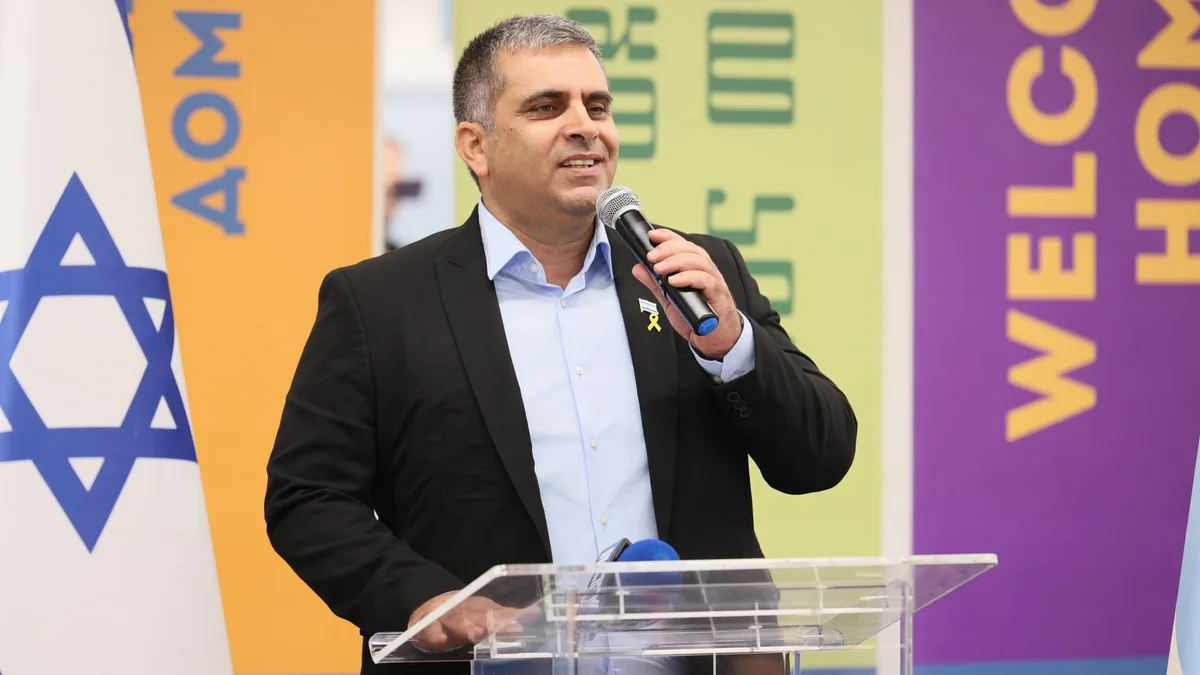
The Ministry of Education responded: "Minister Yoav Kisch intends to lead a 'New Deal in Education' in the next term—a multi-year plan for deep systemic change, including a dramatic reduction in class sizes. This requires an investment of about 15 billion shekels, which could not be implemented during the war. The plan requires broad agreements with the Ministry of Finance and teachers' organizations. Meanwhile, the AI revolution and personalized learning initiatives are already helping transition toward a system that allows for more accurate, individual responses to every student."