Neuroscience
Found 9 recent publications
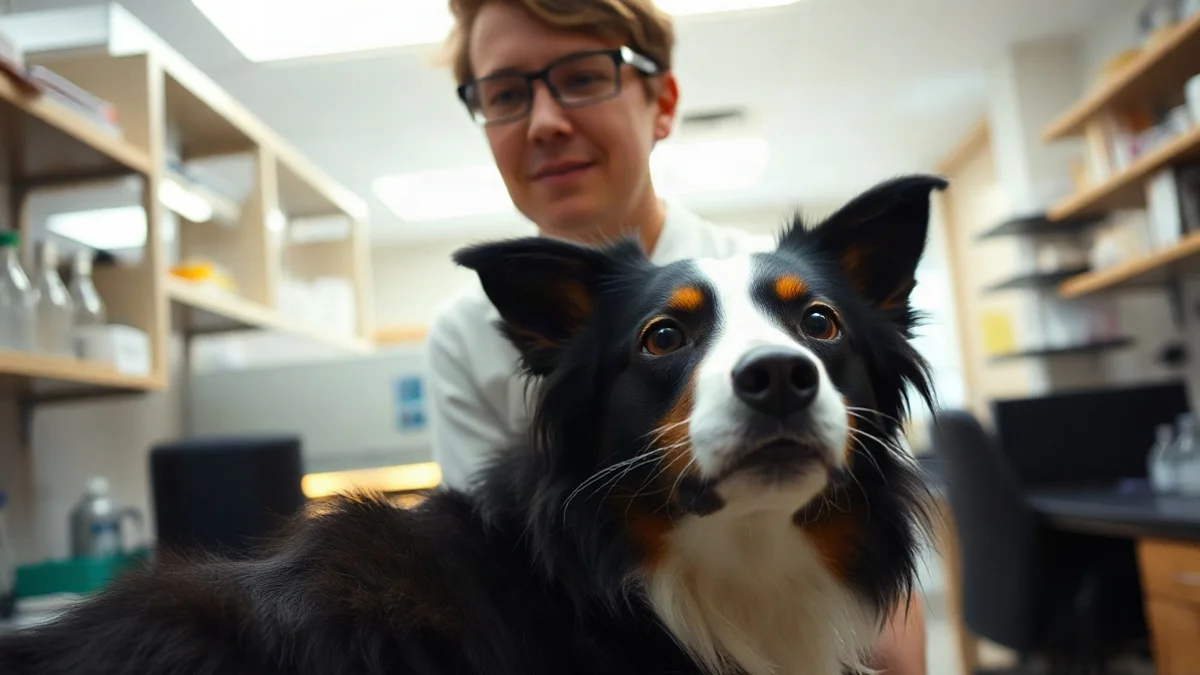
What Happens in Your Dog's Brain When They Look Into Your Face?
A new neuroscience study reveals that dogs decode human emotions and moods with remarkable precision, activating distinct neural reward centers when viewing happy or fearful faces.
Google Maps Fruit Fly Brain with AI, Prompting Developers to Run Doom on It
Google mapped 166,000 neurons of a fruit fly brain into an AI-powered 3D connectome, but developers quickly used the open-source data to run Doom, trade Bitcoin, and play Minecraft.
Neuroscientist Andrew Huberman Reveals Simple Eye Movement Trick to Fall Back Asleep
Renowned neuroscientist Dr. Andrew Huberman shared a practical eye-movement protocol on 'The Diary of a CEO' podcast. The technique aims to signal the nervous system to relax and help people fall back asleep during middle-of-the-night awakenings.
Scientists grew lab-grown brain organoids and discovered they possess biological clocks
Researchers from Harvard University have grown brain tissue from stem cells, maintaining its activity for six years. The findings revealed internal "biological clocks" within nerve cells, offering new avenues for studying autism and schizophrenia.
Why does everyone see little people? The mushroom that intrigues brain researchers
What is the connection between a Lilliputian mushroom, brain syndromes, and the dish served to former US Treasury Secretary Janet Yellen? Is the promising company Karyopharm, which develops cancer treatments, heading toward insolvency? And what will the Israeli company Remepy do with the 36 million dollars it raised? This week in biomed.
"A capability that was unknown": The discovery that changes our understanding of the brain
The adult brain may possess a greater capacity for repair than previously thought. In a new study published Wednesday, researchers from the University of Zurich identified special cells in mice that mobilize following brain injury to restore damaged tissue.
Around the world in 5 points: The universal tickle map is revealed
A large-scale international study found that areas of sensitivity to tickling on the human body are identical across different cultures, shattering centuries-old theories. An artificial intelligence model predicted the most ticklish areas with an accuracy of nearly 100%. Researchers: "This is not just a reaction to touch, but an evolutionary mechanism for strengthening social bonds."
Where do our memories disappear to, and how can they be retrieved?
We tend to think that a forgotten memory is like a file permanently deleted from a computer, but scientists have discovered that reality is much more complex. A new study published in the scientific journal Nature Neuroscience shows that in fruit flies, memories we thought had disappeared completely actually remain hidden deep in the brain, ready to come to life as soon as we receive the right...
The simple action you are neglecting: how handwriting improves brain function
The era of digital screens has led to an unprecedented decline in handwriting. However, neuroscience proves that writing by hand stimulates extensive brain activity that does not occur when typing digitally.