Winter Tire Prices in Israel: Choosing Safety on Wet Roads
Winter rains in Israel highlight road safety risks, driving up demand for tire replacements. A market check reveals prices for a set of four tires range from 629 NIS to 1,850 NIS, raising questions about whether high costs guarantee better safety.
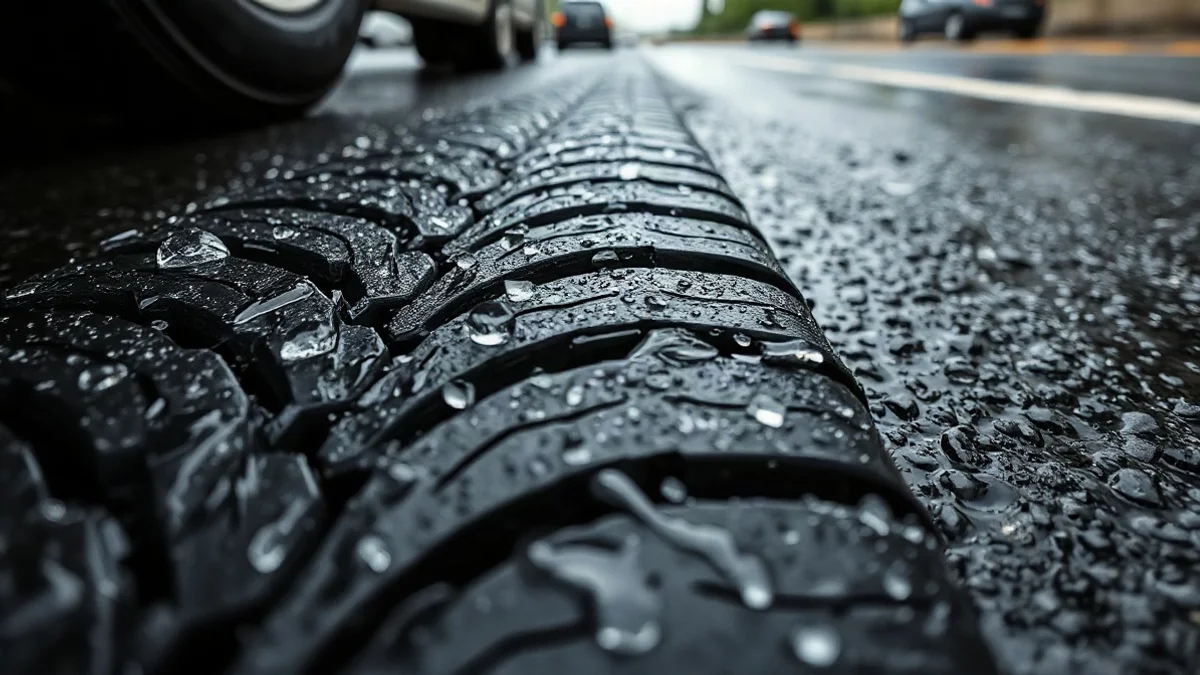
The first winter rains have arrived in Israel, bringing back a familiar road hazard: slipping on wet asphalt. During the summer, dust and oil residues accumulate on roads, and when mixed with rainwater, tire traction can be severely compromised. Experts recommend checking tire condition now and replacing them if necessary. However, the Israeli tire market shows massive price gaps between brands, raising the question of whether a higher price truly guarantees better safety.
Comparing Winter Tire Prices in Israel
A price check conducted across local automotive platforms reveals that a set of four tires in the common 205/55R16 size ranges from 629 NIS for basic models up to approximately 1,850 NIS for well-known premium brands, including installation. This represents a difference of more than 1,200 NIS, with various chains offering special seasonal promotions.
Among established brands, Goodyear EfficientGrip Performance tires cost 1,543 NIS including installation, Michelin Primacy 5 tires are priced at 1,760 NIS, and Continental EcoContact 6 tires sell for 1,849 NIS. However, shopping around pays off: promotional discounts can significantly lower these costs, such as a 50% discount on Continental models at select retailers.
Budget Options and Safety Ratings
Budget-friendly alternatives show even wider discrepancies. Greenlander tires are sold for 629 NIS per set including mounting and balancing, while the British brand Davanti, model DX390, is offered at 899 NIS. Riken Road Performance tires cost 1,251 NIS. Before opting for a low price, motorists must check not only the manufacturer but also the specific model, production year, and safety ratings.
A test conducted by the German automotive club ADAC revealed alarming braking distances: while a premium Continental tire stopped a vehicle from 80 km/h on a wet road in 34.4 meters, a budget-tier tire required 59.3 meters—a difference of nearly 25 meters.
However, a high price tag does not automatically guarantee absolute safety. Every tire features a wet grip rating ranging from A to E under the European labeling system. For instance, the economical Davanti DX390 boasts an A rating for wet braking, compared to a B rating for the pricier Continental EcoContact 6. Nevertheless, this specific rating only measures straightforward wet braking and does not fully reflect cornering behavior, longevity, or hydroplaning resistance.
Choosing the Right Tires
The National Road Safety Authority advises drivers to check tread depth, rubber condition, and the manufacturing date stamped on the sidewall. Tread depth should be at least two millimeters, though waiting until the absolute minimum limit before winter is strongly discouraged. Drivers must also ensure that tire dimensions, load indexes, and speed ratings comply strictly with their vehicle license, and that the purchase price covers mounting and balancing.