Voyager 1 Reaches Historic Milestone at One Light-Day From Earth
NASA's Voyager 1 spacecraft is approaching a historic milestone of one light-day from Earth. Operating with 1970s technology, the distant probe continues its interstellar journey carrying scientific instruments and a golden record.
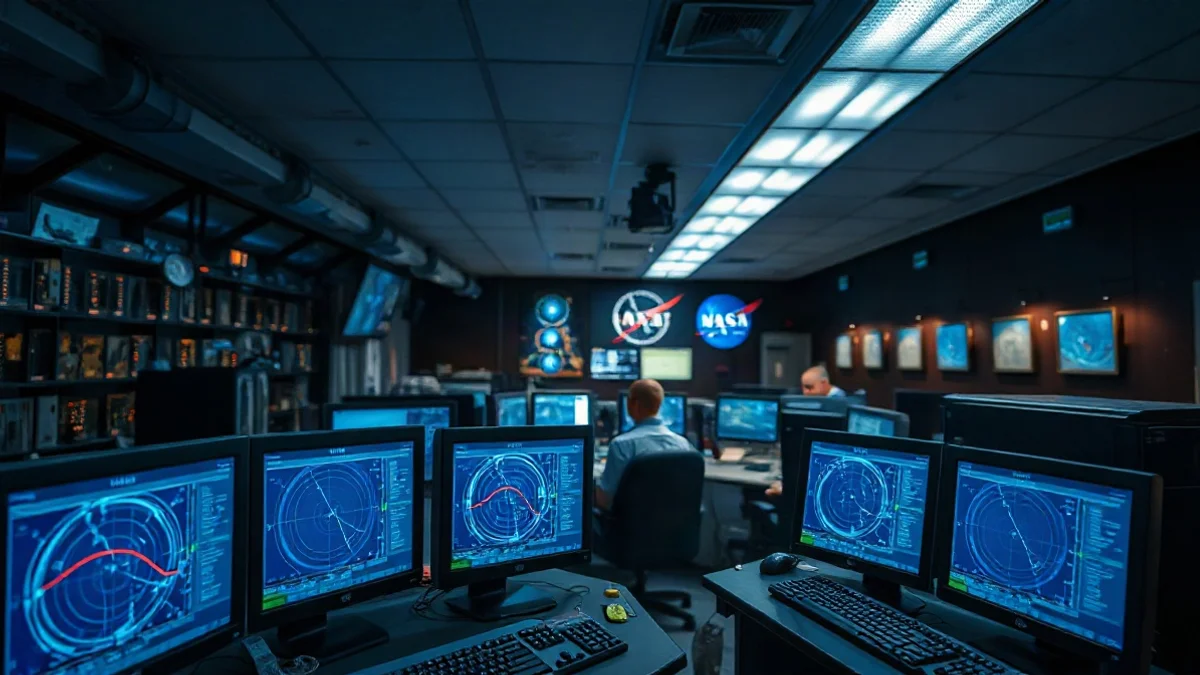
Imagine a computer built in the 1970s, long before the internet, smartphones, and modern computing. Now imagine it is nearly 26 billion kilometers away from Earth, with no possibility of replacing a component, plugging it into a power outlet, or sending a technician. Yet, this computer is still operational, receiving commands, transmitting data, and even undergoing remote software repairs.
This is not a scene from a science fiction movie. It happens every day aboard NASA's Voyager 1 spacecraft, launched 49 years ago on September 5, 1977, which has not stopped moving away from us ever since.
Next week, on Wednesday, November 18, the spacecraft is expected to reach a historic milestone: a distance of one light-day from Earth. This means the distance that even light, the fastest thing in the universe, takes 24 hours to travel. Voyager 1 will be the first human-made object to reach this distance.
Remote Repair in Deep Space
One of the most extraordinary stories of the mission occurred in 2024, when Voyager 1 began sending garbled, unreadable data back to Earth. The spacecraft was still functioning, but the information was useless. For months, NASA engineers investigated until they discovered that a memory chip in one of its three computers had failed. Part of the software responsible for preparing data for transmission was stored on that damaged chip.
Finding a physical replacement was impossible. Instead, the engineering team devised an innovative solution: they divided the code into segments, distributed them across other available memory locations, and modified the software so that all parts continued to work together.
After transmitting these patches via radio signals across billions of kilometers, the fix proved successful. Voyager 1 resumed sending scientific data, demonstrating the remarkable capability of maintaining a half-century-old system remotely.
A Fading Power Source
Voyager 1 is so far from the sun that solar panels are impractical. Instead, it relies on three radioisotope thermoelectric generators, which convert heat from the natural decay of plutonium into electricity. However, this power source is slowly declining, with the spacecraft losing about four watts of generating capacity each year.
To conserve energy, NASA has gradually deactivated scientific instruments, heating systems, and other components. Out of the ten original scientific instruments, only two remain active. Last September, engineers executed another power-saving measure by switching three active devices to alternative backups that consume less energy, ensuring the remaining instruments can operate longer.
A Golden Record and the Pale Blue Dot
Before becoming the most distant human-made object, Voyager 1 revolutionized planetary science. In March 1979, it flew past Jupiter, discovering active volcanic eruptions on its moon Io—the first time active volcanism was observed beyond Earth. In November 1980, it encountered Saturn, revealing complex details about its rings and the moon Titan.
In August 2012, Voyager 1 crossed the heliopause, entering interstellar space. Aboard the spacecraft is a special golden record, a time capsule conceived by a team led by astronomer Carl Sagan. It contains greetings in 55 languages, music from various cultures, natural sounds, and 115 images depicting life on Earth, intended for any intelligent extraterrestrial life that might one day find it.
On February 14, 1990, from a distance of about 6 billion kilometers, Voyager 1 turned its cameras around to take one final portrait of the solar system. The resulting image of Earth as a tiny dot in a sunbeam became known as the Pale Blue Dot. Shortly afterward, its cameras were permanently deactivated to save power. More than three decades later, Voyager 1 continues its lonely journey, carrying the legacy of humanity into the cosmic void.