Why Urban Sewage Odors Persist and Why Municipalities Struggle to Solve Them
Severe municipal foul odors stem from underground chemical reactions and aging infrastructure, presenting major measurement challenges and expensive remediation hurdles for cities.
A pungent gas or chemical odor sweeping through city streets is rarely just a temporary nuisance. Such smells often signal infrastructure failures, hazardous material leaks, or potential public health risks. Unlike conventional pollution that can be precisely measured by instruments, olfactory hazards depend heavily on human perception, making them uniquely challenging to manage.
A striking example of this complexity occurred in early November in Rishon LeZion, where a severe chemical stench blanketed the city for nearly a whole day. Authorities launched extensive searches before identifying the source. Mayor Raz Kinstlich declared the incident a severe sanitary hazard caused by the illegal dumping of fuel and oil waste into a sewage manhole in a remote western sector of the city.
The Chemistry Beneath the Streets
Dr. Rivka Colton Shapira, an air pollution and odor specialist, explains that understanding sewage-related odors requires looking at subterranean chemistry. Within closed wastewater systems, microbial activity in oxygen-deprived environments naturally generates sulfur compounds, ammonia, and amines, many of which carry extremely low odor thresholds. When abnormal substances such as fuel waste enter the system, they trigger an accelerated release of these gases.
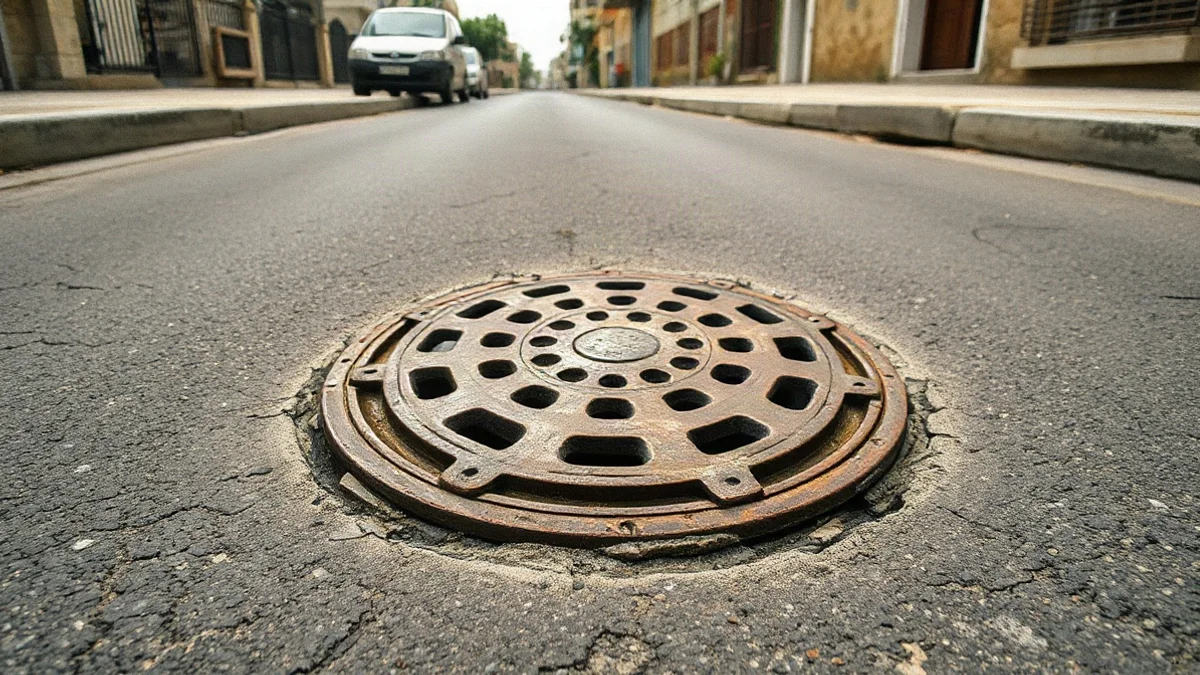
Sewer manhole covers are not hermetically sealed. When excessive gas pressure builds up inside the pipelines, the gas seeks an escape route. Through a process of pressure equalization, these vapors vent into the surroundings, allowing gases generated at a single point to travel far distances and disperse over wide residential areas.
The Limits of Detection and Personal Sensitivity
Experiencing a sharp odor does not automatically indicate a direct health hazard. Colton Shapira notes that odor intensity alone cannot measure risk levels, partly because many smells comprise complex chemical mixtures and human reactions vary widely. Odors can trigger both psychological distress and physical reactions, leaving some individuals mildly inconvenienced while others experience significant distress.
This subjective sensitivity complicates both impact assessment and technical measurement. While analytical devices can detect specific chemical substances, they cannot replicate how the human nose perceives and processes complex odor blends. The challenge multiplies when volatile compounds from different sources react chemically with sunlight and atmospheric humidity to form entirely new compounds.
Infrastructure Decay and Treatment Hurdles
Even under routine conditions, municipal drainage and sewage networks remain primary sources of foul odors. Colton Shapira points to a distinct disparity, noting that odor complaints concentrate overwhelmingly in older urban sectors rather than modern neighborhoods. While new districts feature advanced engineering, aging infrastructure suffers from cumulative wear, sediment buildup, and blockages that exacerbate gas emissions.
Even when authorities pinpoint the source, remediation proves difficult and costly. Addressing odor pollution requires specialized technologies, and bridging the gap between partial and complete mitigation is exceptionally expensive.
"We can handle 90 percent of the problem brilliantly, but achieving that final ten percent will cost more than all of the first 90 percent combined," Colton Shapira explains.
Another core vulnerability involves rainwater infiltration into sewer lines through unsealed covers and cross-connections between drainage and wastewater systems. During heavy rains, water volumes arriving at wastewater treatment plants surge by at least 30 percent. This excess load accelerates fluid flow through treatment facilities, occasionally bypassing full purification cycles.
Solving chronic odor issues demands comprehensive infrastructure overhauls rather than isolated fixes, with investments depending heavily on municipal priorities and regulatory enforcement. Ultimately, experts warn that complete eradication remains nearly impossible, as individual sensitivity thresholds mean that even a 99 percent reduction might still leave some residents exposed to lingering smells.