A year-and-a-half-old toddler chewed a battery: "It could have ended in severe damage"
A year-and-a-half-old toddler from the north took advantage of a brief moment when his mother looked away, climbed onto a high drawer, and began chewing an AA battery. The battery casing tore, and a chemical substance reached his intestines. After he began drooling and vomiting, he underwent a gastroscopy, which revealed mild irritation in the esophagus. After two days, his condition improved, and he is expected to be discharged home.
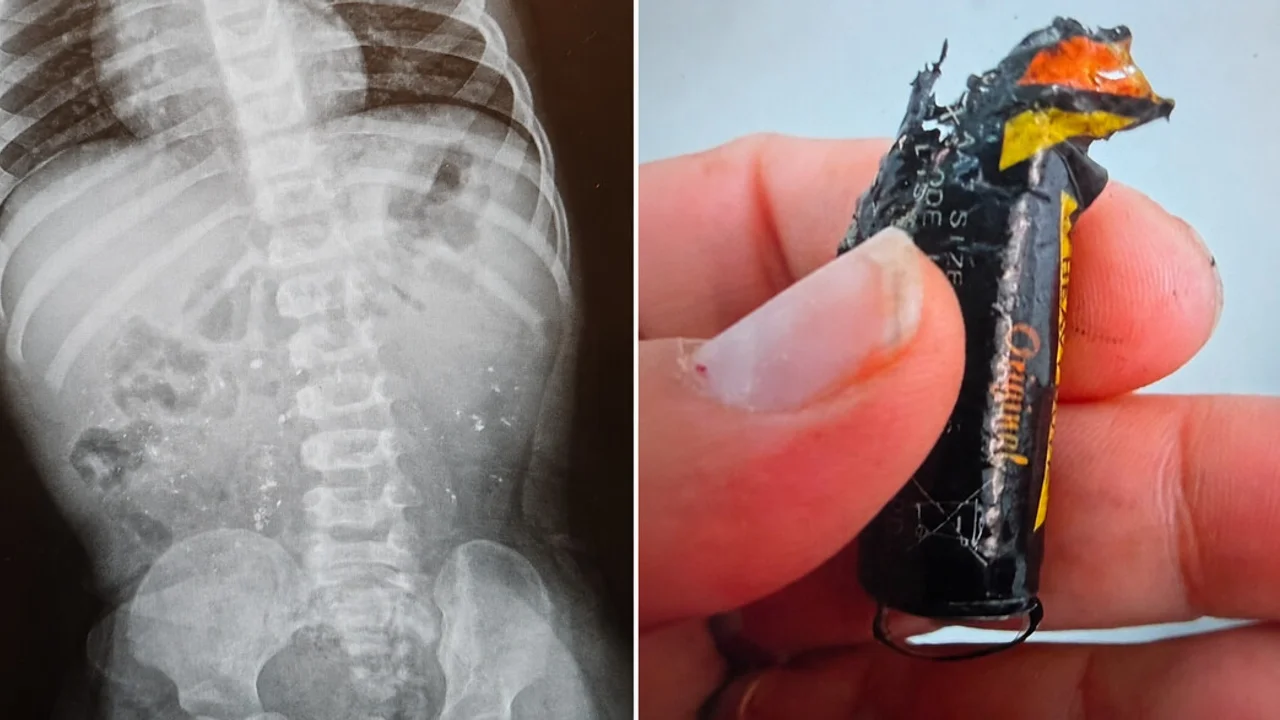
A year-and-a-half-old toddler from the northern region was hospitalized in the pediatric department at the Ziv Medical Center (Poriya) after he chewed an AA battery and the material inside leaked into his mouth. Tests conducted at the hospital found residues of the chemical substance in his intestines, but fortunately, no significant damage was caused to the digestive system.
The incident occurred while the toddler, whom his family describes as an active, mischievous, and climbing-loving child, was at home with his mother and older siblings. The mother looked away for a few seconds, and during that time he climbed onto a high drawer, found the battery, and began biting and chewing it. The battery casing was damaged, and the material inside leaked into his mouth. When the mother noticed his mouth was full of black liquid, she immediately took the battery from his hands and called the HMO hotline. She was instructed to take him urgently to the emergency room. The toddler was not vomiting at that stage, but his body temperature rose to 37.8 degrees.
The toddler arrived at the pediatric emergency department at the Ziv Medical Center a few hours after the incident. "He was admitted to us fully conscious, with no signs of respiratory distress and no signs of burns in the oral cavity," says Dr. Salah Khatib, director of the hospital's pediatric emergency department. "We performed tests, including an ENT examination that ruled out burns in the oral cavity, as well as a chest and abdominal X-ray, which showed residues of the substance in the intestines. After observation and consultation with the National Poison Information Center, and in light of the severity of the substance swallowed, it was decided to hospitalize him for observation in the pediatric department."
According to Dr. Khatib, damage to the casing of a household battery can expose a child to dangerous chemical substances. When the battery casing is damaged and the material leaks, contact with the mouth or ingestion can cause chemical burns to the mucous membranes of the mouth, esophagus, and digestive system. The severity of the injury depends on the amount of the substance and the duration of exposure, so in the case of exposure, especially in young children, it is important to receive medical advice and evaluation as soon as possible. It is very important to rinse the mouth with water and avoid inducing vomiting in the child.
On the first night of hospitalization, the toddler began drooling and vomiting. Consequently, Dr. Shadi Artul, director of the pediatric gastroenterology unit, decided to perform a gastroscopy. The examination ruled out significant damage to the esophagus and digestive system, but mild irritation was discovered in the middle esophagus. After two days of hospitalization, his condition improved significantly, and he is expected to be discharged home with anti-acid medication.
"There was great luck here, as such an event could have ended in severe and long-term damage," says Dr. Said Abu Zeid, director of the pediatric department. "The chemical substances found in batteries can cause lasting damage that is not always immediately visible, so hospitalization and close observation were necessary." Dr. Abu Zeid wished to emphasize that in any case of swallowing an unusual or dangerous substance, one must quickly seek medical treatment. "Such cases remind us again that it is mandatory to watch children with seven eyes. It is important not to take unnecessary risks and to allow the medical staff to evaluate the situation professionally."
From her son's hospital bed, the mother wished to convey a message to other parents: "You must not take your eyes off the children. You need to look at them all the time, 24/7. One second of lack of attention can make all the difference."