The Two-Touch Rule: A Simple Home Organization Trick to Eliminate Clutter
Discover the Two-Touch Rule, a home organization strategy that uses accessibility testing to eliminate daily clutter, streamline kitchen storage, and simplify your living space.
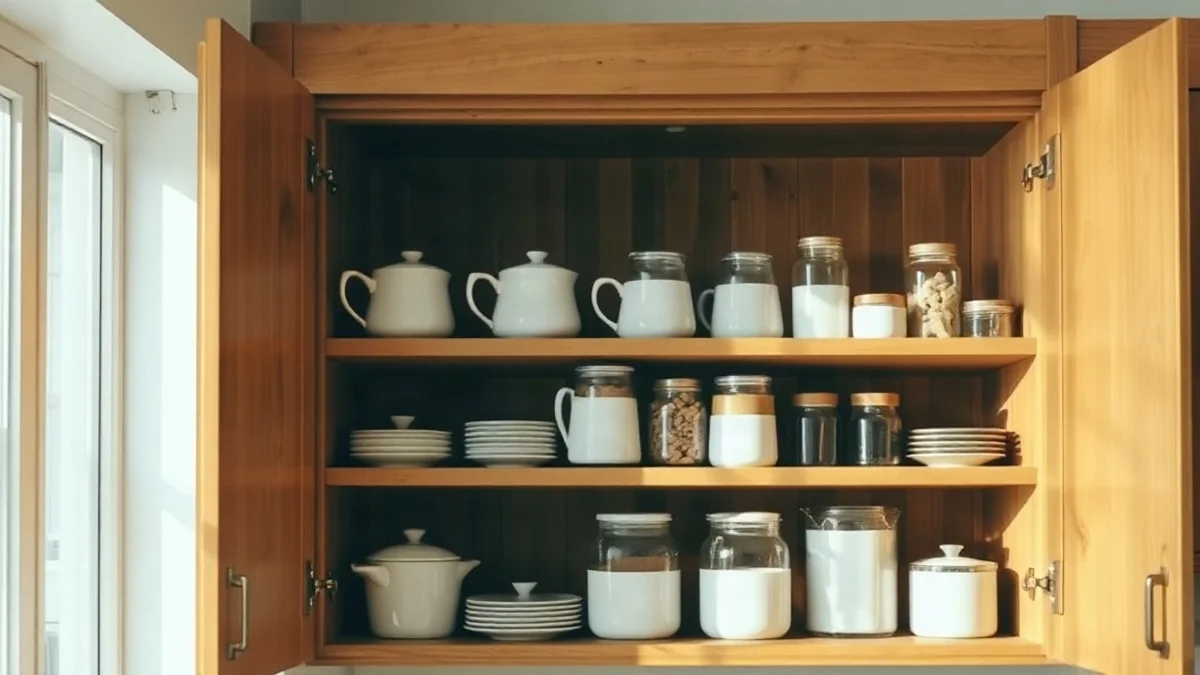
Opening a drawer, shifting a box, and lifting a stack of papers just to reach a notebook can turn a simple morning routine into a frustrating daily chore. Kitchens and utility closets often suffer from the same logistical headache, where retrieving a single frying pan requires moving half the cookware collection. To combat this everyday clutter, home organization experts recommend a straightforward guideline known as the Two-Touch Rule.
The Mechanics of the Two-Touch Rule
According to interior organization insights highlighted by lifestyle specialists, the core premise is simple: if retrieving an item requires more than two distinct actions, its current storage location is likely inadequate. Every movement counts as a touch, such as opening a cabinet door, lifting another object, sliding a storage bin aside, or removing a lid. A retrieval process involving two steps or fewer means the storage setup works efficiently, while anything requiring deeper excavation signals a need for reorganization.
For example, opening a drawer and pulling out a top-tier notebook counts as two actions. However, opening the drawer, shifting a storage box, lifting a stack of mail, and finally reaching the notebook exceeds the threshold. This accessibility test quickly exposes household zones choked by excess clutter, where daily tasks become unnecessarily tedious.
Practical Application Across the Home
Implementing the method starts in the kitchen, which often benefits the most from streamlined placement. Daily essentials like blenders or toasters should never be buried behind seasonal appliances in a deep pantry. Frequently used cooking oils, salt, and pepper grinders also deserve immediate accessibility rather than an obstacle-course placement.
Similarly, office supplies and small electronics can be managed by decentralizing duplicate items or assigning dedicated landing zones. Rather than keeping a single pair of scissors in a distant room, placing dedicated pairs in the kitchen, home office, and workspace eliminates needless wandering and searching.
Smart Strategies for Restructuring Storage
Identifying trouble spots is the first step toward a smoother living space, focusing particularly on drawers and shelves where items routinely conceal one another. Homeowners should avoid deep stacking whenever possible, turning instead to drawer dividers, shelf risers, and shallow bins that keep items visible. When stacking is unavoidable, placing high-frequency items on top ensures effortless access without dismantling entire towers of belongings.
Ultimately, no storage hack can salvage a space overburdened by sheer volume. When items cannot be arranged without constant shifting, decluttering becomes the most effective solution. Relocating rarely used possessions to storage or donating them frees up prime real estate for the belongings that support daily life.