Trump Warns of Shared Danger Amid Iranian Drone Threats and Criticizes Media Coverage
U.S. President Donald Trump warned reporters of widespread danger amid thwarted Iranian drone plots, while defending American air defense performance against massive incoming strikes.
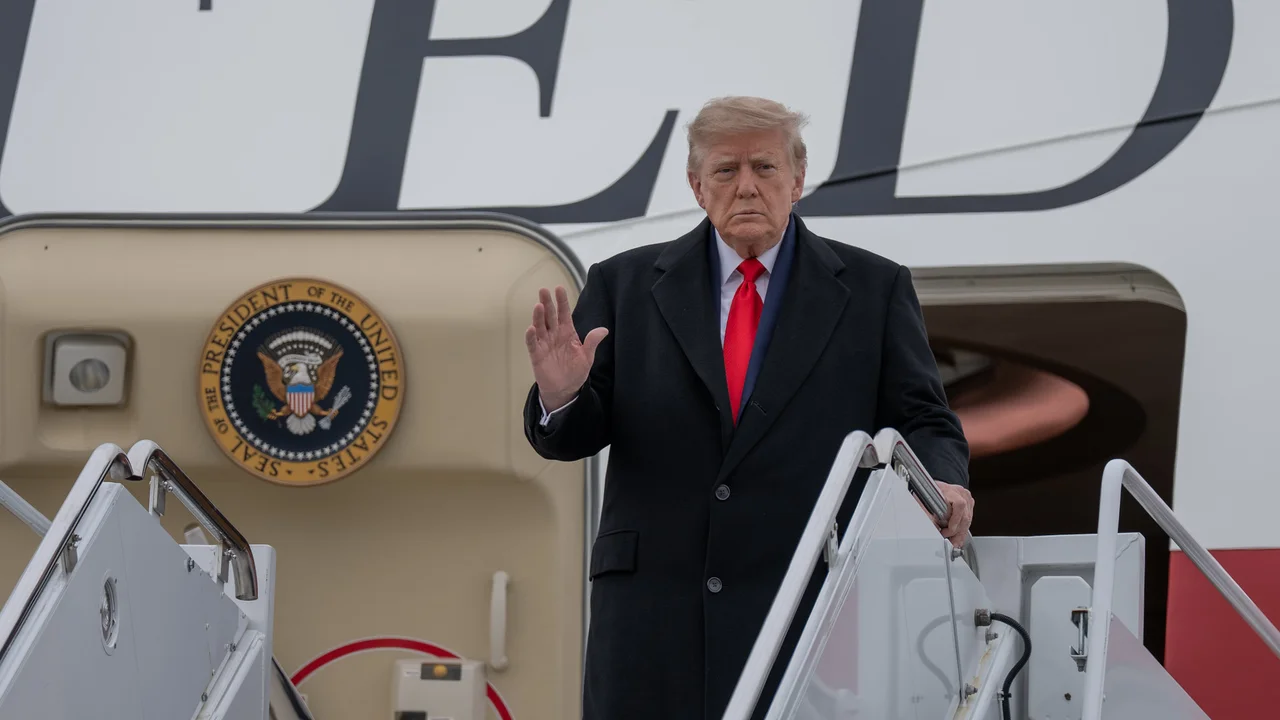
President Donald Trump addressed security threats and international policy before departing the White House for a diplomatic tour in Asia, warning that potential Iranian drone attacks pose a danger to everyone. When asked by a reporter whether he feared personal harm from Iranian explosive-laden drones, Trump shifted the focus outward and stated: "I'm worried about you, because if they hit me, you're going too."
Intelligence Warnings and Security Measures
The remarks follow reports detailing Iranian plots targeting the U.S. President and senior administration officials using attack drones. According to senior Israeli and American officials, Washington approached the Mossad to verify the incoming intelligence warnings. The Mossad subsequently shared the intelligence with the CIA, and corroborating information was later received from another Western intelligence agency.
In response to the threat reports, security protocols were significantly intensified. Administration officials relocated to secure facilities, the President scaled back public appearances, and additional defensive measures were implemented within his inner circle. Officials connected the threats to Trump's hardline stance against Tehran and the diminishing prospects for a diplomatic agreement. The President did not elaborate on the specific intelligence assessments or security steps during his remarks.
Regional Diplomacy and Oil Purchases
Turning to broader foreign policy, Trump confirmed that Tehran's actions would feature in his diplomatic discussions during his trip to Asia. "We'll talk about Iran. Our situation with Iran is very good, but we'll talk about it a little bit," he remarked.
When pressed on whether he would urge Chinese President Xi Jinping to halt purchases of Iranian oil, Trump declined to outline his bargaining position in advance. He responded that he would ask whatever he chooses, telling reporters they do not need to know his specific demands.
Criticism of Media Coverage and Conflict Statistics
Earlier, Trump expressed strong dissatisfaction with television reporting concerning the conflict involving Iran, utilizing social media to criticize a broadcast segment regarding early-stage military engagements. The broadcast focused on alleged defensive vulnerabilities concerning U.S. forces in Kuwait, where six service members were killed in an early-stage Iranian drone strike.
Trump disputed the broadcast's framing, asserting that the report omitted critical context regarding the volume of incoming fire and the effectiveness of American air defense systems. He stated that since the launch of the campaign on February 28, 2026, Iran has launched between 8,000 and 9,000 one-way attack drones. According to the President, only two drones successfully breached defensive perimeters to cause American casualties—resulting from strikes in Kuwait and Saudi Arabia that occurred on the opening day of operations.
Furthermore, Trump noted that Iran launched approximately 2,000 ballistic missiles, maintaining that only a single missile penetrated defenses to cause U.S. casualties, in Jordan. Highlighting the defensive success rate, Trump concluded that 99.99 percent of incoming Iranian projectiles were intercepted or failed to cause fatalities, praising the historic efficacy of U.S. Central Command defensive capabilities.