Tel Aviv Stock Exchange Surges 5.2% in Sharpest Daily Rally Since April 2020
The Tel Aviv Stock Exchange posted its sharpest daily rally since April 2020, with the TA-90 surging 5.2% amid coalition progress, rate cut expectations, and strong global tech sentiment.
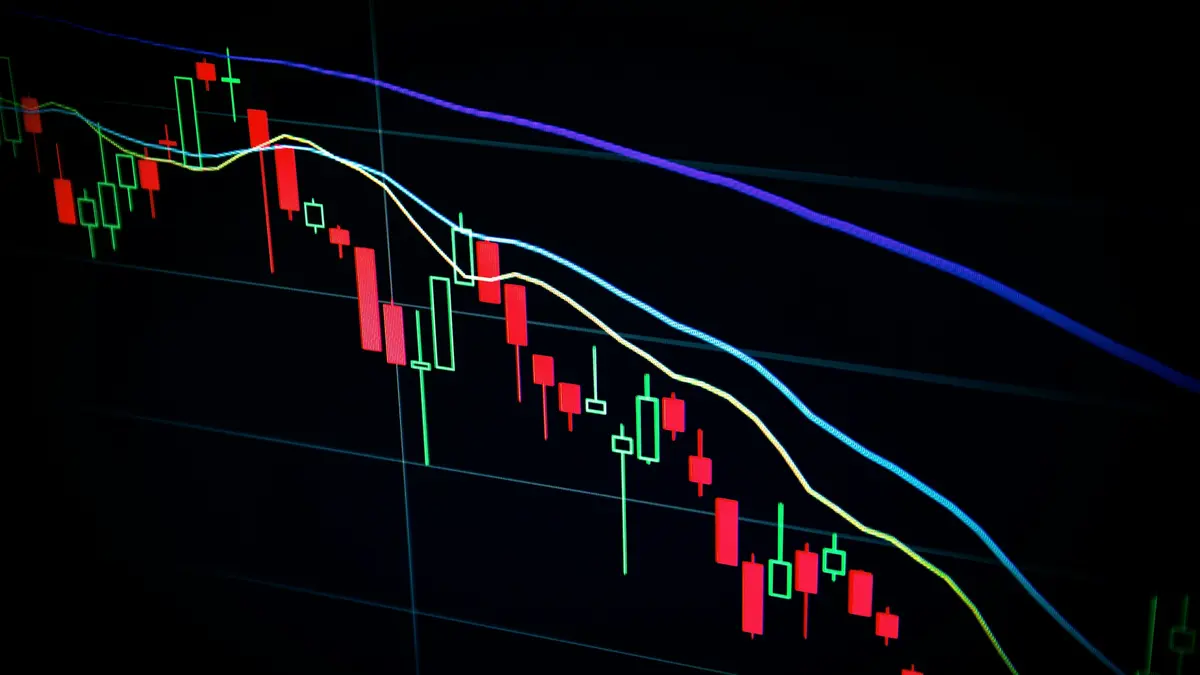
The Tel Aviv Stock Exchange concluded one of its most turbulent and bullish trading sessions in recent years, propelled by strong domestic political developments and global market dynamics. The TA-90 index surged by 5.2% at the close to settle at 3,614.67 points, marking its sharpest daily rally since April 2020 during the peak of the COVID-19 pandemic. Comparable daily surges exceeding 5% had previously been recorded only during major military campaigns such as Operation Rising Lion and Operation Roaring Lion. Concurrently, the benchmark TA-35 index jumped by 2.3%, while the TA-125 index advanced by roughly 3%.
Broad-Based Gains Across Sectors and Equities
The upward momentum encompassed the entire domestic market, with all sector indices finishing with gains of at least 1%. The construction sector led the charge with a remarkable 7.8% surge, followed by the clean-tech index, which jumped 6.2%, defense-related stocks, which rose 5.6%, and the real estate sector, which added 5.5%. Among individual top performers, Nofar Energy soared by over 16% on the back of favorable financial reports and major corporate transactions. Other notable gainers included Israel Canada, which advanced 14.09%, Ampa at 13.88%, Ashtrom Group at 13.48%, and Elco at 11.14%.
Market analysts and financial institutions point to a combination of political developments, monetary expectations, and surging risk appetite as the primary drivers behind the dramatic market turnaround.
Political Stability and Monetary Expectations
Lior Elgam, head of securities research in the banking division at Discount Bank, noted that the positive momentum received a significant boost from domestic political news.
"Trading today on the local exchange was characterized by sharp price gains that intensified starting around midday, against the backdrop of reports regarding significant progress in coalition negotiations to form a government. The capital market favors stability and abhors uncertainty, and the anticipation of a stabilized political system contributes to investor optimism."
Elgam added that in the absence of trading on Wall Street due to the Thanksgiving holiday, domestic developments dictated the prevailing sentiment, noting that second-tier stocks outperformed leading shares, signaling a renewed appetite for risk among market participants.
Adding to this assessment, Yossi Barak, chairman of Barak Financial Group, highlighted the convergence of political and monetary catalysts:
"The sharp gains are the product of converging factors providing a tailwind to the market: first, initial signs of a possible coalition forming, which slightly reduces the risk premium and political uncertainty; second, the sharp recovery in the global technology and semiconductor sector, which pulls indices upward due to the dominant weight of these firms; and third, the forward pricing of interest rates. Although the interest rate remained unchanged at the last decision, the market looks ahead and prices in a near-term rate cut, which particularly fuels the real estate sector and leveraged companies."
Global Reversal and Asian Markets
Adiel Hassidim from Bank Leumi's investment division contextualized the Tel Aviv rally within global market volatility. Recalling the turbulent Wall Street session that saw the Nasdaq 100 plunge 4.7% in the opening 15 minutes before staging a near-total recovery, Hassidim explained how Asian markets interpreted the American reversal.
With US exchanges closed for Thanksgiving, Asian bourses translated the US turnaround into a renewed push into semiconductor and artificial intelligence equities. Taiwan's Taiex closed with a 2.5% surge, Hong Kong's Hang Seng rose 1.4%, and Japan's Nikkei strengthened, led by Kioxia surging 12.6% on a collaboration with Nvidia, and SoftBank jumping 7.3%. Despite Tel Aviv joining this global trend, Hassidim emphasized that the TA-35 index remains approximately 17% below its all-time high recorded on May 6.
Calls for Market Caution
Despite the widespread market enthusiasm, analysts caution that it remains premature to declare a stable trend reversal. Hassidim noted that South Korea's Kospi index rose by only 0.3% following a 6.2% plunge the previous day, serving as a reminder that the market remains fragile.
Yossi Barak concluded with a similar warning for investors:
"Recent days in the local and global markets are characterized by active trading volumes and sharp fluctuations in both directions, creating an inertia effect where volatility feeds itself and pushes the market toward overreactions. Currently, as several positive triggers accumulate simultaneously, this momentum translates into a sharp surge. However, in an environment where the dominant narrative changes frequently, the trend can reverse just as rapidly. For investors, the key in such days is to separate point-in-time market noise from a genuine trend shift."