Inside Tel Aviv's 700-Dress Boutique Funding Women's Independence
A Tel Aviv bridal boutique featuring nearly 700 donated wedding dresses serves as a social enterprise, funding Ruach Neshit to support women escaping violence.
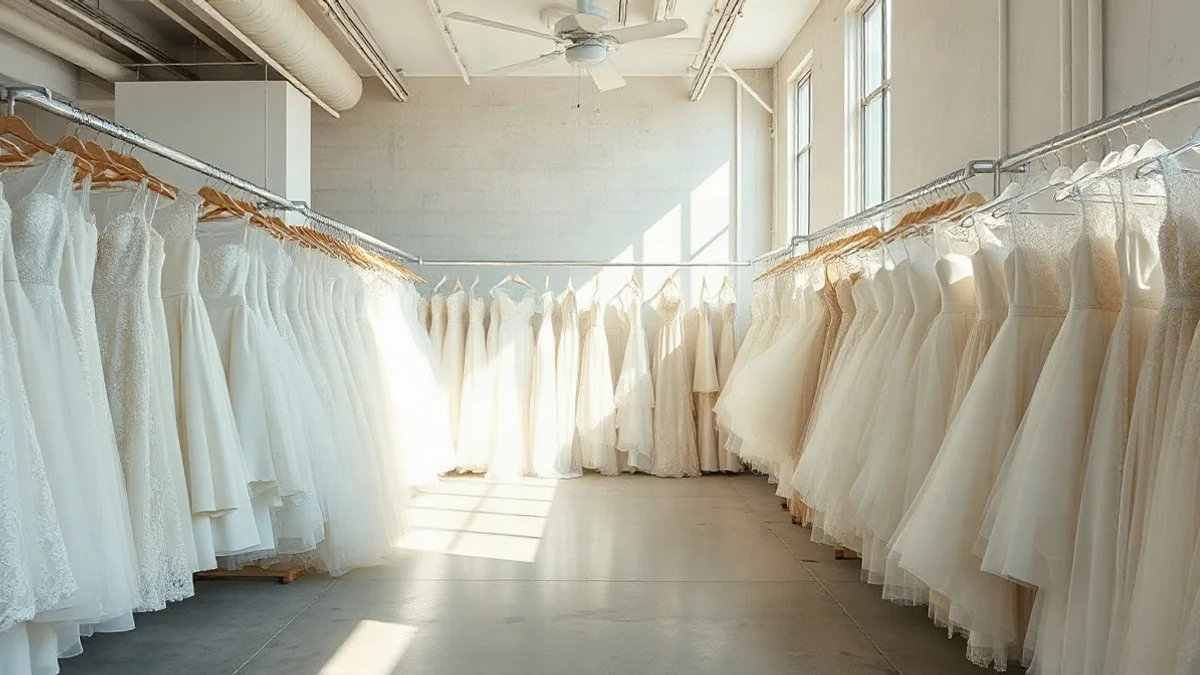
Nearly 700 wedding dresses hang on a full floor in a building on Menachem Begin Street in Tel Aviv. Some are brand new samples provided by leading designers from Israel and around the world, while others were worn just once and donated by brides wishing to pass on the joy. Alongside them wait veils, skirts, tops, jumpsuits, cover-ups, trousers, and reception dresses. From the outside, it looks like an exceptionally luxurious bridal boutique. Inside, however, it is a venture designed to give every dress and purchase a deeper meaning.
"The boutique run by the Ruach Neshit association is a social enterprise where all proceeds return to fund the association's activities, supporting women victims of violence on their path to financial independence," says Einat Irelander, the boutique manager. "Today, the boutique's operations account for about 12% of the association's revenues. In a place where a dress symbolizes a new beginning, every purchase also helps another woman start afresh."
The boutique did not start as a structured business plan, but almost by accident. In 2015, Ruach Neshit held "Trenda," an annual fair selling designer clothing donated to the association. That June, several dozen wedding dresses were also offered at the fair, and they were snapped up immediately. "The success revealed a previously unrecognized need," explains Michal Baruch, VP of the Ruach Neshit association. "On one hand, brides were looking for beautiful dresses at more accessible prices. On the other hand, expensive, high-end dresses remained hanging in closets after just one evening. We realized this connection could become a permanent revenue source to support women victims of violence."
Unlimited Fitting and a Safe Space
The experience begins long before the first zipper is pulled. Every bride arriving at the boutique first hears a few words about the association's work, the support it provides to women victims of violence, its legislative and educational efforts, and the link between purchasing a dress and the fight for financial independence. Afterward, a personal session lasting about an hour and a half begins. Each bride is assigned a fitting room and a volunteer companion. She can try on as many dresses as she likes without restriction, add shoes and accessories provided by the boutique, and take photos.
The space is exclusively for women. Male companions are not permitted, allowing brides to move freely between the fitting room and the racks. The emphasis is not on making a sale at any cost, but on creating a relaxed, non-judgmental experience. Volunteers do not pressure the bride to decide. The goal is to help her find a dress in which she feels beautiful, comfortable, and most importantly, herself. A bride struggling to decide can even borrow two dresses for ten days for a symbolic deposit to consult with a seamstress and think without pressure.
Real Sizes and Sustainable Fashion
"Because all items are donated, there is no fixed collection or stock from which another size can be ordered. On the other hand, the continuous stream of donations creates a large and surprising variety," Baruch says. The inventory ranges from size XXS up to XXXXL, including a wide selection of plus-size dresses above size 50. Prices for most wedding dresses range between 1,800 and 2,500 shekels, while veils sell for 100 to 250 shekels, skirts cost between 300 and 500 shekels, and reception dresses range from 400 to 1,200 shekels.
The boutique relies heavily on a network of more than 30 volunteers who manage shifts, social media, and boutique arrangements. The boutique's activity also carries significant environmental value. The fashion industry consumes massive amounts of raw materials, water, and energy, while a wedding dress is an elaborate item worn for just a few hours. At the boutique, it receives a chance at an extended life. Dresses with flaws are transferred to charitable organizations, and usable fabrics and trims are salvaged, creating a sustainable chain where almost nothing goes to waste.