How Sylvester Stallone Wrote Rocky and Defied Hollywood Against All Odds
Discover how Sylvester Stallone turned $106 in the bank and his last resort into the legendary film Rocky, overcoming studio pressure to create a global cinematic masterpiece.
At 29, Sylvester Stallone was an unknown actor struggling to survive in Hollywood. His financial situation was so desperate that his sparse credits included an appearance in a softcore film for $200, leaving him with just $106 in the bank. Stallone and his wife were forced to pawn their jewelry, and he even parted with his beloved dog, Butkus, selling him for $40 simply because he could not afford pet food. Yet out of this lowest point, his legendary career was born. On March 24, 1975, Stallone watched the broadcast of the heavyweight boxing match between Muhammad Ali and Chuck Wepner. The grueling fight, in which the unknown Wepner went 15 rounds against the legend, ignited a spark in Stallone. Within three and a half days, he wrote the screenplay for "Rocky", the film that would change his life and cinematic history.
The Birth of an American Icon
"Everyone saw Wepner as a mediocre boxer. I saw him taking brutal punches, his face bruised and bleeding, but he simply refused to fall. He kept getting up and getting up," Stallone recalled. "I returned to a small, cramped one-room apartment where I couldn't afford the rent. I sat there with a simple ballpoint pen and a spiral notebook, writing the script while my wife typed the text after me. I didn't have money for food, but I had this story inside my head that I had to let out."
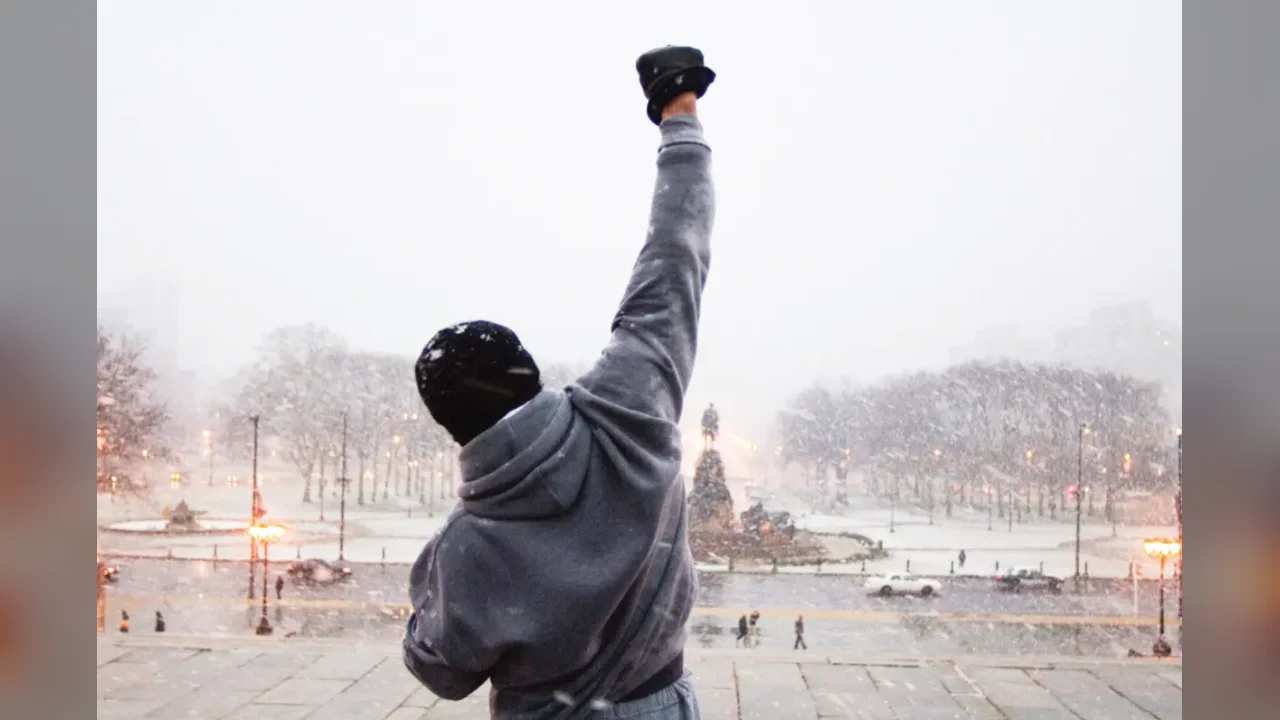
Before "Rocky", Stallone felt invisible, repeatedly told he spoke and looked strange. The film not only transformed his financial standing and turned him into a global star, but it also gave him a voice, proving that anyone who believes in themselves can change their destiny. Released on November 21, 1976, "Rocky" captured the United States at a low point following the Vietnam War and the Watergate scandal, introducing Rocky Balboa—a simple working-class guy who restored faith in the American dream.
A Grueling Struggle for Artistic Control
Despite the studios offering up to $360,000 for the script alone while demanding to cast established stars like Robert Redford or Burt Reynolds, Stallone adamantly refused to sell unless he played the lead. Producers Irwin Winkler and Robert Chartoff eventually relented, cutting the budget to a modest $1 million and paying Stallone a mere $23,000 for the script and union minimum for his acting. Shot in just 28 days under extreme conditions, the film grossed a phenomenal $225 million worldwide, swept three Academy Awards including Best Picture, and cemented its status as an enduring cultural milestone.