Supreme Court Overturns Murder Conviction in 2017 Ramat Gan Killing Case
The Supreme Court overturned a murder conviction for Ron Nahum, ruling that prosecutors failed to prove intent in the 2017 killing of Artyom Vilov. The conviction was reduced to manslaughter, and the case was sent back for resentencing.
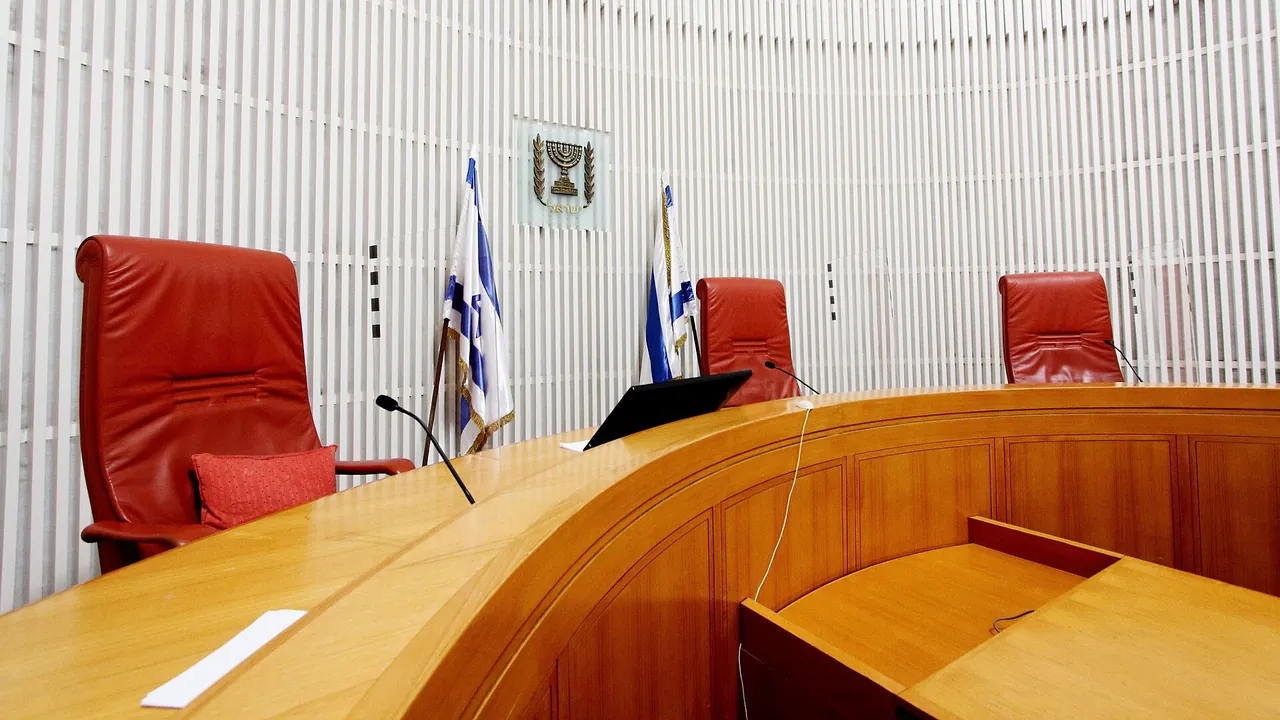
Nearly nine years after Artyom Vilov's body was discovered in a Ramat Gan waste site, the Supreme Court overturned a murder conviction against Ron Nahum, who was previously sentenced to 30 years in prison. The panel of judges ruled that while prosecutors proved Nahum caused Vilov's death during a violent altercation at his apartment, they failed to establish beyond a reasonable doubt that he intended to kill him. Consequently, the court acquitted Nahum of murder and substituted the conviction with manslaughter committed with indifference.
The case has now been remitted to the District Court for resentencing, as the maximum penalty for the revised manslaughter conviction stands at 20 years in prison. Defense attorney Netanel Yaacov-Hai from the Public Defender's Office argued in the appeal that the precise cause and timing of death could never be definitively established due to the advanced state of decomposition in which the body was found.
The Discovery and Investigation Timeline
The events unfolded on December 19, 2017, marking Vilov's 37th birthday. Security footage captured the two men walking together on Bialik Street in Ramat Gan before entering Nahum's apartment around 22:43. Roughly five hours later, surveillance cameras recorded Nahum dragging Vilov's motionless body along the building's pathway toward a neighboring trash room. Vilov's upper body was bare while his trousers were pulled down.
Approximately a week and a half later, on December 31, a sanitation worker at the Hiriya waste facility noticed a tattooed leg protruding from a pile of refuse. Forensic experts were unable to determine an exact cause of death due to post-mortem trauma sustained from heavy machinery at the dump. However, police investigators recovered Vilov's bloodstains on bedroom furnishings and discovered Nahum's palm print in a blood-like substance containing mixed DNA profiles of both men inside the trash room.
Legal Rationale and Supreme Court Ruling
Writing for the Supreme Court, Justice Khaled Kabub criticized the lower court's reliance on the statutory presumption of intent, noting that the precise nature, frequency, and force of the blows delivered during the violent incident remained entirely unknown. The bench concluded that post-offence behavior, such as cleaning up blood and dragging the body to conceal the crime, could signify an intent to hide the offense rather than a premeditated plan to kill.
Furthermore, the court took into account Nahum's psychological evaluation, which indicated impaired reality testing, alongside evidence that both men had been drinking heavily that night. While dismissing the defense argument that Nahum was merely reckless, the judges ruled that his failure to summon medical help demonstrated at least an indifferent state of mind toward the lethal outcome.
"We are left with many question marks regarding the events inside the apartment on that dark night, but a reasonable doubt remains as to whether the appellant possessed an intent to kill," Justice Kabub wrote in the ruling.
With the murder conviction set aside, the case returns to the District Court in Tel Aviv to determine a new sentence reflecting the manslaughter charge.