Somaliland Seeks Stronger Ties With Israel via Port of Berbera Trade Route
Somaliland's ambassador to Israel announced that the Port of Berbera could connect Israel, East Africa, and India, opening trade access to Ethiopia's 130 million residents.
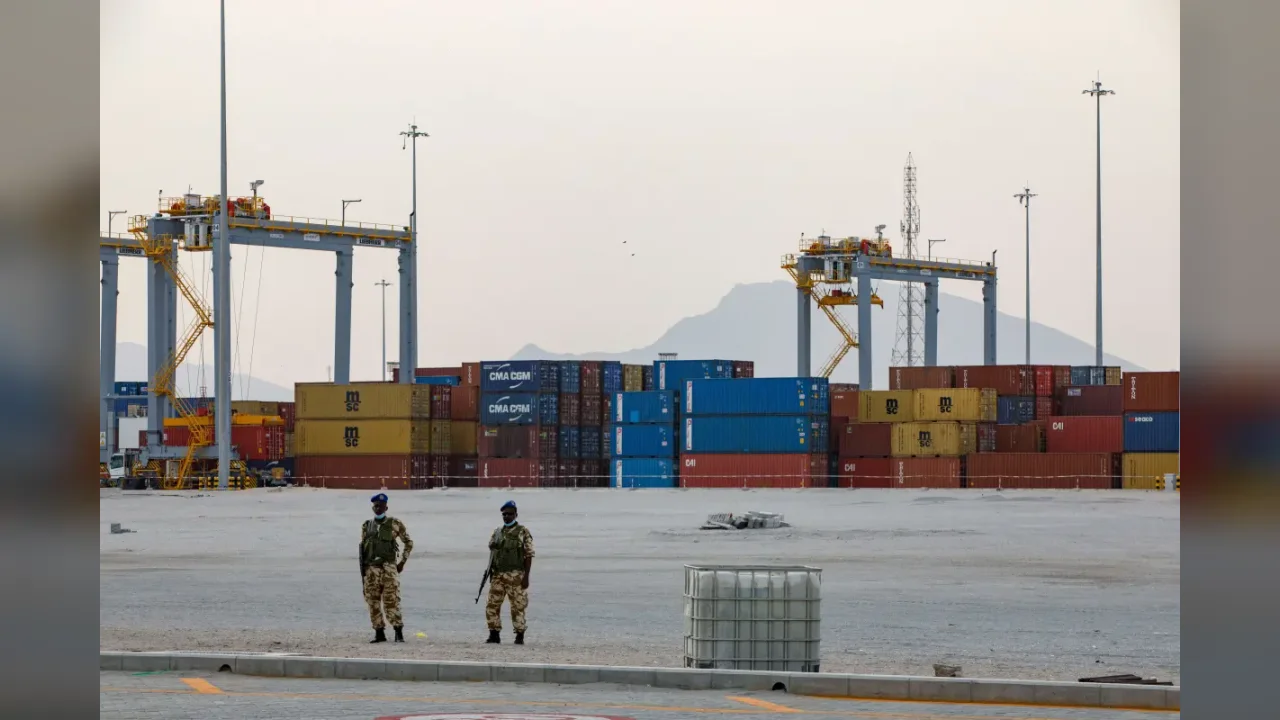
The strategic Port of Berbera in Somaliland could emerge as a vital commercial hub connecting Israel, East Africa, the Gulf states, and India, opening a gateway to a market of 130 million people. Speaking on Thursday at the Jerusalem Post conference in Sydney, Australia, Somaliland Ambassador to Israel Dr. Mohamed Haji outlined his government's ambitions to expand economic and security cooperation with regional partners by leveraging its critical position along major global maritime trade routes.
Strategic Port Expansion and Ethiopia Connection
Situated on the southern coast of the Gulf of Aden near the Bab el-Mandeb Strait, the Port of Berbera has undergone significant modernization backed by investments from Dubai-based logistics giant DP World. Container handling capacity currently stands at 500,000 standard units annually, with future expansion plans targeting two million units per year. Alongside port development, the Berbera Corridor connecting the facility to landlocked Ethiopia has amplified Somaliland's commercial importance in the Horn of Africa. Ethiopia, whose population exceeds 130 million residents, relies almost entirely on Djibouti for maritime trade, making alternative trade corridors an essential economic objective.
Ambassador Haji highlighted Jerusalem as a primary strategic partner and noted that Israel was the first nation to recognize Somaliland's independence. While Ethiopia has not yet formally extended diplomatic recognition, both countries maintain robust economic and political ties. Haji expressed hope that Israel would broaden its engagement across African nations, including Kenya, to foster multilateral growth linking Africa, the Middle East, and India.
Maritime Security and Regional Stability
Addressing security challenges, the ambassador warned that instability in the Red Sea and the Gulf of Aden severely impacts the regional economy. He specifically cited threats posed by the Iran-backed Houthis in Yemen and the al-Shabaab terrorist group in East Africa. Maintaining freedom of navigation and securing maritime trade lanes require close security coordination with international partners, including Israel.
Haji also addressed the expanding military and economic footprint of Turkey in neighboring Somalia, where Ankara has invested heavily in training and equipping security forces. The ambassador stressed that Somaliland wishes to avoid regional rivalries escalating into a direct confrontation between Israel and Turkey, warning that further friction could undermine fragile stability in the Horn of Africa.
A Vision for Multilateral Cooperation
Advocating for diplomatic engagement over military escalation, Ambassador Haji presented a collaborative vision involving Somaliland, Israel, the United Arab Emirates, the USA, Ethiopia, and India. He emphasized that strengthening multilateral ties will enhance maritime security, bolster economic development, and establish a balanced regional order.
"In our region, we do not have many friends. We need to find a partner who can help us not only economically, but also on a strategic level."
Through deepened alliances with global and regional democracies, Somaliland seeks the diplomatic backing necessary to secure its long-term stability and economic prosperity.