Ministry Committee Recommends Shafdan Revenue Split and Annexation to Rishon LeZion
A Ministry of the Interior committee recommended annexing the Shafdan wastewater plant to Rishon LeZion and distributing 35-40 million shekels in annual property tax revenues among six neighboring local authorities.
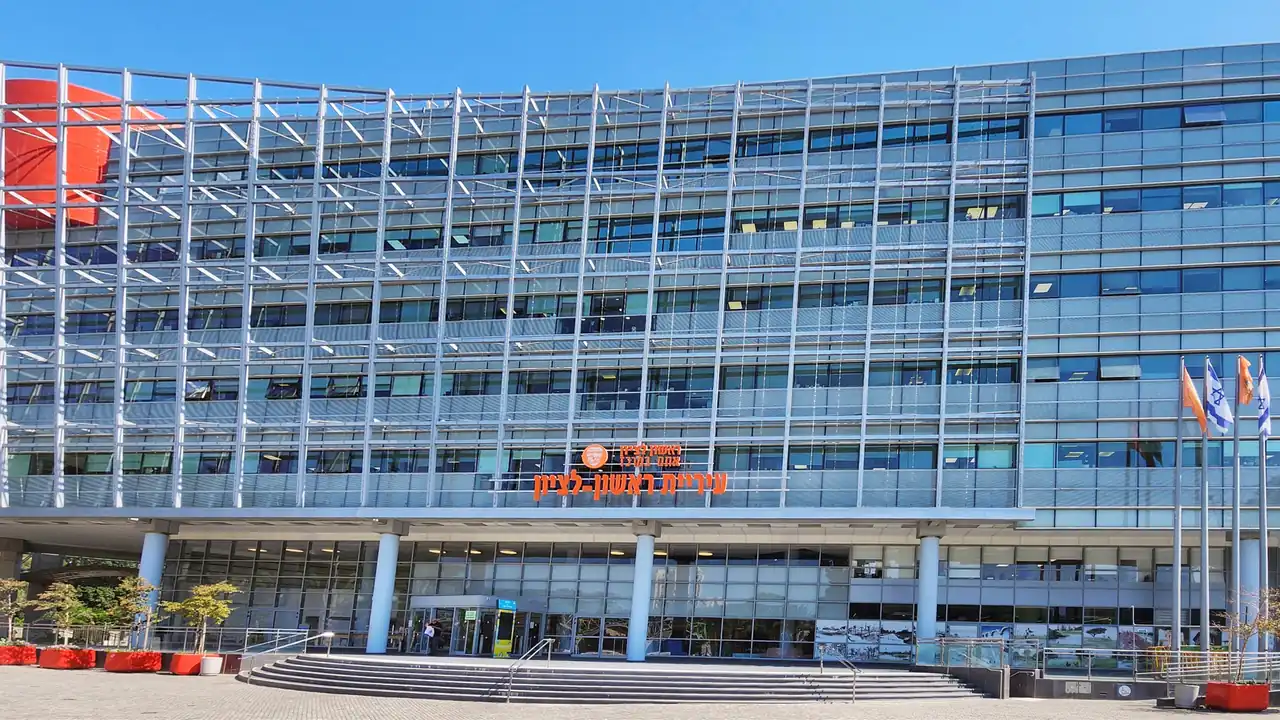
A geographical committee appointed by the Ministry of the Interior has formulated a recommendation for distributing annual revenues ranging between 35 million and 40 million shekels from the Shafdan wastewater treatment plant. The facility, which is the largest of its kind in Israel and owned by the Dan Region Environmental Association, treats sewage for a population exceeding two million residents across the Tel Aviv metropolitan area.
Annexation and Revenue Distribution Formula
Geographically situated as an enclave entirely surrounded by Rishon LeZion, the facility currently does not pay municipal property taxes, known as arnona, to any local authority. Under the newly proposed framework, the territory will be fully annexed to Rishon LeZion, while revenues will be distributed among neighboring municipalities using a weighted model based on population, socioeconomic ranking, financial resilience, property tax collection rates, and territorial proximity to the plant.
While five local authorities previously submitted a compromised proposal during committee hearings, Holon opposed the arrangement and presented an independent model advocating for the land to be annexed under its own jurisdiction. Holon criticized the agreed-upon document, alleging it was withheld by officials until the conclusion of the committee proceedings.
Final Allocations and Financial Impact
According to the recommended distribution structure, Rishon LeZion will first receive 5 percent of the revenues to cover municipal services and tax collection costs. The remaining funds will then be allocated with Rishon LeZion receiving 38.6 percent, Bat Yam taking 20.4 percent, Holon securing 17.7 percent, Yavne receiving 11.2 percent, Ness Ziona getting 7.2 percent, and Gan Raveh receiving 4.9 percent. Notably, Tel Aviv, despite its prominent role in the environmental association, will receive no share of the revenues.
Furthermore, the national municipal tax fund will claw back approximately 28 percent of these proceeds in accordance with housing supply expansion rules. Water consumers will ultimately bear the financial burden of the property taxes, resulting in an estimated 0.35 percent increase in water costs, equivalent to roughly half a shekel per household each month. The recommendation now awaits ministerial review, though implementation depends on the incoming government since the caretaker cabinet remains in office.