New Plant Species in the Andes Named After Football Star Lionel Messi
A newly discovered plant species in the Peruvian Andes has been named Salvia messii in honor of football star Lionel Messi, featuring the light blue and white colors of Argentina.
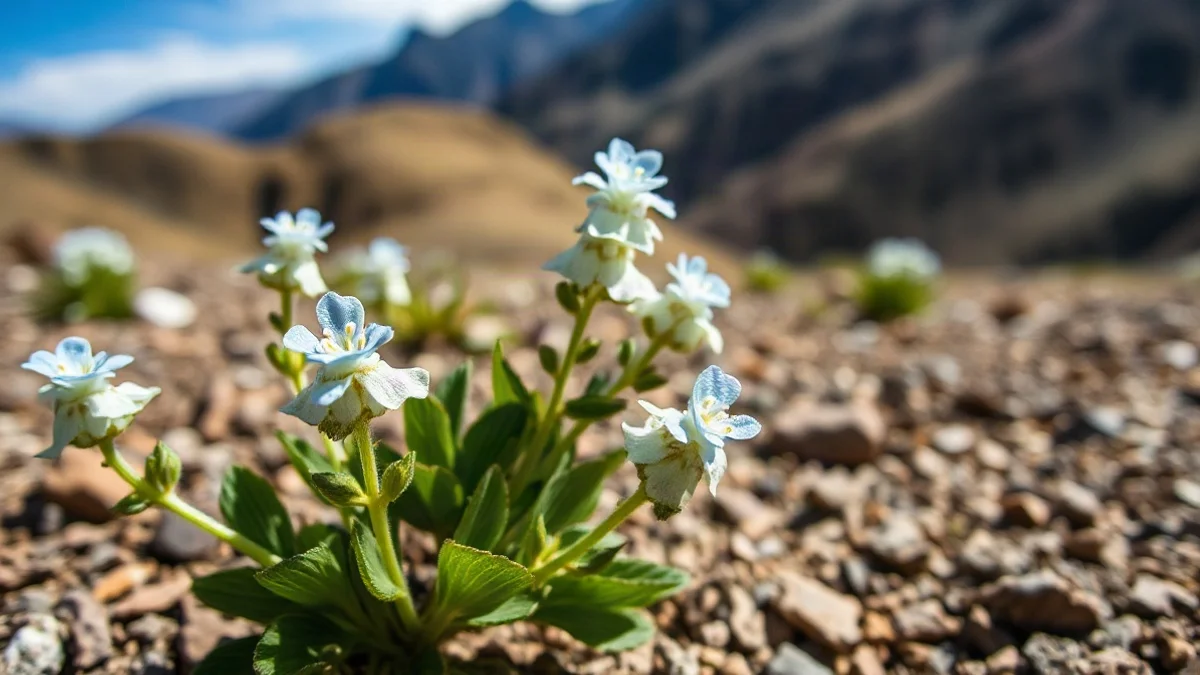
Lionel Messi has won almost every possible football trophy, but now he receives a completely different honor: a newly discovered plant species in the Peruvian Andes has been named after him. According to a recent academic study, researchers gave the plant the scientific name Salvia messii, which literally means "Messi's plant". In a particularly symbolic touch, the plant's flowers feature the light blue and white colors of the Argentine national team.
Discovery and Characteristics
The plant was discovered in the Andes region of central and southern Peru, at elevations between 2,000 and 2,400 meters above sea level. It belongs to the Lamiaceae family, which includes sage and mint, and can reach a height of about 1.5 meters. Researchers note that it is capable of adapting to extremely harsh environmental conditions and surviving on rocky, arid slopes. However, despite its resilience, it has already been classified as an endangered species due to the impacts of climate change and forest fires.
Scientific Naming and Legacy
The chosen name is no accident. Following standard botanical naming conventions, the researchers added the letter "i" to the end of Messi's last name to honor him. Thus, Salvia messii was born, immortalizing the Argentine footballer in the plant kingdom. The research was led by Paul Gonzalez from the Natural History Museum at the National University of San Marcos in Peru, Argentine researcher Rolando Uría, and biologist Jean Capcha-Ramos from Huarango Nature.
Messi, who currently plays for Inter Miami, concluded his international career with Argentina after a legendary run that included winning the 2022 World Cup and two Copa América titles. Now, alongside his numerous records and trophies, his name will also be permanently etched in scientific literature alongside other footballers who received similar botanical and zoological honors.