Alleys of Tears and Gold: The Wonderful Journey to the Secrets of Selichot Among the Stones of Jerusalem
The hidden synagogues of Jerusalem preserve ancient Selichot traditions, from the melodies of the Jews of Yazd and Greece to the prayers of Breslov and Yemenite Jews. Alongside the prayers are woven stories of kindness, heroism, and Jerusalem legends that have become an inseparable part of the nights of Elul in the city.
With the arrival of the month of Elul, Jerusalem sheds its everyday clothes and takes on the image of a powerful spiritual magnet, where the boundary between visible reality and ancient tales blurs in the shadows of the night. While crowds visit the well-known tourist centers, deep within the hidden alleys of Nachlaot and the Bukharan Quarter, a different magic occurs, full of kindness and self-sacrifice that only a few are privileged to know up close. In these alleys, time seems to have stood still, and the echoes of prayer breaking out from ancient synagogues carry with them moving stories about the human heart at the height of its glory.
One of the wonderful stories that still echoes today between the city walls is the story of Rabbi Shlomo Elyashiv, author of the "Leshem," who on one of the cold nights of Elul met a weeping widow who was left without food for her children. The rabbi, who had only a simple copper coin in his pocket, gave her everything he had, and in the morning the miracle was revealed - the coin had turned into a rare gold coin from the Second Temple period, with the rabbi explaining that it was the intention of the heart that turned the copper into gold.
In those years, at the "Beit El" yeshiva of the kabbalists, another miracle occurred when a cantor who had lost his voice prayed that he could just once more awaken the people, and his voice miraculously returned to him for one night of heart-stirring Selichot.
Walking through the alleys of Nachlaot in the small hours of the night brings up the legendary figure of Rabbi Aryeh Levin, the "father of prisoners," who would pass by with a small kerosene lantern and gently knock on the windows to awaken the residents for Selichot with a loving and soft voice. Rabbi Aryeh's love knew no bounds, and he would even reach the detention basements in the Russian Compound to strengthen the underground prisoners.
This spirit of daring also characterized the young people during the British Mandate period, who would smuggle shofars under their clothes to blow at the Western Wall despite the ban, while Rabbi Shlomo Zalman Auerbach would wait for them at the Kishle police station with food and drink at the end of the fast.
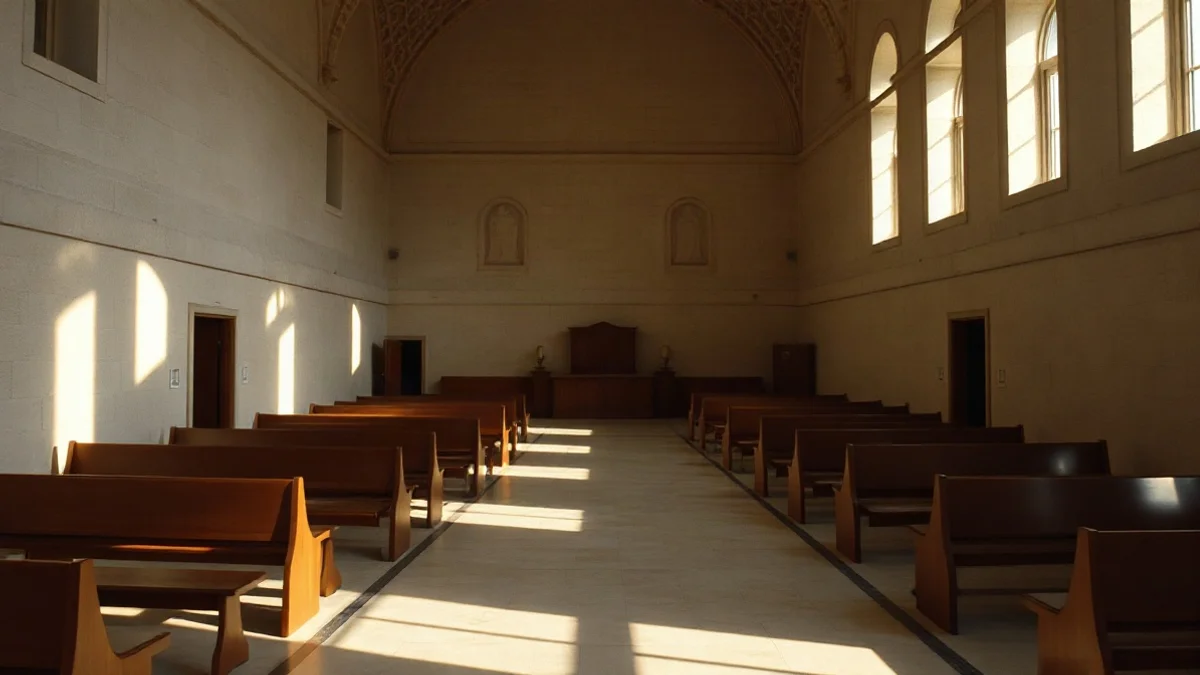
When delving into the neighborhoods, synagogues are revealed that are hidden pearls, such as the "Shevet Achim" synagogue of the Jews of Yazd in Nachlaot, where the walls are decorated with Persian carpets and the Selichot are recited in an ancient desert melody that is all longing. Not far from there, in the synagogue of the Ioannina community, the delicate melodies of the Greek Jews are preserved, a remnant of a community that perished in the Holocaust, when the sounds of prayer end with the blowing of a shofar at dawn.
In the heart of Nachlaot is also the "Ohavay Zion" synagogue, identified with the Banai family, where worshipers gather even before midnight for singing and Jerusalemite piyyutim that connect generations of cantors.
For those looking for a more shaking and wild experience, the Breslov Hasidic study hall "The Shul" in Mea Shearim offers Selichot in partial darkness, without a dominant cantor, but in a massive and spontaneous cry of hundreds of people fighting for their souls. In contrast, in the Yemenite synagogue "Beit Avraham ve-Ohel Sarah" in the Bukharan Quarter, the Selichot are recited with quiet weeping and a heartbreaking melody, reaching its peak with the blowing of a long and twisted Yemenite "krud" shofar that shakes the stone walls.
There are places where the prayer rises literally from the ground, like in the underground water cistern in Nachlaot, where a group of kabbalists sings "Shma Koli" with acoustics that create a chilling echo in the darkness.
Jerusalemite Selichot are a mosaic of cultures, from the synagogue of the Jews of Amadiya from Kurdistan, where elderly people who worked all their lives as porters sing in ancient Aramaic and with true heartbreak, to the magnificent "Adas" synagogue of the Aleppo expatriates, decorated with wall paintings and powerful and mighty singing.
Even in surprising places like the "Horses' Courtyard," which was once an Ottoman stable, there is now a study hall of kabbalists who pray according to the intentions of the Rashash in complete silence of kabbalistic meditation.
Selichot in Jerusalem are also a story of impossible connections, like that historic moment after the liberation of the Old City, when paratrooper soldiers from the kibbutzim joined hands in a stormy dance with old kabbalists in the Western Wall plaza to the sounds of "Adon HaSelichot."
This is a city where the media personality Jacky Levy searches, as he wrote in a column for "Israel Hayom," for the "taste of the Temple" in the precise melodies of his childhood, and where legends tell of mysterious guards in Motza who disappear at dawn, leaving behind only the smell of hot tea and the feeling that Elijah the Prophet himself came to protect those walking to Selichot.
Jerusalem of Elul is a place where every melody, every knock on a window, and every tear in a water cistern tell the story of a people that asks, every year anew, to find its way to the heart.