Half a Billion Later: The Rubik's Cube Returns to Its Hungarian Homeland
More than fifty years after its creation, the iconic Rubik's Cube is returning to its native Hungary with a new automated factory inaugurated in Jászberény by inventor Ernő Rubik.
More than half a century has passed since Ernő Rubik, a young design lecturer in Hungary, built a rotating wooden cube while experimenting with three-dimensional objects. He could never have imagined that his modest invention would evolve into one of the best-selling and most recognizable games in history, with over half a billion units sold worldwide. Now, after decades of production outside its homeland, the iconic puzzle is returning to Hungary.
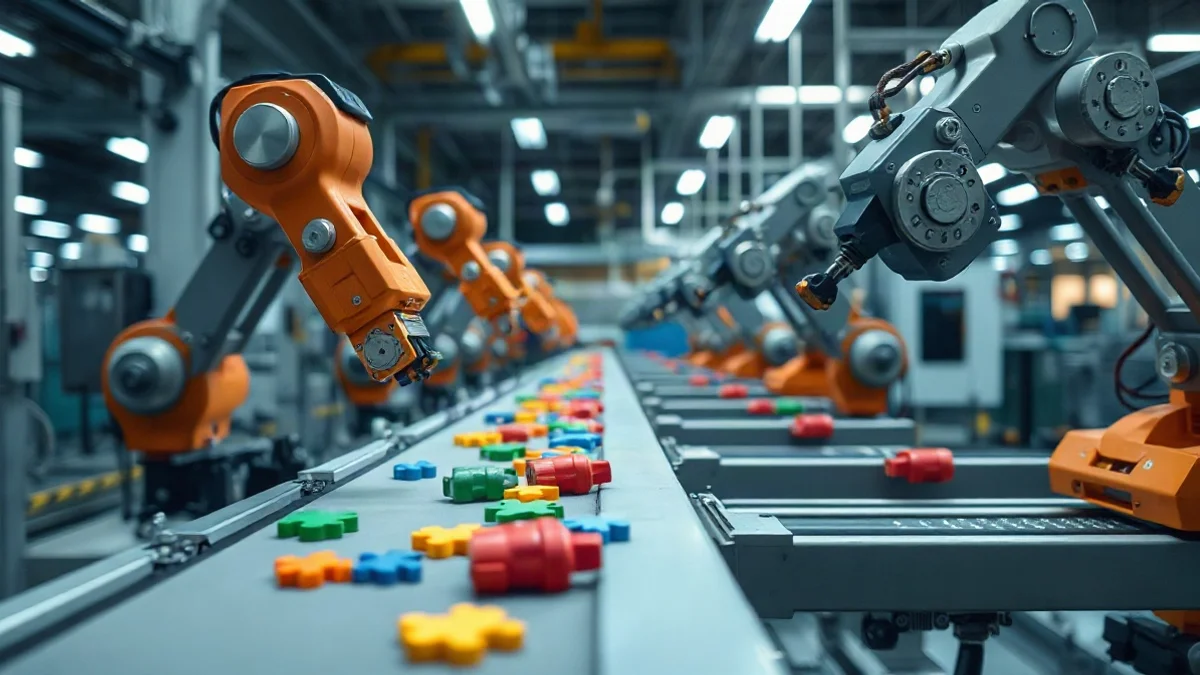
A new automated production line for the famous puzzle was inaugurated on November 10 in the Hungarian city of Jászberény, with the inventor, now 82 years old, in attendance. Operated by the Jász-Plasztik company, the state-of-the-art facility is projected to manufacture roughly one million cubes annually using robotic arms that assemble the components, test their mechanics, and ensure long-term durability.
Return to the Homeland
"Hungary is the home of the cube. This is where it was born," Rubik declared at the festive opening ceremony. He noted the vast technological gap between modern manufacturing methods and the puzzle's early days, recalling that while the cubes were assembled entirely by hand during the 1970s, advanced automated machinery now executes the precise work.
The remarkable journey of the puzzle began in 1974, when Rubik taught design at the Academy of Applied Arts in Budapest. He crafted a wooden prototype consisting of 27 smaller cubes designed to rotate freely on multiple axes. In 1977, he began marketing the invention under the name "Magic Cube", and the first 5,000 units quickly sold out in local Budapest shops.
Global Cultural Phenomenon
Success followed swiftly and unexpectedly. Within a few short years, manufacturing plants in communist Hungary proved unable to keep pace with soaring international demand, prompting the transfer of global distribution rights to Western toy corporations. Between 1980 and 1983 alone, approximately 200 million cubes were sold, transforming the puzzle into a sweeping worldwide cultural phenomenon.
Even in the modern era of smartphones and advanced video games, the puzzle continues to captivate millions of enthusiasts. International speed-solving competitions have blossomed into a thriving global sport, highlighted by a recent world record set in October when a nine-year-old Chinese boy, Yiheng Wang, solved a Rubik's Cube in a staggering 2.51 seconds.
Steve Radovick, a senior executive at the Canadian toy giant Spin Master, which holds the rights to the brand, emphasized during the ceremony that the puzzle transcends simple play. He described it as a global social phenomenon symbolizing creativity, logical thinking, and problem-solving ingenuity.
Rubik himself never viewed the cube strictly as a test of speed. To him, the puzzle represents a piece of mathematical art, an ever-changing sculpture that bridges engineering, creativity, and aesthetics. With production now returning to Hungarian soil, a historic circle closes for one of the most brilliantly simple inventions of the 20th century.