Royal Navy Launches Its First Autonomous Squadron in Portsmouth
The Royal Navy has established its first autonomous squadron, deploying uncrewed Kraken and Rattler boats operated from a control room. Backed by a major defense investment, the hybrid unit aims to enhance maritime security.
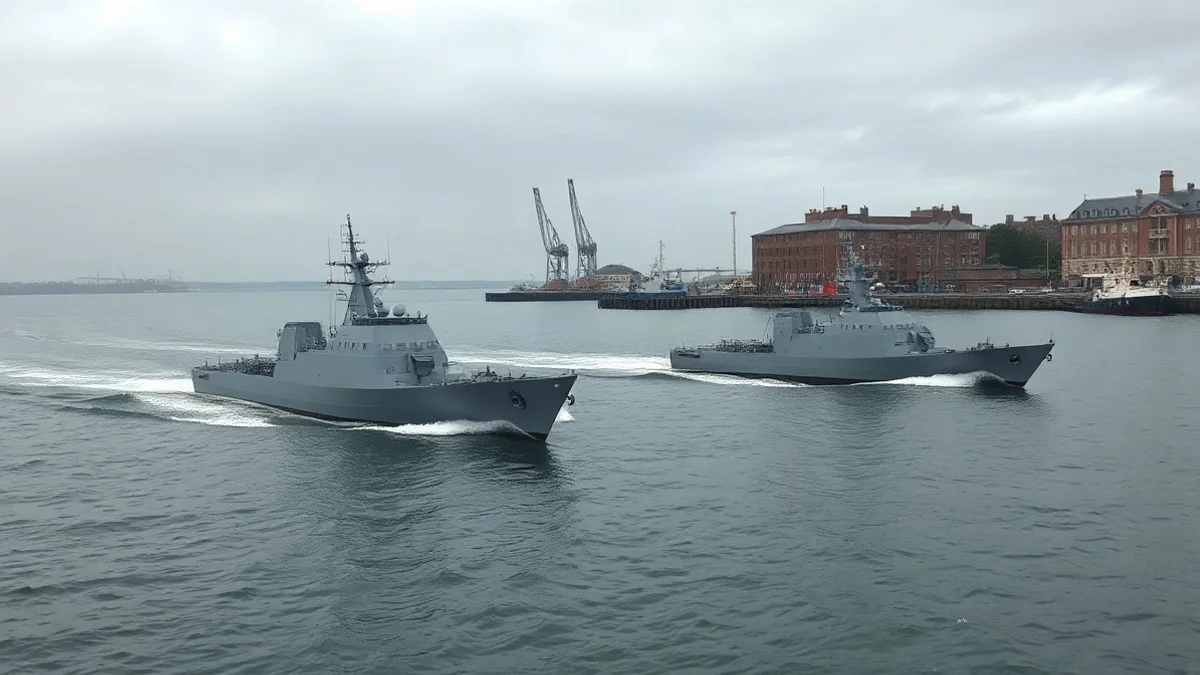
The Royal Navy has announced the establishment of its first autonomous squadron, which will operate uncrewed surface vessels from a control room during front-line missions. The unit was commissioned during a ceremony held at the naval base in Portsmouth, southern England, attended by more than 200 sailors, dignitaries, and family members. During the event, the vessels to be operated by the unit—the Kraken and Rattler class boats—demonstrated maneuvers around the harbor without anyone on board.
"The Royal Navy is doing something it has never done before. We are bringing into service the first autonomous squadron in our history," said Fleet Commander Vice Admiral Steve Moorhouse, adding that this is a truly historic event. He noted that for generations naval power was built around ships, submarines, and aircraft manned by sailors and marines, and from now on they will be joined by a unit operating uncrewed vessels. Moorhouse emphasized that the seas are becoming more dangerous and difficult to operate in, and that a hybrid fleet will provide a broader range, greater strike power, and expanded options, while humans remain at the core.
Defense Secretary Wes Streeting stated that the threat environment is fundamentally different from that of recent decades, and that today a decisive factor in military strength is who innovates faster. The minister added that the UK is leveraging the largest sustained increase in the defense budget since the Cold War to put autonomous technology into the hands of sailors, protecting the kingdom's shores and NATO allies. "The more ready we are to fight and win, the less likely we are to have to do it," Streeting declared. The transition to a hybrid navy, where traditional warships operate alongside uncrewed systems, is backed by a 1.5 billion pound investment over four years.
The new unit comprises approximately 180 personnel, matching the crew size of a frigate, divided into two shifts to maintain round-the-clock operations. The Kraken boats, with a range of about 1,000 kilometers that can be extended to approximately 1,800, have been tested along the southern coast of England on defense, surveillance, and patrol missions, while the Rattler boats escorted warships in Scotland while operated from a distance of about 800 kilometers. The squadron replaces the navy's first experimental program for acquiring uncrewed boats and will operate both independently and as part of a task force alongside allies.
The announcement came days after the Royal Navy reported that it launched strike drones for the first time from the flight deck of the aircraft carrier HMS Queen Elizabeth, during trials held in mid-October in the North Atlantic. Four British-made drones were launched from the deck, all of which struck their targets. Meanwhile, military and political leaders from Western nations are gathering in Oslo, Norway, for conferences on Northern European security, where rapid technological developments on the battlefield are also being discussed.