Millions of Migrating Starlings Invade Rome and Cover the City in Droppings
Millions of migrating starlings invade Rome each winter, creating stunning aerial displays by day but covering the city in tons of acidic droppings by night, frustrating residents and sparking municipal efforts to disperse the massive flocks.
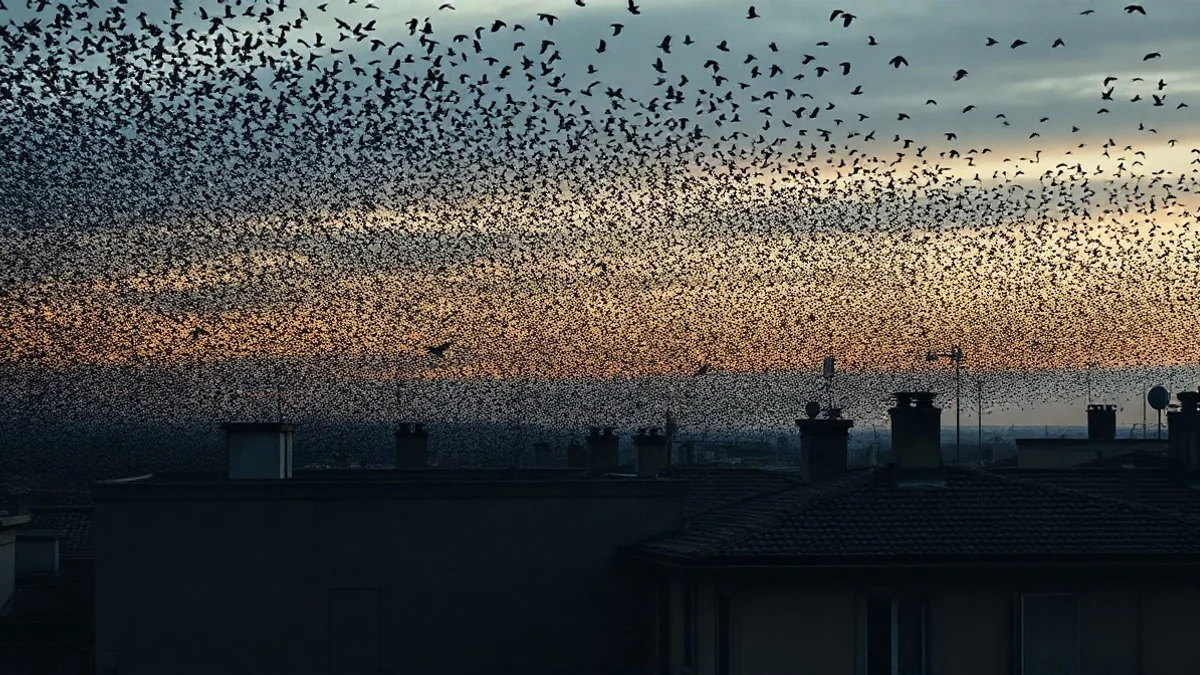
Every afternoon, around 5:00 PM, the skies above Rome fill with a breathtaking natural spectacle that tourists love to capture for social media. Millions of starlings, arriving in the city between October and February from northern and eastern Europe, gather in giant flocks that swirl through the air in mesmerizing shapes. However, once the birds settle down to sleep on trees and antennas, the romance ends and car washes face a massive surge in workload.
According to reports from local media, residents in various neighborhoods of the Italian capital, including Prati and Magliana, have recently complained about foul-smelling air and cars covered every morning in a thick layer of droppings. Ornithologist and science communicator Francesco Barberini explained that these are common starlings, estimating that more than four million specimens winter in the city proper, while total estimates for greater Rome range between five and ten million birds per season.
Science and Urban Shelter
Although the phenomenon has been known in Rome since antiquity, giant flocks on the scale seen today only began forming in the 1920s. According to Barberini, the birds choose to roost in the city for a simple reason: "Because it is warm." During the day, they feed in rural areas on olives and agricultural crops, returning at night to a city that provides shelter from wind and predators. Their olive-rich diet makes their droppings particularly sticky and oily, turning roads and sidewalks into slippery hazards. Scientists note that ten million starlings produce no less than seven tons of droppings every single night.
Local drivers, however, care less about science and more about the paint jobs on their vehicles. Barberini warned that "the droppings are highly acidic and corrode car paint, so vehicles must be protected with tarp covers." One of the prominent hotspots is the Prati Fiscali neighborhood in the northern part of the city. Since mid-October, the search for a "safe" parking spot away from tree branches has become a daily race, with some residents even walking the streets with umbrellas to shield themselves from what is described as a literal downpour.
The City's Response
Rome's municipality and the municipal cleaning company are trying to combat the phenomenon through frequent cleanings and specialized teams known as "starling dispersers," who wear white protective suits and face masks. These teams set up megaphones under trees broadcasting amplified starling distress calls at a hundredfold volume, alongside laser beams to scatter the flocks without trapping or killing the birds.
Yet, judging by the situation on the ground, the starlings remain unimpressed by the audio effects. Even if they abandon one tree, they simply relocate to a neighboring one. Meanwhile, the debate on Italian social media continues: alongside frustrated residents, voices remind the public that nature was there first, writing in comments that "we are the guests, not them."