Right-Wing Bloc Plans to Oppose Deputy Speaker Slate to Avoid Voting for Tibi
The right-wing bloc in the Knesset plans to vote against the entire slate of Deputy Speakers to avoid supporting Ahmad Tibi, accepting the loss of its own posts.
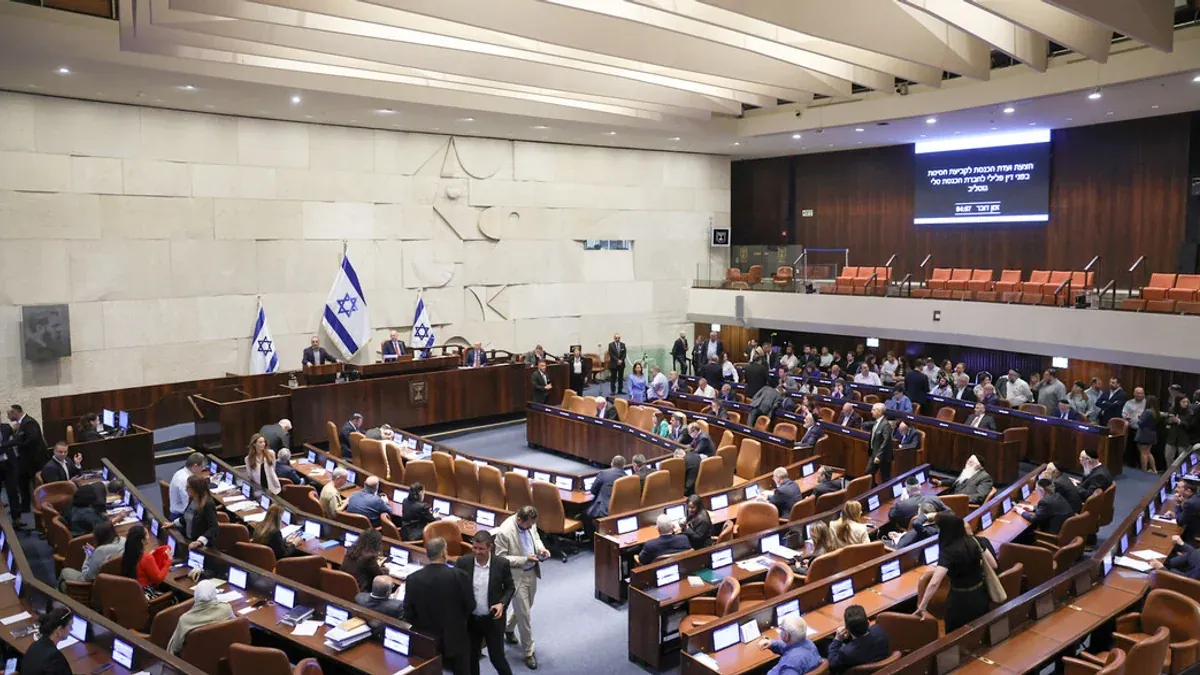
A fresh political dispute erupted in the Knesset over the appointment of Deputy Speakers, with the right-wing bloc preparing to vote against the entire candidate slate to avoid supporting Ahmad Tibi. The controversy arose after Roey Folkman, Chairman of the House Committee and a member of the Yashar! faction, determined that the election would take place through a single combined vote on all proposed names rather than separate ballots for each candidate.
Rules and Procedural Background
Because the slate includes Ahmad Tibi, right-wing lawmakers intend to reject the entire list, effectively forfeiting their own designated deputy positions for the current vote. This voting mechanism is not an ad hoc creation for this appointment; Section 2 of the Knesset Rules of Procedure explicitly mandates that when multiple deputy speakers are elected simultaneously, the selection must be conducted via a single vote. Furthermore, the rules state that these deputies are chosen upon the recommendation of the Knesset House Committee, or the House Committee's predecessor, the Arrangement Committee, before the permanent committee is established.
This standoff follows last week's heated battle over the composition of the Arrangement Committee for the 26th Knesset. The Knesset plenum approved Folkman's proposed committee makeup by a 63-to-50 vote. The 22-seat committee was organized using a formula of one representative for every five Knesset seats per faction. Likud secured five seats, Yashar! obtained four, while BeYachad, The Democrats, the Joint List, and Ra'am received two seats each. Yisrael Beytenu, Shas, United Torah Judaism, Otzma Yehudit, and Religious Zionism were allocated one representative each.
Bloc Reactions and Subsequent Appointments
Right-wing factions opposed this distribution and advanced an alternative proposal led by Likud MK Ofir Katz, which was ultimately rejected. Following the vote, Likud figures criticized the change bloc for cooperating with Arab parties, asserting that the factions of Gadi Eisenkot, Avigdor Lieberman, and Naftali Bennett voted alongside Ahmad Tibi and Mansour Abbas.
Later that day, the Arrangement Committee approved the formation of two temporary bodies: the Finance Committee and the Foreign Affairs and Defense Committee. The committee recommended that Liran Avisar Ben-Horin of BeYachad chair the temporary Finance Committee, while Yisrael Beytenu leader Avigdor Lieberman was tapped to head the temporary Foreign Affairs and Defense Committee, passing with a 13-to-9 majority.
The current battle over the deputy speakerships shifts the focus from committee sizing to personal alignment on the candidate list. By deciding to vote against the collective list, the right-wing bloc demonstrates its willingness to surrender high-ranking parliamentary posts rather than back Ahmad Tibi. This maneuver highlights deep coalition fault lines at the start of the new parliamentary term, signaling that right-wing factions draw firm lines regarding joint votes, even at the cost of losing leadership positions that oversee plenary sessions.