Rare Arctic Bird Spotted in the Negev Desert in Stunning Surprise Appearance
A rare buff-breasted sandpiper, native to North America, was spotted at the Purah Reservoir in the northern Negev, marking only the second recorded sighting of the species in the country.
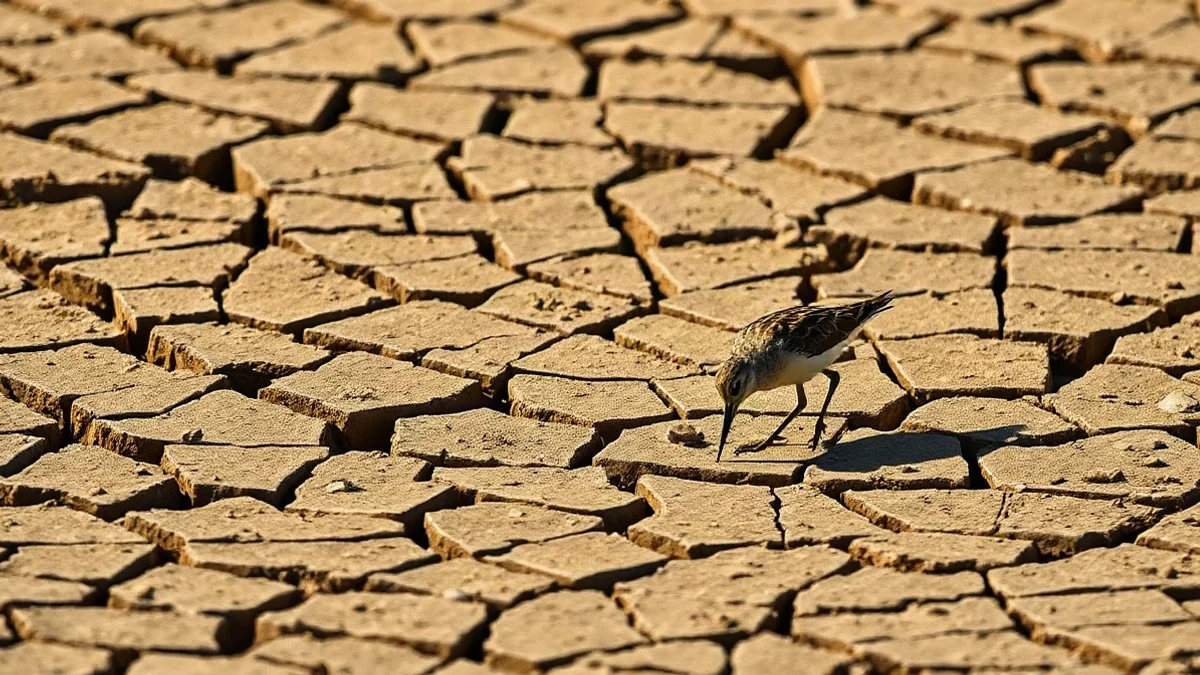
A rare visitor has made a surprise stop in the northern Negev desert. On Friday, a buff-breasted sandpiper was spotted at the Purah Reservoir, marking only the second time this rare migratory bird has ever been documented in the country.
A Rare Sighting in the Desert
The bird was first identified by local birdwatcher Miriam Al-Sirhan at the Purah Reservoir, which serves as a crucial staging ground for migratory birds. This unique specimen breeds in the Arctic tundra of northern Alaska and northern Canada, and typically migrates all the way to the coast of Argentina.
The buff-breasted sandpiper is classified as Vulnerable on the IUCN Red List, facing ongoing threats from habitat loss, hunting, and climate change. The only previous documented sighting in the country occurred in the autumn of 2018 at Kibbutz Ga'ash, where a lone bird stayed for two days.
How Did It Get Here?
"We will never know for sure how it arrived here from its breeding grounds in North America," explains Dr. Yoav Perlman, director of the Israel Ornithological Center at the Society for the Protection of Nature. "This is a juvenile on its very first migration, and it is entirely possible the bird simply made a navigational error."
"We will never know for sure how it arrived here from its breeding grounds in North America. This is a juvenile on its very first migration, and it is entirely possible the bird simply made a navigational error," explains Dr. Yoav Perlman.
Experts suggest two main migration anomalies. The first is that the bird crossed the Atlantic, reached Western Europe, and continued on to Israel—a theory supported by a historic first sighting of the species in Cyprus just a week prior. Alternatively, the bird may have flown from Alaska across the Bering Strait and down through Asia.