Rare 2,200-Year-Old Coin Depicting War Elephant Discovered in Ness Ziona
A rare 2,200-year-old coin depicting a war elephant and Antiochus IV was discovered alongside a Hellenistic farmhouse during road works in Ness Ziona.
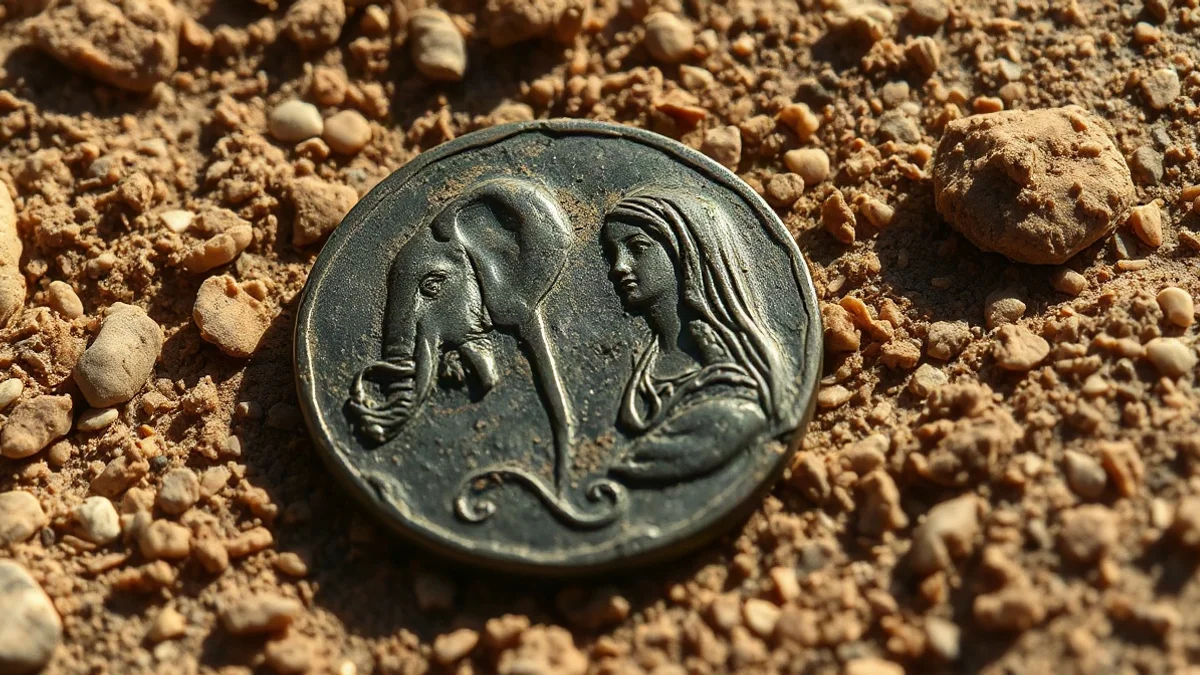
A rare 2,200-year-old bronze coin bearing the image of a war elephant and the name of King Antiochus IV has been uncovered during archaeological excavations in Ness Ziona. Unearthed alongside the remains of a 2,300-year-old Hellenistic farmhouse, the discovery was made during road construction works conducted by the Israel Antiquities Authority in cooperation with the Ministry of Transport and Netivei Ayalon.
The archaeological investigation preceded the construction of a new bypass road in Ness Ziona, designed to connect the Flag Pole Street area to the Rabin and Emek HaShoshanim intersection with direct access to Route 42. According to excavation directors Shahar Krispin, Dror Citron, and Danny Benayoun, the farmhouse featured a series of rooms surrounding an inner courtyard. The sturdy structure served residents engaged in local agriculture and commerce, benefiting from its strategic location between Lod and the ancient port city of Yavne-Yam.
The standout discovery, a serrated bronze coin minted during the reign of Antiochus IV Epiphanes between 175 and 164 BCE, was found by Israel Antiquities Authority volunteer Dr. Ran Levy. One side of the coin displays a veiled female portrait identified as Laodice IV, the king's sister and wife, while the reverse side features a war elephant head facing left, a naval ram, and a Greek inscription reading "Of King Antiochus."
The Ancient Tank and Historical Context
Numismatic researcher Yaniv David Levy noted that coins of this type were minted at the outset of Antiochus IV's reign between 175 and 172 BCE in Antioch and Acre-Ptolemais. The war elephant motif on the coin symbolized the military might of the Seleucid Empire, serving as the heavy armor and tanks of antiquity to terrify enemy lines and carry armed combatants into battle.
These war elephants hold a prominent place in the historical narrative surrounding Hanukkah and the Maccabean Revolt, which erupted against Seleucid decrees in 167 BCE. Seleucid war elephants are also famously referenced in the Books of Maccabees, specifically during the Battle of Beth Zechariah in 162 BCE, where Eleazar Maccabee was crushed to death after striking a royal war elephant from underneath.
The Israel Antiquities Authority, the Ness Ziona Municipality, and Netivei Ayalon will host an open day at the excavation site on Tuesday, December 8, offering the public guided tours of the ancient farmhouse ruins and family-friendly workshops.