Researchers Capture Rare Footage of Transparent-Headed Barreleye Fish
MBARI researchers in California have documented a rare Barreleye fish with a transparent head and green eyes at a depth of 600 meters, marking only the 11th sighting in nearly 40 years.
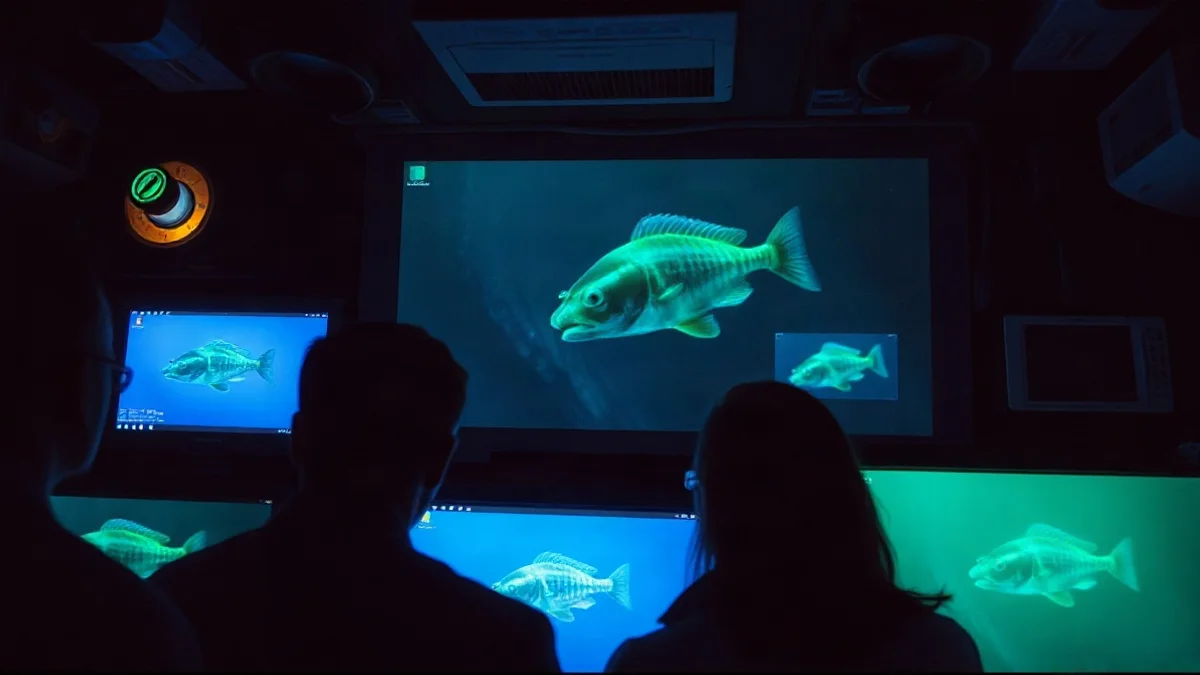
Researchers from the Monterey Bay Aquarium Research Institute (MBARI) in California have captured rare footage of a Barreleye fish (Macropinna microstoma) featuring a transparent head and glowing green eyes at a depth of approximately 600 meters. The encounter, which marks only the 11th time MBARI researchers have documented the species in nearly 40 years of deep-sea exploration, took place roughly 90 kilometers off the coast during an expedition aboard the research vessel David Packard.
The sighting occurred as the team was concluding operations and retrieving their remotely operated vehicle (ROV), Doc Ricketts. A researcher spotted the unusual creature on camera, prompting the crew to halt the ascent and gather in the control room to observe the phenomenon. Despite conducting over 7,000 dives and accumulating more than 41,000 hours of underwater footage, encounters with Macropinna microstoma remain exceptionally rare, with the previous sighting recorded in 2021.
During the recent 20-minute encounter, scientists successfully documented the fish in unprecedented 4K resolution and captured 3D imagery using varied lighting conditions. The barrel-shaped, tubular green eyes housed inside the transparent fluid-filled shield typically point upward to detect silhouettes of potential prey against the faint filtered sunlight of the ocean's twilight zone. When targeting prey, these eyes can rotate forward, while the protective transparent dome shields them from stinging siphonophores as the fish feeds on small crustaceans.
Researchers did not collect the specimen, allowing the deep-sea dweller to remain undisturbed in its natural habitat. The high-definition material is expected to provide marine biologists with crucial insights into how this specialized visual system functions under extreme lighting conditions in the ocean depths.