Rami Levy Executives Reveal 1,000 Worker Shortage and Delivery Hurdles
Rami Levy executives revealed critical labor shortages of 1,000 workers and delivery bottlenecks during an industry expo in Tel Aviv, while addressing pricing strategies and competition.

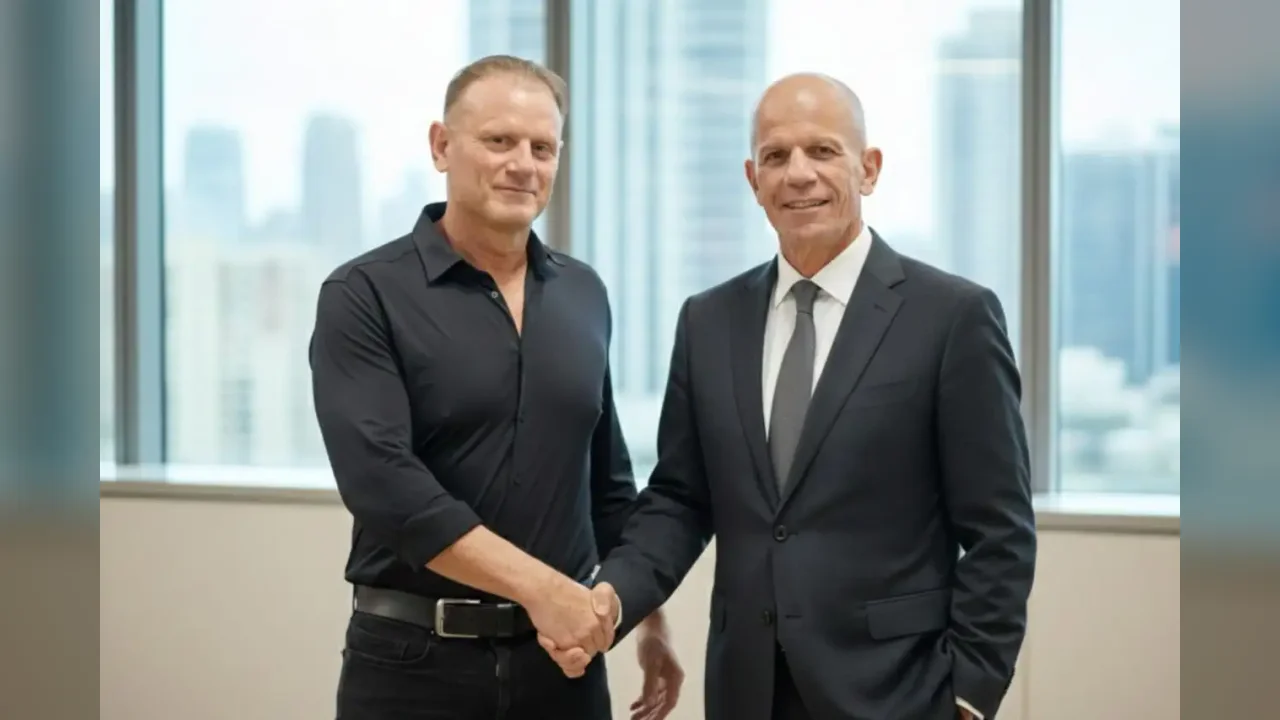
Rami Levy, CEO and owner of Rami Levy Shivuk Hashikma, alongside co-CEO and daughter Yafit Atias, addressed several key operational challenges during an appearance at the 41st Israfood exhibition at Expo Tel Aviv, part of the 2026 Food Industries, Hospitality, and Retail Week.
Speaking with journalist Keren Marciano, the executives detailed ongoing struggles with online shopping logistics, labor shortages, private label competition, and the broader cost-of-living crisis.
Online Delivery Bottlenecks and Labor Shortages
Addressing one of the retail chain's primary operational vulnerabilities, the online shopping infrastructure faced heavy scrutiny following recent delivery fee hikes that prompted similar moves across competitor networks. While Levy maintained that the digital division is profitable, he acknowledged that a comprehensive overhaul is necessary to elevate consumer service.
"To provide better services to the consumer, we need to make a revolution in many things. It is known that there is a shortage of labor here," Levy stated, noting that the enterprise requires at least 1,000 additional workers, particularly for driving and delivery roles.
Atias highlighted that technological integration has helped streamline in-store picking and inventory availability. However, she pointed out that the final delivery leg remains the most extreme vulnerability.
"The vulnerability is delivery. If in the past it was in-stock picking, today we are advancing with technological matters that we introduce into the chain. We are overcoming the issue of product availability. That is one thing we solve with technology. Now the extreme vulnerability is in deliveries. We know how the product leaves, we don't know how the product arrives."
Labor Market Realities and Foreign Workers
When pressed on whether raising wages could resolve the shortage of Israeli workers instead of relying on foreign labor, both executives emphasized that the reality is considerably more complex.
Atias noted that the firm previously offered 30,000 shekels in educational grants and high school diploma completion programs to support employees. Nevertheless, she observed that individuals avoid manual labor positions, with many domestic workers departing after three to six months.
Levy rejected the notion that higher wages alone would fix the deficit, highlighting current hourly rates ranging between 55 and 65 shekels.
"Our hourly wage is between 55 and 65 shekels. Let them not tell stories about a minimum wage of 35 shekels. Even if wages go up by 50%, it will not solve the shortage."
Expanding Private Label and Pricing Strategies
Discussing retail expansion, Atias explained that the establishment of Rami Levy Stock aims to scale non-food offerings constrained by limited floor space in standard grocery branches. Strong private label categories, including cleaning supplies, pasta, flour, and legumes, continue to secure strong consumer loyalty.
While Marciano questioned whether price gaps between private labels and major brands have genuinely narrowed, Levy asserted that private labels remain significantly cheaper.
"There are gaps that can reach 50% to 60%. Precisely there I put up a fight. We have a considerable share in black coffee, which is a product people are used to, it constitutes almost 35% to 40% of our sales compared to Elite's coffee, and it is cheaper by 40%," Levy explained.
Antitrust Testimony and Market Commentary
The discussion also touched upon the February 2025 antitrust indictment filed by the Israel Competition Authority against Victory Supermarket Chain Ltd. and its owner Eyal Ravid, alongside executives from Yochananof and Super Bareket. Levy, who testified as a prosecution witness in November 2026 regarding public statements intended to influence competitor pricing, distanced his company from coordination allegations.
"I can speak only for myself and my business. I do monitor the market, but I do not operate according to declarations of competitors—I don't care if this or that entity declares a 'tsunami' of price hikes or claims there is no tsunami," Levy concluded, emphasizing that market transparency rests ultimately with consumer choice.