Preparing the ground for escalation? Senior Iranian officials return to threats on social media
Senior regime officials in Tehran are increasing pressure on Gulf states hosting American forces: an Iranian parliament member warned Qatar, Kuwait, and the UAE, while Qalibaf called for establishing a new regional security order independent of Washington.
Senior officials in Iran have sharpened their tone toward Gulf states hosting American forces, while simultaneously calling for a reshaping of the security and economic order in the region without dependence on Washington. The spokesperson for the National Security Committee in the Iranian parliament, Ebrahim Rezai, published today (Saturday) on the X network an implied threat toward countries where, according to him, American aircraft and refueling planes are stationed.
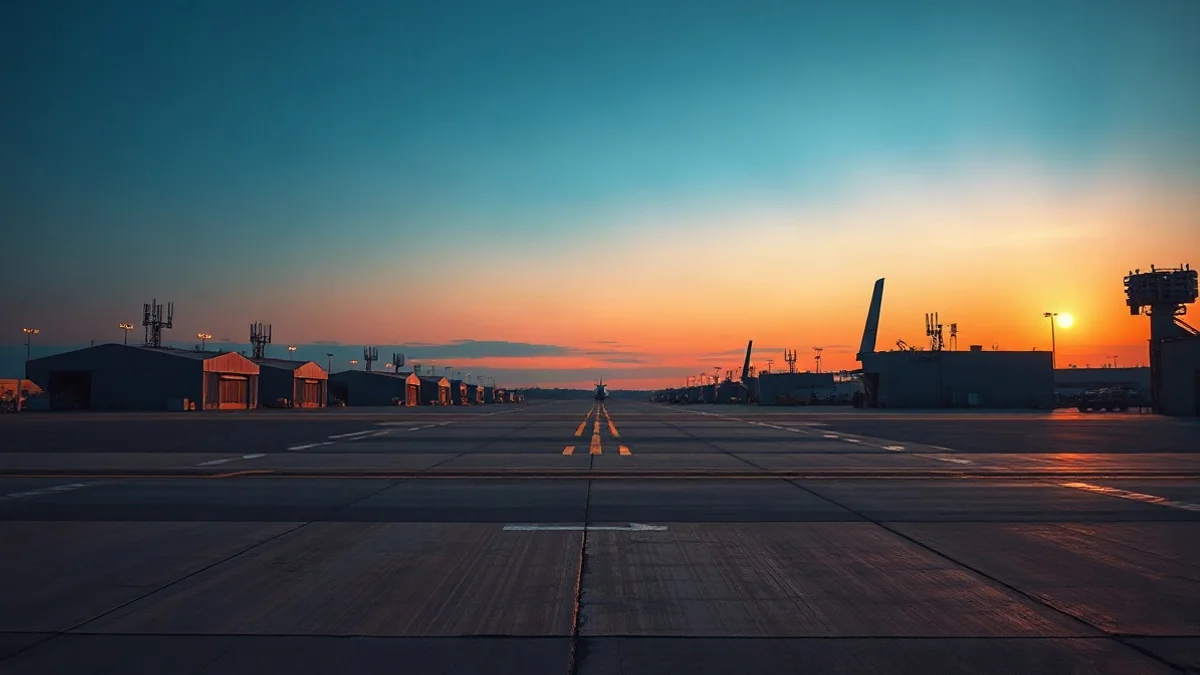
"It is reported that American enemy planes and refueling planes are present at airports in Qatar, Kuwait, the UAE, and other places," wrote Rezai. "They have turned their homes into bunkers of the enemy. Let them not complain later." These remarks place the Gulf states hosting American facilities and forces in the spotlight, and clarify that Tehran seeks to link the American military presence on their soil to the responsibility they might, from Iran's perspective, bear in the event of further escalation.
Simultaneously, the Speaker of the Iranian Parliament, Mohammad Bagher Qalibaf, published on the X network a message different in tone, but aimed at the same regional issue: the future of security relations between countries in the region and the United States. "We have received numerous messages from neighboring countries regarding the shaping of new security arrangements and economic cooperation in the region," wrote Qalibaf.
According to him, the policy of the United States has undermined the sense of security of its allies in the region. "The United States has put the security of each and every one of its allies at such risk, through bullying and complete disregard for their interests for the sake of Israel, that at times they saw their very existence at stake," he claimed.
Qalibaf added that from Tehran's perspective, the alternative is the creation of a regional framework that does not rely on external powers. "An independent order, which will grow from within the region itself, is what will truly bring peace and security," he wrote.
Meanwhile, despite the signing of the memorandum of understanding between United States President Donald Trump and Iran in mid-June at the Palace of Versailles, it turns out that the radical leadership in Tehran used the time of calm to weave a completely different plan. The American administration hoped that the agreement, which promised Iran sanctions relief, the possibility to sell oil, access to billions of frozen dollars, and even the potential for a $300 billion reconstruction fund, would lead to the opening of the Strait of Hormuz and the end of the fighting.
However, sources in Iran and Arab countries revealed at the beginning of the week that Tehran viewed the agreement as a ruse by the United States and Israel intended to buy time. The Iranian strategy has since been conducted along two axes: while its diplomats, led by more pragmatic figures such as President Masoud Pezeshkian who called for the agreement to prevent economic collapse, conducted talks, the new Supreme Leader, Mojtaba Khamenei, began organizing security mechanisms for escalation.
Arab intelligence intercepted communications indicating close coordination between the Revolutionary Guards and pro-Iranian militias. The result on the ground became clear quickly: attacks on ships in the Strait of Hormuz were renewed, and the theater of combat expanded to the Red Sea. The Houthi rebels in Yemen, with backing in intelligence, weapons, and guidance from the Revolutionary Guards, announced the closure of the Bab el-Mandeb Strait to Saudi Arabia and began attacking its forces.
Simultaneously, Iraqi militias attacked Saudi oil facilities, and Iran launched advanced ballistic missiles toward Jordan, actions that proved a significant improvement in their precision capabilities. Mohammad Hassan Sangtarash, a security analyst from Tehran, defined this as a "salami slicing" tactic — gradual escalation intended to exhaust the enemy before the truly big confrontation, which has yet to begin.
We also recall that Iran announced today that reconstruction work at the refinery of Phase 14 at the South Pars gas field, which was damaged in an Israeli attack in June of last year, is 70% complete. The CEO of the Pars Oil and Gas Company, Toraj Dehghani, told the Iranian Ministry of Petroleum's news agency SHANA that the work is expected to be fully completed by the end of the year and that the damaged part will be fully returned to the production cycle.
The refinery is part of the South Pars field, one of the largest natural gas reservoirs in the world, which Iran shares with Qatar. According to the Iranian company's data, the South Pars complex is responsible for more than 70% of Iran's natural gas supply, and therefore damage to the processing facilities in the area has great significance for the country's energy sector.
The facility was damaged in June 2025 in an Israeli attack that caused a fire and a temporary cessation of part of its operations. According to estimates published at the time, the damage halted production of about 12 million cubic meters of gas per day. Phase 14 was designed to process more than 56 million cubic meters of gas per day and also produce tens of thousands of barrels of condensate, a liquid hydrocarbon mixture with high economic value.