Almost a year of life in a traffic jam: the real price of the commute to work
According to current estimates, the average Israeli spends time in traffic jams equivalent to a pregnancy and maternity leave. Building more roads does not solve the problem, so what is the actual solution?
A traffic jam is not just a morning annoyance; it is not just honking, a confused Waze, or the struggle to merge into a lane. A traffic jam is life itself—precious, non-renewable time that we burn on the road.
It is frustrating, yet most people have no real choice. They are not stuck in traffic as a hobby; they need to get to work, drop off children, or reach their studies. Day after day, life returns to the same endless loop of braking and short bursts of acceleration.
Over a decade ago, a grim scenario for Gush Dan was presented in the Knesset: without a reliable public transport system, by 2030 every vehicle could lose more than an hour a day to congestion, with total wasted time reaching 850 million hours annually. The economic damage was estimated at 25 billion shekels per year.
Data from the State Comptroller confirms the severity: in 2021, road congestion caused roughly 31 billion shekels in damage, about 2% of GDP. Between 2000 and 2021, the number of vehicles in Israel increased 2.1 times, while road length grew by only 1.24 times. We are adding cars much faster than we are adding road space.
What does this mean for the individual? If you live in Gush Dan and commute five times a week (about 230 days a year), losing an hour a day, you will spend roughly 6,900 hours, or nearly ten months of your life, in traffic over a thirty-year career. That is enough time to go from pregnancy to your child entering the first grade—much like a plot from a sci-fi series.
The problem is that traffic feeds itself. Public transport is unreliable, so people buy cars. More cars lead to more congestion, which traps buses in the same traffic, making public transport even less attractive. It is a vicious cycle, devoid of magic but full of noise.
The solution of "just add another road" does not work. A 2026 Bank of Israel study found that increasing road capacity encourages more private vehicle use, especially in urban areas, as households often purchase second cars. New road space fills up almost immediately.
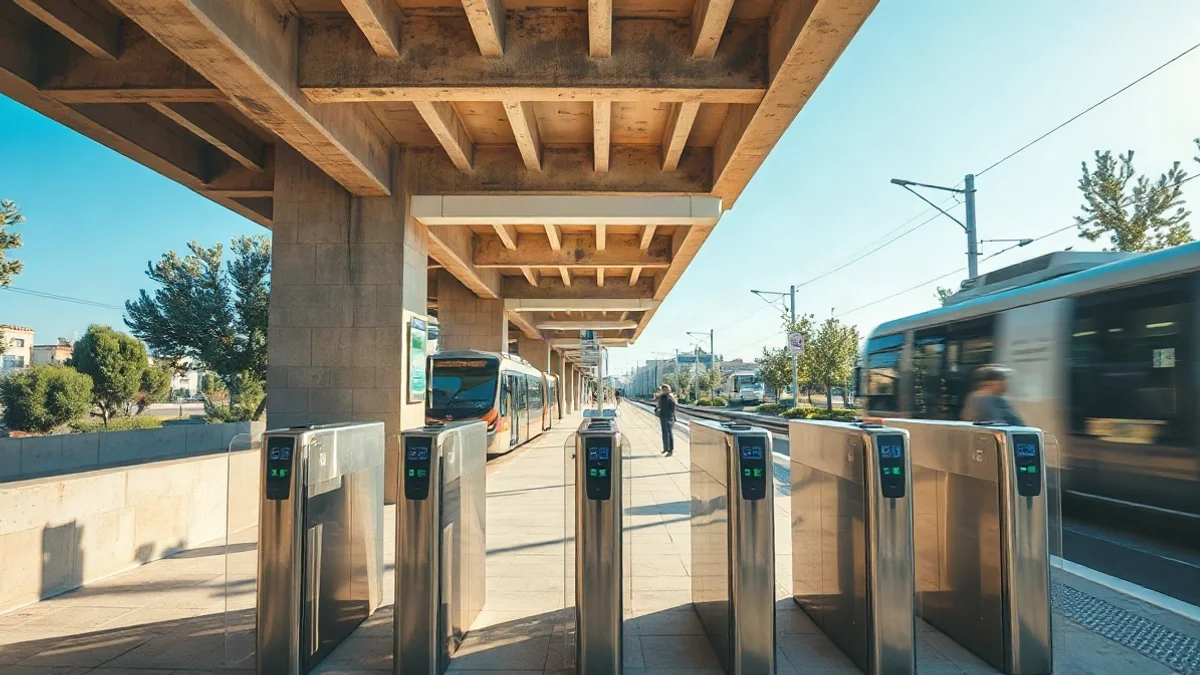
The solution requires more than just asphalt; it requires public transport that acts as a real option rather than a punishment. We need trains, subways, and buses with dedicated lanes, high frequency, and a reliable system that allows people to plan their mornings without a forty-minute "anxiety buffer."
In Gush Dan, the metro is set to be the country's largest infrastructure project, with three lines and 109 stations. However, according to the State Comptroller, it is not expected to operate until 2037, assuming no further delays. Until then, millions continue to pay the price in time.
Traffic jams are rarely perceived as a major crisis because they are broken down into small segments: half an hour here, twenty minutes there. But when added up, it represents one of the greatest wastes of our time. Ultimately, the question is not just how long the commute takes, but how much of our life we are willing to leave on the road. Currently, the answer is quite disappointing.