Powerful Earthquake Strikes Central Peru Injuring 15 and Damaging Infrastructure
A powerful earthquake struck central Peru, injuring 15 people and causing infrastructure damage and landslides. Emergency authorities issued travel safety guidelines.
A powerful earthquake shook central Peru and triggered widespread panic among residents and thousands of international travelers, leaving at least 15 people injured and causing significant structural damage. According to data released by the Geophysical Institute of Peru (IGP), the main seismic event struck on Friday, November 20, 2026, at 19:09 local time. The epicenter was located approximately 30 kilometers northwest of the Andean city of Junín, at a depth of roughly 129 kilometers beneath the surface. The seismic activity persisted through Saturday, November 21, with two notable aftershocks recorded at 00:12 measuring magnitude 5.0, followed by a magnitude 3.5 tremor at 08:21 in the Junín region.
Impact and Regional Damage
The National Civil Defense Institute of Peru (INDECI) issued an official situation report detailing infrastructure damage across multiple provinces. In the capital city of Lima, one person sustained injuries, and authorities recorded collapsed stone walls along with dangerous rockfalls in the tourist-heavy Miraflores district along the Costa Verde coastal highway overlooking the Pacific Ocean. Nearby Callao Province also experienced structural damage to several residential buildings.
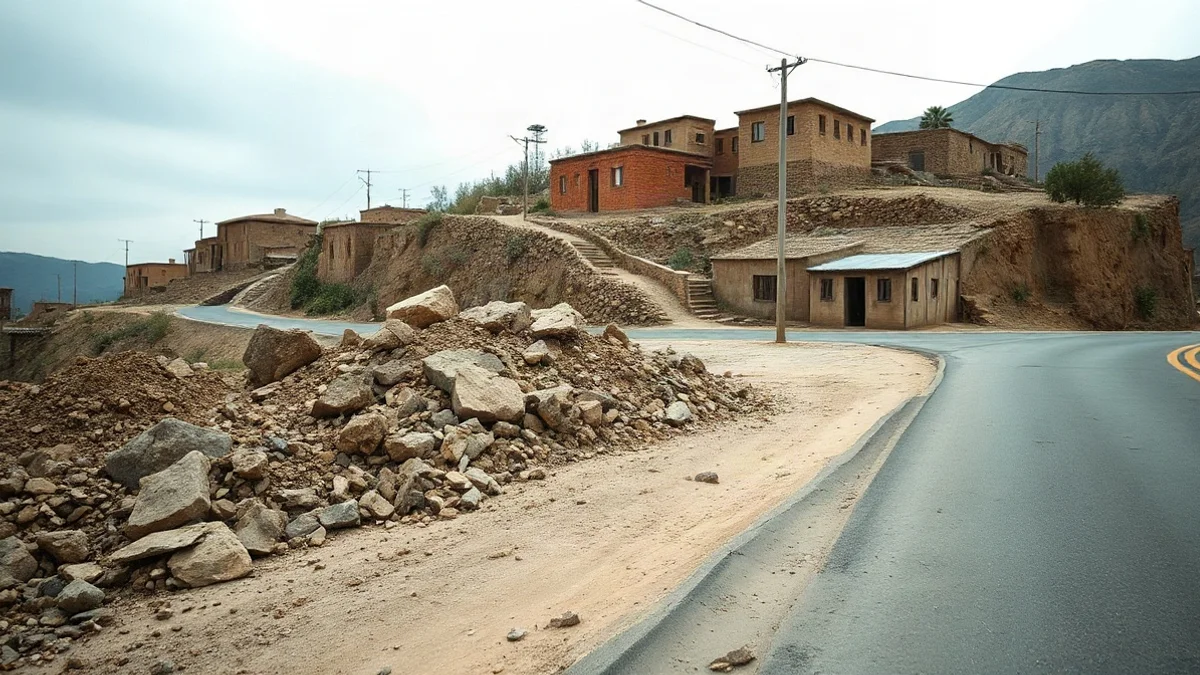
The Pasco region suffered widespread power outages alongside damaged homes and a local church. Furthermore, landslides severely restricted traffic along the primary highway connecting Pasco to the city of Huánuco. In Ambo, engineering teams were dispatched to inspect significant structural cracks discovered in an ancient historic church. The relatively deep hypocenter of 129 kilometers helped absorb a portion of the seismic energy, preventing even more catastrophic destruction.
Safety Instructions for Travelers
Emergency authorities and travel organizations released urgent safety guidelines for tourists currently visiting Peru, advising them to avoid mountain routes prone to rockfalls—specifically the Pasco-Huánuco corridor and the coastal cliffs of Lima—as aftershocks continue to threaten stability. Travelers must refrain from entering accommodations or historical sites displaying visible wall cracks and must strictly follow directives issued by INDECI and local security forces while keeping emergency supplies such as water, flashlights, and portable chargers accessible.
"If an aftershock occurs while indoors, do not run down staircases or use elevators. Drop immediately, protect your head and neck, and take cover under a sturdy piece of furniture or against an interior wall until shaking stops," emergency officials advised.
Those outdoors must maintain a safe distance from buildings, cliffs, utility poles, and billboards.
The Geologic Context of Peruvian Seismicity
Peru ranks among the most seismically active regions on Earth due to its geographic position along the Pacific Ring of Fire, a horseshoe-shaped belt surrounding the Pacific basin responsible for roughly 90 percent of global earthquakes. Tectonically, the country sits directly above the convergence zone where the oceanic Nazca Plate subducts beneath the South American Plate. The relentless eastward motion of the Nazca Plate at a rate of several centimeters per year generates immense friction and stress, which periodically releases seismic energy and volcanic activity across the Andes mountain range.