Remote Pacific Atolls Unveil Pristine Marine Ecosystems and Rare Species
A new scientific study reveals that two remote, uninhabited atolls in the Marshall Islands host exceptionally pristine marine ecosystems, providing a vital baseline to understand global biodiversity loss.
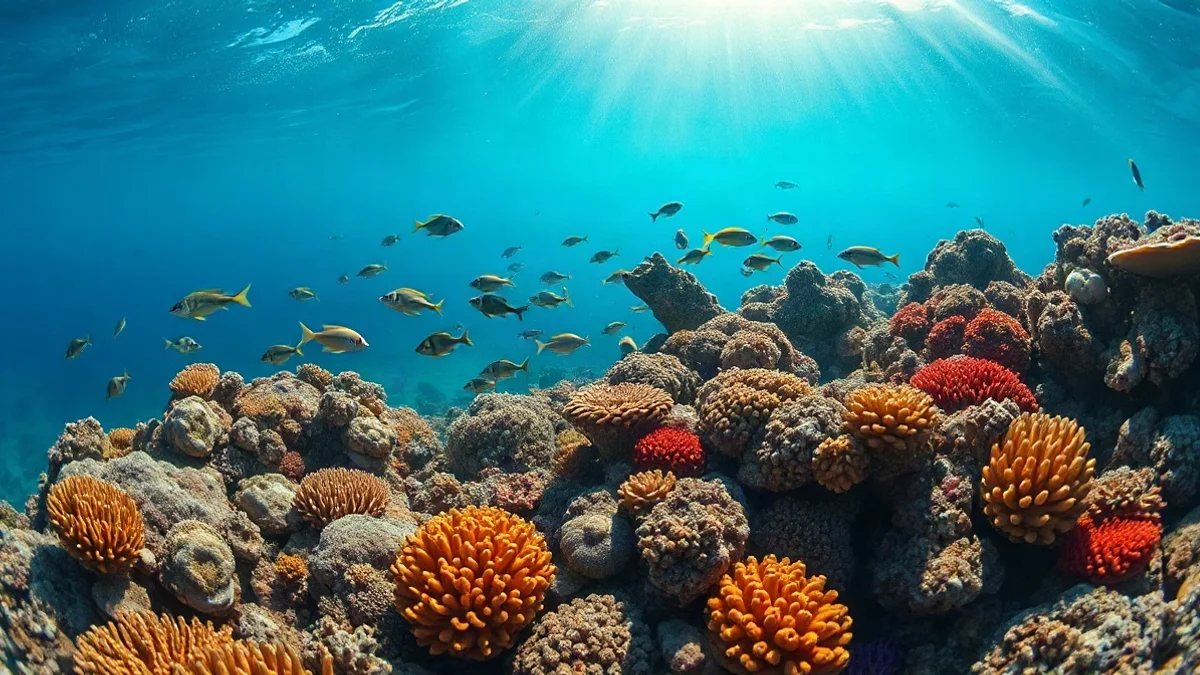
In the remote expanses of the Pacific Ocean, far from human population centers, two uninhabited atolls have been revealed as a rare refuge for pristine marine and terrestrial ecosystems. The atolls of Bikar and Bokeak, belonging to the Marshall Islands, remain largely untouched by direct human activity due to their extreme isolation. Bikar lies about 116 kilometers from the nearest inhabited atoll, while Bokeak is situated approximately 385 kilometers away.
A comprehensive scientific study published in the journal Frontiers in Marine Science details findings from a major 2023 research expedition led by scientists from the University of Hawaii and National Geographic’s Pristine Seas project. Researchers examined beaches, surveyed birds and vegetation, dived along coral reefs, and deployed cameras and submersibles to explore deep-sea environments.
Biodiversity and Deep-Sea Discoveries
The surveys documented at least 266 species of reef fish, 138 species inhabiting intermediate depths, and 79 deep-sea fish species. Additionally, researchers identified 15 groups of pelagic predators, including sharks and large fish. Notably, 14 of the recorded groups had not been previously documented in the Marshall Islands, and two observed fish species may represent discoveries new to science.
Terrestrial life is equally vibrant, with 17 seabird species identified, of which 15 nest or breed on the atolls. Bikar revealed 132 sea turtle nesting pits, predominantly belonging to endangered green sea turtles. Meanwhile, Bokeak stood out for its rich coral reefs and exceptionally high fish biomass, with total fish mass nearly double that measured at Bikar.
Dr. Alan Friedlander, a marine ecologist at the University of Hawaii and lead researcher of the expedition, emphasized the global significance of the discovery.
"These atolls are not only a treasure for the Marshall Islands, but for the entire planet," Friedlander stated, crediting the Utrik Atoll community for protecting the sensitive ecosystems for decades.
A Natural Laboratory and Climate Threats
The importance of Bikar and Bokeak extends far beyond their beauty, serving as vital baseline ecosystems that help scientists understand what has been lost in heavily exploited marine environments worldwide. In response to these findings, the government of the Marshall Islands established a national marine sanctuary in 2025 covering approximately 48,000 square kilometers around the two atolls.
Despite their isolation, the researchers noted that the sites are not entirely immune to human impact. Invasive rats introduced in the past were documented, and a broader, more pervasive threat looms large: global climate change. Ocean warming, coral bleaching, rising sea levels, and changing food availability threaten even the most isolated marine habitats, making the preservation of such ecological refuges more critical than ever.