Nvidia Faces Major Succession Crisis and Stock Drop After Jensen Huang Resigns
Nvidia faces an unprecedented leadership crisis and market valuation drop after co-founder Jensen Huang stepped down amid geopolitical probes, security breaches, and workplace controversies.
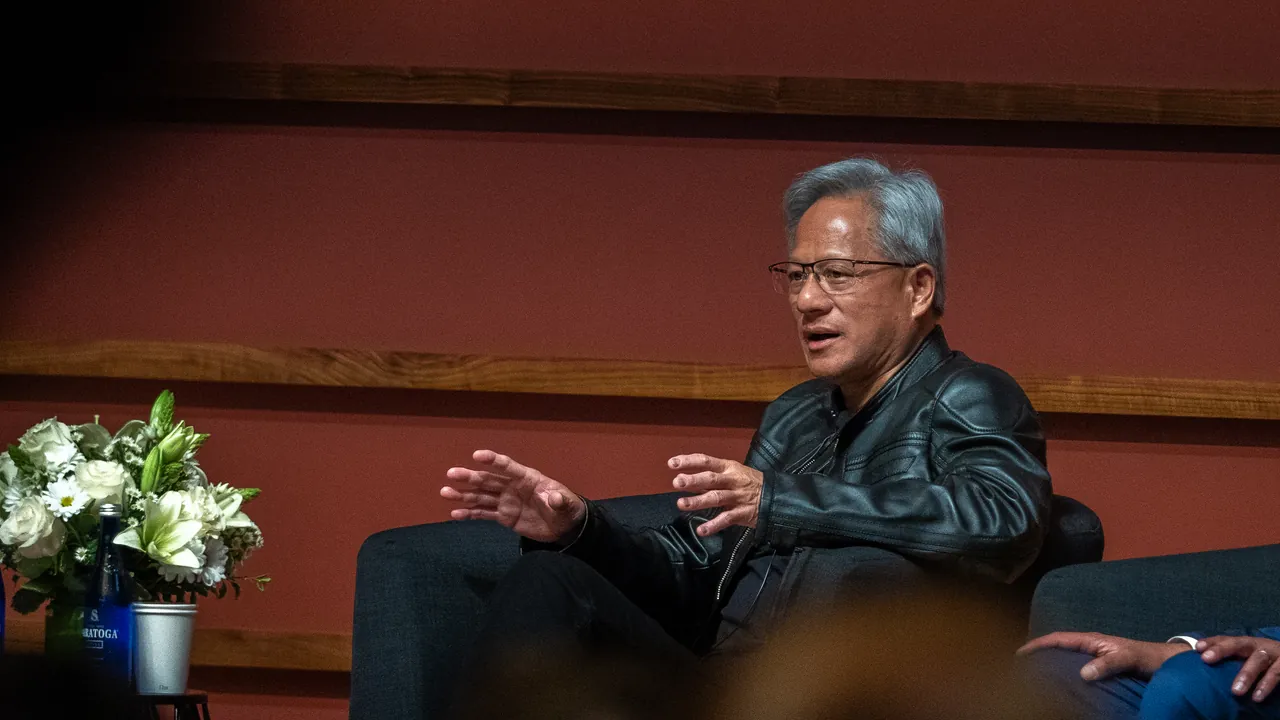
Founded in 1993 by Jensen Huang, Chris Malachowsky, and Curtis Priem at a Denny's diner in California, Nvidia initially aimed to develop graphics acceleration chips for computer games. Following a near-bankruptcy after its first chip launch in 1995, the company introduced the GeForce in 1999, establishing an industry standard. The defining turning point arrived in 2006 when Huang defied his board of directors and shareholders by championing the CUDA software ecosystem. This move opened parallel processors to researchers and universities, enabling the foundational AlexNet deep learning breakthrough by Geoffrey Hinton, Alex Krizhevsky, and Israeli doctoral student Ilya Sutskever from the University of Toronto. This infrastructure laid the groundwork for the global artificial intelligence revolution, cementing Nvidia's competitive moat through proprietary software libraries.
Over the subsequent decades, Nvidia transformed from a graphics card manufacturer into the central engine of global cloud and artificial intelligence infrastructure, supplying servers to industry leaders including OpenAI, Anthropic, Google, Microsoft, Meta Platforms, and SpaceX. To secure perpetual demand, Huang engineered a circular economy model. Nvidia invested and loaned profits to AI model developers, computer manufacturers like Intel and Dell, and data center operators in exchange for guaranteed chip purchases. This exposure was valued at 164.5 billion dollars, with critics like Elon Musk suggesting the true volume of handshake agreements was considerably higher. These aggressive maneuvers propelled Nvidia past a market capitalization of five trillion dollars, before compounding scandals triggered a massive sell-off that erased approximately two trillion dollars in value and allowed Apple to reclaim the top spot in market capitalization.
The leadership crisis surrounding Huang's departure stemmed from a convergence of geopolitical security investigations, conflicts of interest, and severe organizational governance failures. U.S. intelligence agencies uncovered evidence regarding Huang's romantic relationship with Alice Huang, an individual suspected of acting as an operative for Chinese intelligence. She maintained ties to the board of Singapore-based Mega Speed, a firm implicated in acquiring and smuggling restricted Nvidia accelerators into mainland China. Concurrently, investigators revealed unauthorized server shipments routed through Taiwan, triggering friction within the U.S. administration between U.S. Secretary of the Treasury Scott Bessent and Secretary of Commerce Howard Lutnick over regulatory enforcement and allegations that Nvidia obstructed federal oversight. Meanwhile, reports indicated Huang donated 25 million dollars toward the renovation of Donald Trump's new ballroom, drawing scrutiny regarding policy exemptions for H200 chip exports to China.
Personal Scandals and Corporate Culture
On a personal level, Huang issued a public apology regarding marital infidelity, but investigative reports soon highlighted additional workplace relationships with direct subordinates, including Chief Health Officer Kimberly Powell. Simultaneously, media accounts detailed severe verbal harassment allegations involving Huang and his daughter Madison directed at corporate executives and employees, including senior vice president Jay Puri. The tumultuous departure left the corporate structure fractured, prompting an intense leadership succession battle as Chief Financial Officer Colette Kress stepped in as interim chief executive officer.
Ramifications for the Israeli High-Tech Ecosystem
The leadership shakeup carries profound implications for Israel, a nation Huang frequently designated as Nvidia's second home. Following his initial visit in 2017 and the multi-billion-dollar acquisition of Mellanox in 2019 for 6.9 billion dollars, Nvidia integrated deeply into the Israeli economy. Its local workforce expanded from 20 employees to 6,000, accompanied by the acquisition of Run:ai for approximately 700 million dollars, venture investments in AI21 Labs and Decart, the deployment of the 500 million dollar Israel-1 supercomputer, and plans for a massive campus near Kiryat Tiv'on. Analysts estimate that Israeli intellectual property exports surged from 9.3 billion to 16 billion dollars between 2024 and 2025, driven largely by Mellanox communications technology. Furthermore, Huang demonstrated personal commitment following the October 7 massacre by supporting the family of kidnapped employee Avinatan Or, raising 15 million dollars for humanitarian aid alongside 15,000 warm meals for displaced citizens, and personally meeting Or following his release from captivity in 2025.
The Succession Battle and Future Outlook
As Nvidia navigates its post-Huang era, the succession battle remains wide open between internal contenders and external restructuring demands. A petition demanding Huang's reinstatement garnered nearly 200,000 signatures, backed by figures such as Elon Musk and 5,600 Nvidia employees, with Huang reportedly establishing a support war room alongside allies. Conversely, Treasury Secretary Bessent has advocated for sweeping governance reforms and the appointment of an external chief executive officer. Prominent candidates under consideration include Arm Chief Executive Officer Rene Haas and senior Nvidia executive Ian Buck, alongside internal and regional figures such as Colette Kress, along with Israeli tech leaders Johnny Srouji and Michael Kagan. Industry observers compare the transition to Apple's shift from Steve Jobs to Tim Cook, emphasizing that while Nvidia was built around a singular visionary, its enduring success ultimately relies on thousands of elite engineers and its deep-rooted partnerships in hubs like Israel.