Forgotten Medieval Poem Note Leads Researchers to Lost City in Mongolia
A forgotten 13th-century poetry note has led researchers to a fortified site in Mongolia, potentially uncovering Bilge Khagan's lost 8th-century palace city.
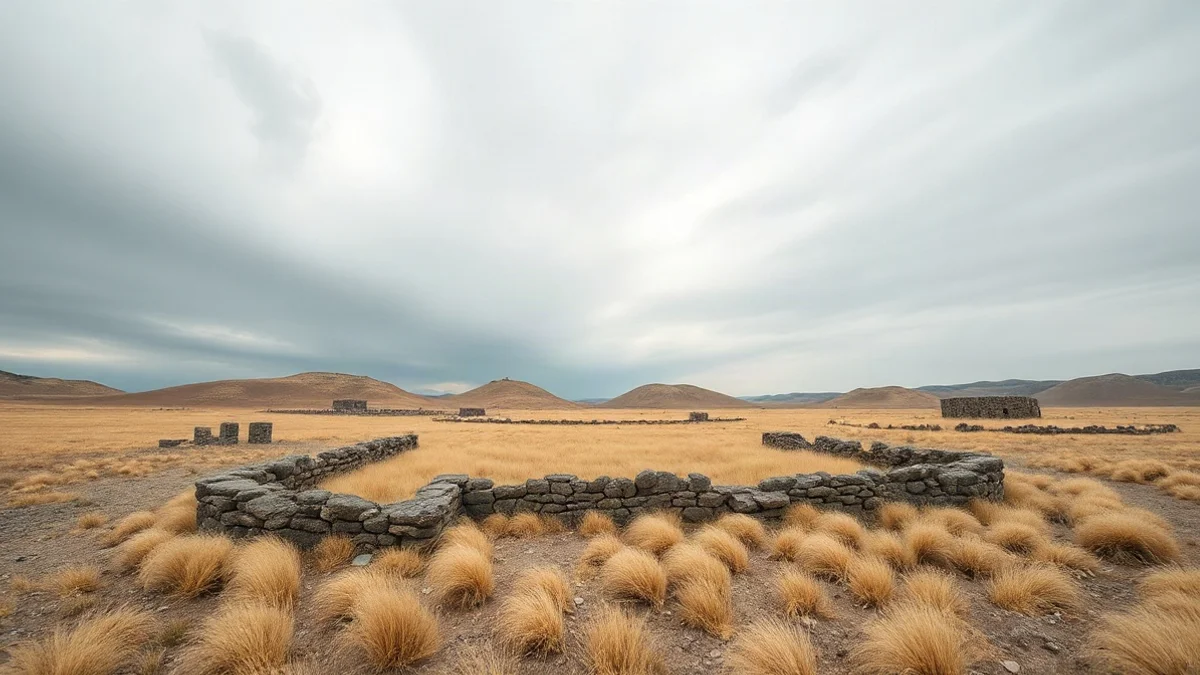
A forgotten marginal note in a 13th-century medieval Chinese poetry collection has guided researchers to a fortified archaeological site in central Mongolia. Scientists believe the site may contain the long-lost palace city of Bilge Khagan, an 8th-century ruler of the ancient Turkic Khaganate. This discovery could reshape established historical assumptions regarding urban life among early nomadic Turkic populations.
The Medieval Poetry Clue and Satellite Analysis
The investigation originated within the poetry anthology compiled by Yelü Zhu, a Khitan statesman and scholar who served during the Mongol Empire. Yelü Zhu was the son of Yelü Chucai, an influential advisor to Genghis Khan. While examining the collection, Professor Görhan Kirilen of Ankara University identified an explanatory annotation attached to a poem about Karakorum. The note described the ruins of Bilge Khagan's palace city and positioned them using two specific geographic references: seventy li northwest of Karakorum and seventy li southwest of the Kul Tigin monument.
Applying the ancient Chinese unit of measurement where one li equals approximately five00 meters, the researchers calculated a distance of roughly thirty-five kilometers from each landmark. Kirilen and Associate Professor Hayrettin İhsan Erkoç of Çanakkale Onsekiz Mart University compared these medieval distances with modern satellite maps. The coordinates directed them to an area northeast of the town of Hotont in the Arkhangai Province of Mongolia. Satellite imagery revealed clear outlines of substantial defensive walls, several large structures, and a potential palace building enclosed within the fortifications.
Chronological Challenges and Historical Context
Although the satellite data outlines promising architectural remains, the physical site presents significant chronological hurdles. A Japanese archaeological team that previously surveyed the complex attributed its surface structures to the later medieval period, centuries after the reign of Bilge Khagan. However, archaeologist Ankhchuluun Altangerel of the Mongolian Academy of Sciences suggested that an older Göktürk settlement might lie hidden beneath these later strata. Only systematic archaeological excavations can verify whether such deep cultural layers exist.
Bilge Khagan ruled the Second Turkic Khaganate from 716 to 734 CE, an era commemorated by the Orkhon inscriptions, which stand among the earliest surviving texts in the Turkic language. Generations of historians traditionally characterized the Göktürks as purely pastoral nomads. According to a well-known narrative, Bilge Khagan once abandoned plans to construct a permanent city after his chief advisor warned against sedentary living. Nevertheless, the Orkhon inscriptions themselves explicitly reference fortified locations and administrative centers.
Broadening Perspectives on Turkic Urbanization
Speaking to the press, Erkoç emphasized that the Göktürk society should not be viewed through a rigid, single-lifestyle lens. Alongside economic mobility, permanent settlements likely served crucial administrative, military, and residential functions. Archaeological findings across Central Asia already support this multifaceted view, exemplified by the 1,400-year-old Kalzyr settlement in Kazakhstan, which dates to the sixth and seventh centuries and spans over twenty-five hectares.
While researchers historically attributed early Turkic urbanization primarily to the later Uyghur Khaganate, confirming the existence of Bilge Khagan's palace city through future digs would provide definitive evidence of permanent political centers during the earlier Göktürk era. This potential breakthrough highlights the complex socioeconomic structures that sustained major imperial powers in medieval Central Asia.