Mladenov reveals: agreements with Netanyahu, the demand from Hamas, and the dispute with Israel
The CEO of the Peace Council shed light on behind-the-scenes contacts to promote the Trump plan. According to him, an agreement was reached with the Prime Minister on the process of handing over weapons and establishing monitoring mechanisms. Alongside criticism of Israel, he clarified that Hamas is required to hand over all types of weapons: "without any gray area."
The speech by the CEO of the Peace Council, Nickolay Mladenov, at the Security Council the day before yesterday (Tuesday) was enlightening and shed light on much of what happened behind the scenes in the contacts to promote the Trump peace plan. And not everything that emerges from his words will be pleasant to Israeli ears.
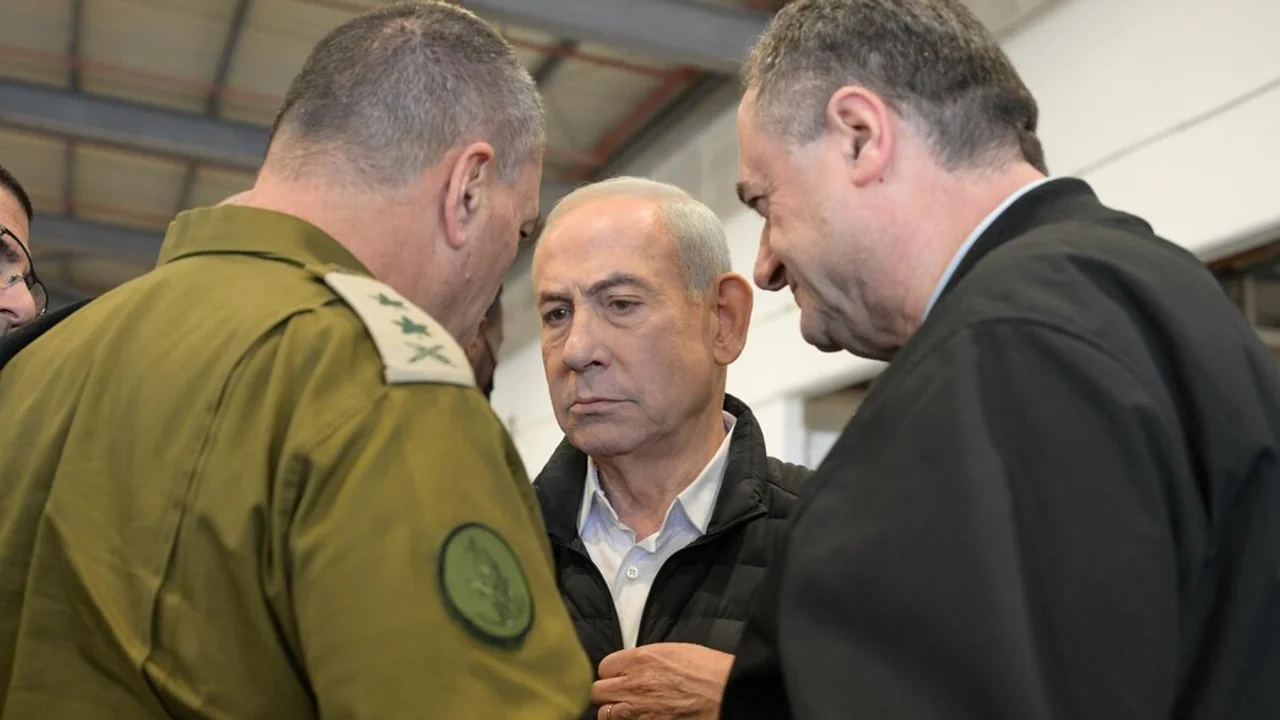
Mladenov reveals that Israel was not required to agree to the 15-point plan or sign it. The plan was signed between the Peace Council and Hamas, but according to him, Jerusalem actually agreed to promote it. Thus, he said that in a meeting with Prime Minister Netanyahu last week, agreements were reached on the process of handing over the weapons of Hamas and terrorist organizations and on establishing monitoring and control mechanisms for the process. Moreover, according to Mladenov, some of the mechanisms have already been established and are operating, including a mechanism for resolving problems and checking complaints from the parties on the ground.
In his remarks, Mladenov criticized Israel and the strikes in Gaza. "Palestinian civilians continue to be killed, and the ceasefire is in danger. I wonder, will another strike on a Hamas weapons depot prevent it from continuing to advance its military plans? The answer is that it only delays the disarmament process," he said.
Mladenov demanded that Israel and Hamas comply with all the terms of the Sharm el-Sheikh agreement. From Israel's perspective, this means a full ceasefire and basing itself on the yellow line and not beyond it. He even explicitly demanded an end to the strikes, unless it is an immediate threat from Hamas.
Here lies one of the central points of contention between the Peace Council and Israel. In Jerusalem, they point out that Hamas continues to violate the terms of the ceasefire and prepare for attacks and terrorist activities, and therefore Israel is acting against it firmly. On the other hand, Mladenov demanded that Israeli complaints be transferred to the established inspection mechanism and handled within its framework.
Mladenov also criticized the fact that Israel does not allow, according to him, the entry of equipment in sufficient volume to build shelters for the winter, and warned of the consequences of their absence.
On the other side, the demands from Hamas are no less clear: a full cessation of military activity and preparations for it, the removal of militants from the streets except for civil police personnel, an end to harming Gaza residents who oppose the organization, and the start of preparations for handing over weapons.
According to Mladenov, the agreement that Hamas signed "covers all categories of weapons without exception, without any gray area." That is, the surrender of all means of warfare, from pistols to rockets, as well as the surrender of maps of the tunnels that are supposed to be destroyed.
These things stand in complete contradiction to the statements of Hamas leaders. Hamas spokesman Osama Hamdan explicitly said the day before yesterday that "no one said and not a word was said about handing over weapons. What was agreed upon is only the transfer of heavy weapons to the responsibility of the Palestinian committee (the technocrat government) and under the supervision of the resistance organizations (i.e., Hamas and Islamic Jihad). No non-Palestinian party will be involved in the process. Not a single bullet will leave the Gaza Strip, that is what was agreed upon."
Mladenov also spoke about the agreed rule that there is no timetable, but an execution schedule: the transition to the next stage will take place only after the previous stage is fully completed. The situation he outlined includes a full ceasefire, the cessation of Hamas's military activity, and the creation of conditions for the entry of the multinational force, the ISF, and for the entry of the Palestinian National Committee - the technocrat government that is supposed to take over civil rule.
Mladenov warned that this is the only possible solution at the current stage and that all other alternatives are much worse. "If this fails, there will be no more possibility to fix it," he warned. Bottom line, the current situation is one of waiting for the conditions to ripen for the transition to the next stage. According to the CEO of the Peace Council, both Hamas, in its actions, and Israel, in its responses, are responsible for the delay in progress.
Mladenov also said something else interesting. The veteran diplomat determined what the world, and especially leaders in the West, have avoided explicitly defining for years: the main culprit for the situation in Gaza is the rule of extremists over the last 20 years, i.e., Hamas, and the preference for armed struggle over civil development.
Israel, on the other hand, Mladenov accused of a policy designed to deal with the security threat from Hamas, but which did not seek a fundamental solution to the problem. There is quite a bit of hypocrisy here: a fundamental solution would have required the overthrow of Hamas, and that could only have been achieved through total war. Over the years, the world has opposed almost every Israeli military action in Gaza, and therefore casting this responsibility on Israel is puzzling and is likely intended to present a balanced picture.