Secrets of Michael Jackson's Legendary 1993 Super Bowl Halftime Show Revealed
Discover the inside story of Michael Jackson's legendary 1993 Super Bowl halftime show, from tough negotiations and unusual demands to the production that changed television history.
More than 33 years after Michael Jackson took the stage for the Super Bowl halftime show in 1993, the behind-the-scenes stories of one of the most influential performances in television history continue to emerge. Jim Steeg, who supervised 26 Super Bowl games in a senior NFL role and earned the nickname "Mr. Super Bowl," detailed the intense negotiations with the King of Pop, his extraordinary demands, and how a single groundbreaking event forever transformed the status of the halftime intermission.
Until then, the halftime break was primarily viewed as a routine interval between two halves of football. A major turning point arrived a year earlier when the Fox network broadcast a special episode of "In Living Color" in direct competition with the Super Bowl halftime show, causing a sharp drop in the game's viewership ratings. Recognizing the urgent need to stage an unignorable spectacle, Steeg collaborated with Radio City Music Hall production executives, and the bold idea to invite Jackson was born.
The initial challenge required explaining to the pop star and his entourage what the Super Bowl actually was. In March 1992, organizers met with manager Sandy Gallin and presented a detailed briefing, followed a month later by a meeting with Jackson himself, who displayed genuine curiosity. "Who plays in it? What is it?" he asked. Upon learning that the broadcast would reach roughly 100 million viewers in the United States and air in more than 100 countries, Jackson grew fascinated by the prospect of tapping into an entirely new audience.
Negotiating Song Choices and Demands
Reaching an agreement, however, was far from straightforward. Jackson, who viewed the platform as a unique opportunity to promote his Heal the World Foundation, insisted on anchoring the performance around his humanitarian anthem "Heal the World" while filling the field with children. Initially, he even resisted performing his classic hits, telling organizers that "Billie Jean" was just a song with no greater meaning and that everything had to revolve around his new global message. NFL executives insisted that the audience expected familiar hits, eventually persuading him to include "Billie Jean" and "Black or White."
Other demands tested the patience of organizers, including a request by Jackson to delay kickoff by three hours so he could perform in total darkness. Organizers flatly refused, noting that such a delay would push the broadcast past midnight in large parts of the country. They also asked him to tone down his signature crotch-grab dance moves, an instruction Jackson simply ignored. Steeg noted in his book that post-show complaints included letters from viewers who had meticulously tallied the exact number of times he performed the gesture.
Financial arrangements also required unprecedented compromise. When Jackson's manager demanded one million dollars for the performance, NFL officials maintained their policy of covering production expenses only. The impasse was resolved by securing corporate sponsorship for the first time, with Frito-Lay contributing 500,000 dollars toward the production, which exceeded two million dollars, while granting Jackson 30 minutes of airtime to discuss his charitable foundation. Organizers assured team owners that the league's out-of-pocket costs would not exceed the previous year's 1.5 million dollar budget.
Perfectionism on the Rose Bowl Stage
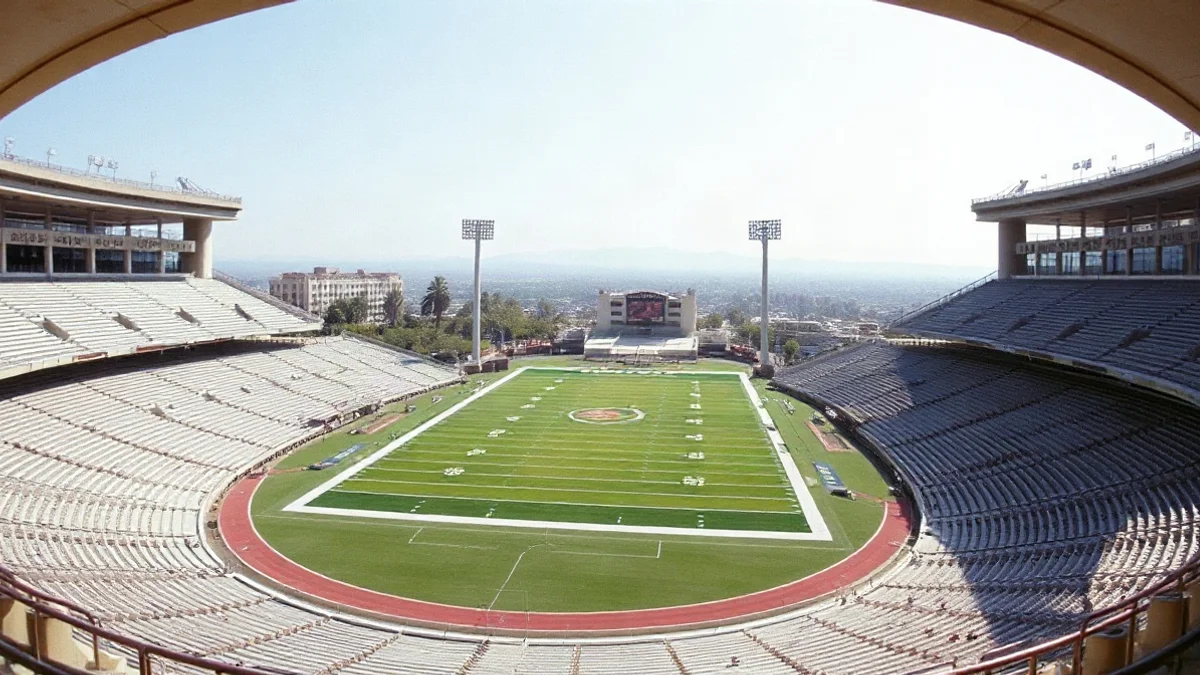
During rehearsals, it became immediately clear that organizers were working with an extraordinary perfectionist. A massive tent was erected outside the Rose Bowl containing a replica of the stage, allowing Jackson to rehearse every detail over three days alongside director Don Mischer with a meticulous focus on camera angles. His pre-game press conference also signaled a cultural shift, drawing entertainment journalists in droves alongside traditional sports reporters.
When showtime arrived, two stunt doubles appeared on the massive stadium screens before Jackson launched himself out of the stage at the center of the field amid pyrotechnic effects. He stood completely motionless for one minute and 17 seconds as the 100,000-strong crowd waited in anticipation. Only after tilting his head and removing his sunglasses did the music start. He opened with "Jam," transitioned into "Billie Jean" and "Black or White," and concluded with a massive visual spectacle around "Heal the World" featuring some 3,000 children.
As Jackson sang the finale, children in traditional attire flooded the stage alongside a massive choir, and a giant inflatable globe rose in the center. The result far exceeded applause: for the first time in Super Bowl history, television ratings for the halftime show surpassed those of the preceding game. Steeg noted that even Dallas Cowboys players Charles Haley and Michael Irvin peeked out from the tunnel to watch, cementing the transition of the Super Bowl from a sporting event with entertainment into a massive television spectacle in its own right.
Legacy and Upcoming Documentary
Steeg also reflected on the poignant irony that the performance marked one of Jackson's final major US appearances before the first allegations of child sexual abuse surfaced later that year. What felt at the time like the dawn of a new era in American entertainment also concluded a chapter in the singer's public standing. Recently, Hulu and ESPN announced that a documentary film titled "Spectacle: Michael Jackson at the Super Bowl" will air this coming February, produced by Skydance Sports and directed by Bao Nguyen to chronicle the historic 1993 halftime show.