Hitler's Knife: Inside the History of the Deadliest World War II Fighter
Explore the lethal history of the German Messerschmitt Bf 109, World War II's deadliest fighter aircraft, its engineering triumphs, and its postwar service in Israel.
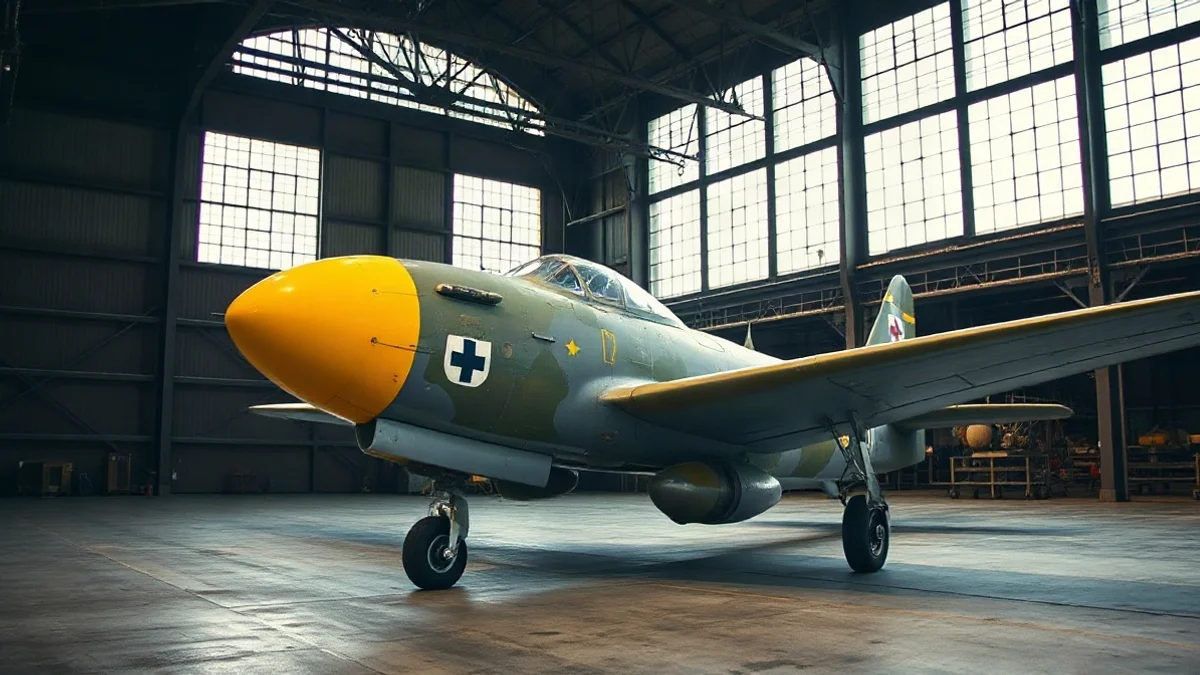
During World War II, combat aircraft left an indelible mark on aviation history, but none matched the deadliness and legendary status of the German Messerschmitt Bf 109. Spearheading Nazi Germany's territorial expansion across Europe, Bf 109 pilots accumulated between 15,000 and 20,000 aerial victories—a staggering figure roughly equivalent to half of all operational military aircraft fleets worldwide today. From France and North Africa to the vast expanses of the Eastern Front, the aircraft's distinctive yellow nose and devastating cannon fire struck fear into allied forces. Elite flying aces achieved unprecedented records aboard the Bf 109, most notably Erich Hartmann, who scored an astonishing 352 individual aerial victories.
The genesis of this lethal aerial predator traces back to a bitter personal rivalry between two key figures: aeronautical genius Willy Messerschmitt and Reich Aviation Minister Erhard Milch. Their animosity originated in the 1920s during a failed commercial airliner project at Bavarian Aircraft Works that resulted in financial ruin and reputational damage for Milch, who vowed lifelong retribution. When the Nazi regime launched a competitive tender in 1933 for a state-of-the-art fighter to anchor its military ambitions, established manufacturers submitted designs deeply rooted in World War I concepts featuring open cockpits and fixed landing gear. Desperate to outmaneuver Milch's oversight and secure the contract, Messerschmitt unveiled a radically futuristic prototype: the Bf 109. Sleek, exceptionally narrow, lightweight, and agile, the new fighter climbed rapidly, dived like a meteor, and easily outperformed every rival in speed and maneuverability, forcing Milch to approve its adoption.
Engineering Brilliance and Structural Flaws
The Bf 109 featured a powerful, reliable inverted-V Daimler-Benz engine paired with an innovative weaponry configuration. Instead of wing-mounted armaments that compromised precision and range, the German fighter housed two machine guns above the engine cowl and a 20mm cannon firing directly through the propeller hub, ensuring pinpoint accuracy at extended ranges. Additional engineering marvels included automatic leading-edge slats that deployed to enhance control during sharp low-speed dogfights. However, these performance gains came at the expense of pilot safety and operational handling. The cockpit was extremely cramped, severely restricting rear visibility and emergency bailout procedures. Furthermore, the narrow landing gear track made the aircraft notoriously prone to ground loops during takeoff and landing. Veteran pilots frequently compared flying the Bf 109 to riding an aggressive, unpredictable racehorse.
The aircraft proved its combat effectiveness during the 1936 Spanish Civil War, easily outmatching obsolete adversaries. This dominance repeated during the 1939 invasion of Poland, where enemy pilots found themselves outmatched by the fighter's superior speed and firepower. However, the tide began to shift during the 1940 Battle of Britain. Escorting bombers across the English Channel, Bf 109s encountered the British Supermarine Spitfire. While closely matched in performance, the German fighters operated under severe fuel constraints, leaving pilots with only about twenty minutes of combat time over British territory before needing to turn back across the sea.
The Eastern Front and Heavy Bomber Interception
The vast majority of Bf 109 victories were recorded on the Eastern Front, where Soviet forces operated numerically superior yet technologically inferior aircraft lacking tactical radios. The German tactical advantage of four-ship formations split into flexible pairs allowed them to systematically dismantle Soviet formations. By the summer of 1942, as Allied heavy strategic bombing campaigns intensified, Bf 109 units transitioned to intercepting massive American B-17 and B-24 bomber formations. Operating without long-range escort fighters in the early years of the campaign, German pilots launched daring head-on and vertical diving attacks against the heavily armed bombers, inflicting severe losses despite the defensive box formations.
As the war progressed, the introduction of advanced Allied escort fighters, most notably the North American P-51 Mustang, eroded German aerial superiority. Unlike Allied pilots who rotated home after completing designated combat tours to train recruits, German aircrews fought continuously until death or severe injury, resulting in extreme combat fatigue. Fuel shortages and relentless bombing of industrial infrastructure ultimately crippled the Luftwaffe. By the war's end, approximately 34,000 Messerschmitt 109 aircraft of various experimental and operational variants had been produced worldwide.
Postwar Legacy and Service in Israel
Surviving airframes found new life in postwar international air forces, with Spanish-built variants remaining operational until 1965. Notably, a Czech-built derivative designated the Avia S-199 was acquired by Israel during the War of Independence, serving as the newly established IDF's inaugural fighter aircraft. Nicknamed the Knife, the aircraft proved notoriously unstable and difficult to pilot, resulting in numerous training accidents. Today, surviving Messerschmitt Bf 109 fighters are preserved in international aviation museums, with roughly 16 airframes remaining airworthy and performing at global airshows.