Maya Bay Reopens to Massive Crowds and Heavy Overcrowding Concerns
Maya Bay in Thailand reopened after its annual closure, sparking intense debate as thousands of tourists flooded the narrow beach and piers, creating severe overtourism bottlenecks.
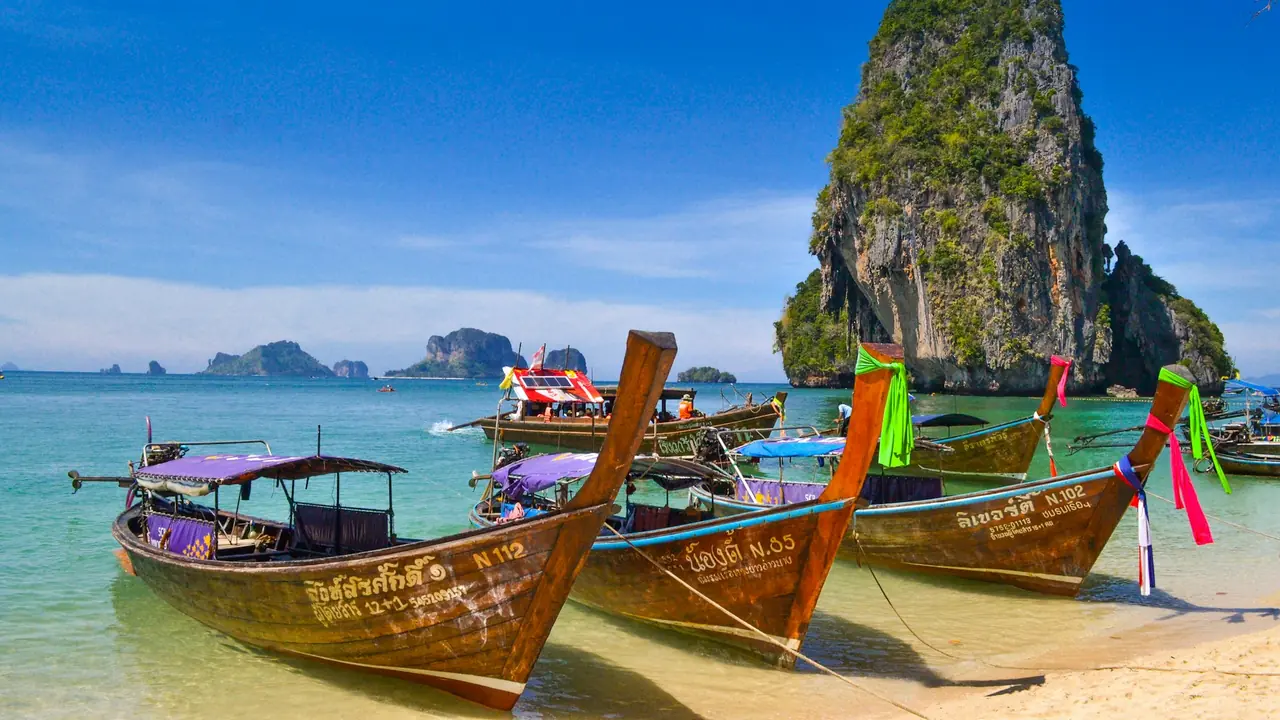
Maya Bay in Thailand's Krabi province has reopened to the public following its traditional two-month annual closure, but the picturesque destination was immediately overwhelmed by massive crowds. Recent footage from the site reveals thousands of visitors crammed shoulder-to-shoulder onto the narrow beachfront and a floating walkway leading to the pier, resembling a rush-hour train station rather than an exotic tropical getaway.
Tourists wearing matching group tour shirts were filmed shuffling at a frustratingly slow pace along the congested wooden pier and a narrow staircase emerging from the water. "It was so crowded that for a while we simply could not move, but eventually we managed to get through it and enjoy the island," recounted tourist Kittitra Duanghai, who visited the location with a group of friends.
From Cinematic Gem to Ecological Strain
Situated on the uninhabited island of Ko Phi Phi Leh within the Hat Noppharat Thara-Mu Ko Phi Phi National Park, Maya Bay is renowned as one of Southeast Asia's most spectacular natural wonders. The bay is enclosed by dramatic limestone cliffs rising roughly 100 meters, forming a secluded natural lagoon featuring soft white sand and deep turquoise waters.
The location remained a relatively well-kept secret among backpackers until 2000, when it served as the primary filming site for the cult movie The Beach, starring Leonardo DiCaprio. Following the film's release, the bay transformed into a pilgrimage site for millions of global tourists seeking to recreate cinematic moments and photograph the ultimate vacation backdrop. At its peak prior to regulatory intervention, the small beach absorbed approximately 5,000 visitors daily, while motorboats anchored directly along the shoreline and severely degraded local coral reefs.
Strict Conservation Rules and Public Backlash
Driven by severe ecological damage, Thailand closed the bay for over three years between 2018 and 2022 for rehabilitation. Authorities have since enforced strict regulations, closing the destination annually from August through October to allow the sensitive ecosystem to recover and to address hazardous monsoon sea conditions. Furthermore, swimming is strictly prohibited, and visitors are permitted to arrive exclusively via a designated rear pier to protect recovering corals and returning reef sharks.
Despite these restrictions, recent social media videos capturing extreme congestion have sparked fierce debate. "Too expensive and too crowded. Hell on earth," one disgruntled visitor wrote online. Conversely, other travelers defended the management structure: "We visited Maya Bay today. Yes, it was crowded, but everything was well-organized. The queue moved very fast, and we were allowed to stay on the beach for about half an hour."
Overtourism Beyond Thailand
This phenomenon of natural landmarks falling victim to their own popularity extends far beyond Southeast Asia. Similar troubling scenes emerged during the peak summer season at the famous Balos beach located on the northwestern tip of Crete in Greece. Balos, celebrated for its shallow lagoon, pinkish sand, and crystal-clear waters connecting the island to the Gramvousa peninsula, draws massive crowds every year.
Footage from Balos showed thousands of holidaymakers packed tightly along the narrow lagoon shoreline as large excursion vessels continuously unloaded more passengers. The most severe bottleneck developed at the narrow metal ferry pier, where crowds attempting to board and disembark collided in total chaos.