Historic British Mandate Structures Across Israel Transform Into Leisure Hubs
British Mandate-era military sites and structures across Israel are being transformed into cafes, restaurants, and tourist attractions, blending history with modern urban renewal.
Eighty years after the historic United Nations vote on the partition plan, British Mandate-era structures across Israel are undergoing a massive transformation. Former military camps, corrugated iron huts, railway tunnels, and port hangars are being revitalized into bustling cafes, restaurants, and tourism hubs, seamlessly blending historical preservation with modern leisure.
Petah Tikva: Sirkin Camp's Nissen Hut
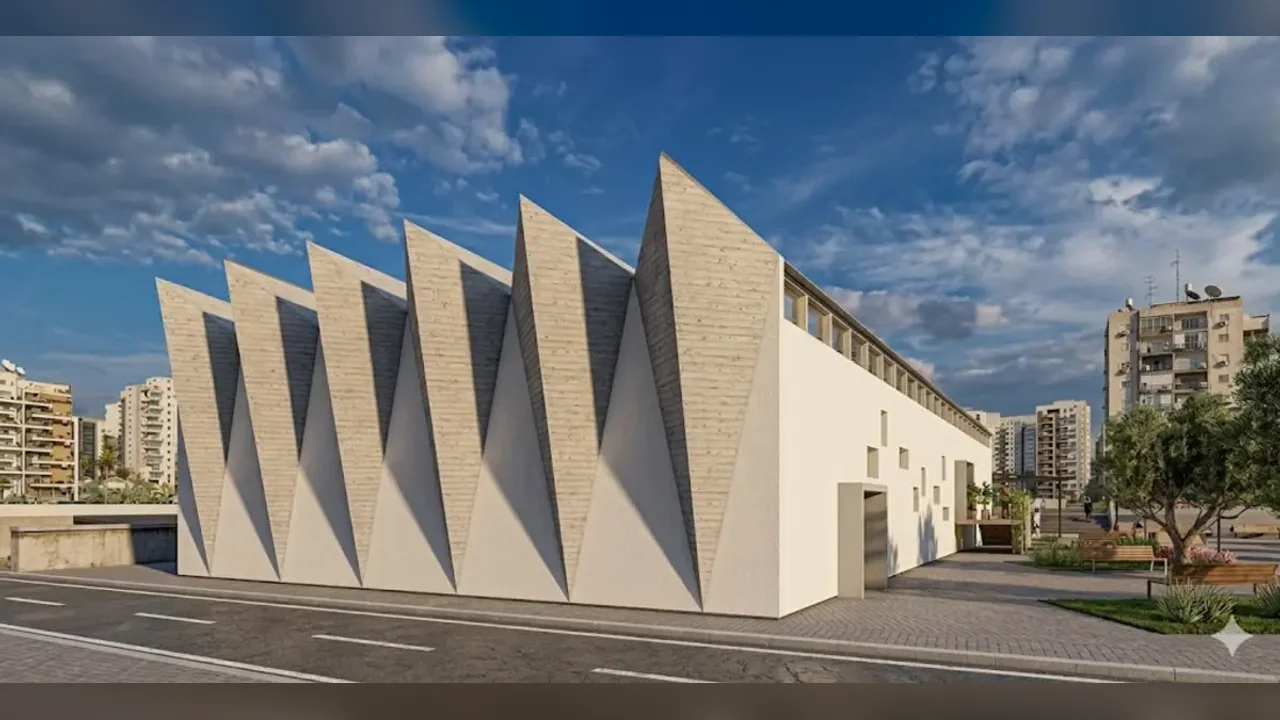
In Petah Tikva, the newly developing Tzeremet neighborhood sits on the former grounds of Sirkin Camp, which was established in 1941 as a British airfield before later serving the Israeli Air Force and elite reconnaissance units. At the heart of this new urban park, a rare 'Nissen hut'—a curved, barrel-shaped corrugated iron structure developed by the British Army during World War I—is being meticulously restored.
Spearheaded by the Petah Tikva municipality and the municipal development corporation, the restored hut is scheduled to open in 2027 as a cafe-restaurant. The comprehensive preservation master plan also encompasses the old control tower, aircraft hangars, and trainee living quarters, which will be repurposed into entertainment venues alongside heritage sites dedicated to the elite units that once operated at the base.
Beersheba: Culinary Incentives in the Old City
In Beersheba, municipal authorities are breathing new life into the Negev capital's Mandate-era heritage. The city and its business development corporation, Yaadim, have issued a tender to establish a cafe and patisserie within a 150-square-meter preserved upscale Mandate-period residence on HaHagana Street in the Old City.
To attract culinary entrepreneurs, the municipality is offering a robust incentive package that includes up to 2 million shekels in preservation and construction subsidies, full financing for architectural planning and a protected shelter, a two-year rent exemption, and a property tax discount of up to 70%.
Rosh HaNikra: Historic Railway Tunnels
Visitors to Rosh HaNikra walk through a pivotal engineering project dating back to World War II. Excavated in 1942 by the South African Engineering Corps, the tunnel was part of a railway line connecting Haifa to Beirut and Tripoli for troop and supply logistics. Although the cross-border bridge was blown up during the War of Independence, the southern tunnel now serves as the main entrance to the tourist site.
Following an extended closure due to the ongoing conflict, the site has reopened to the public, offering visitors historical multimedia presentations inside the tunnels alongside the cliffside HaTzur chef restaurant overlooking the Mediterranean Sea.
Tel Aviv: From Military Hangars to Public Spaces
Tel Aviv offers long-standing examples of successful Mandate-era adaptive reuse. The Tel Aviv Port, established in 1938 following the Arab strike at the port of Jaffa and subsequently commandeered by the British Royal Navy during World War II, has evolved into one of the country's premier commercial and cultural waterfront districts.
Nearby, the Sarona compound—primarily recognized as a Templer colony—served under British administration as a detention camp and later as a fortified military headquarters targeted by the pre-state Lehi and Palmach underground militias. Today, those restored British military quarters house vibrant restaurants and a bustling food market.
Meanwhile, more than 33 years after its opening, the Tel Aviv-Yafo municipality is advancing a major infrastructure initiative to dismantle the bridges of the New Central Bus Station, aiming to rehabilitate public spaces and alleviate environmental burdens in the city's southern neighborhoods. The demolition work will begin in January and run through April 2027, starting with the western bridge before proceeding to the northern and southern access arms.
This project represents the initial phase of a broader master plan to curtail central bus traffic and decentralize transit operations. The strategy entails transitioning to electric bus fleets, converting HaHeres Street into a conventional urban corridor, and relocating the majority of bus operations to an alternative terminal at Mikve Israel by 2032 and subsequently to the Ben Zvi complex in Holon, while the central station continues partial operations until alternative facilities are fully completed.