Leviathan Gas Export Dispute Sparks Debate Over Israel Energy Security
The cancellation of a major gas supply deal from the Leviathan reservoir to Dalia Power Energies has renewed public debate over balancing natural gas exports with domestic energy security and consumer pricing.
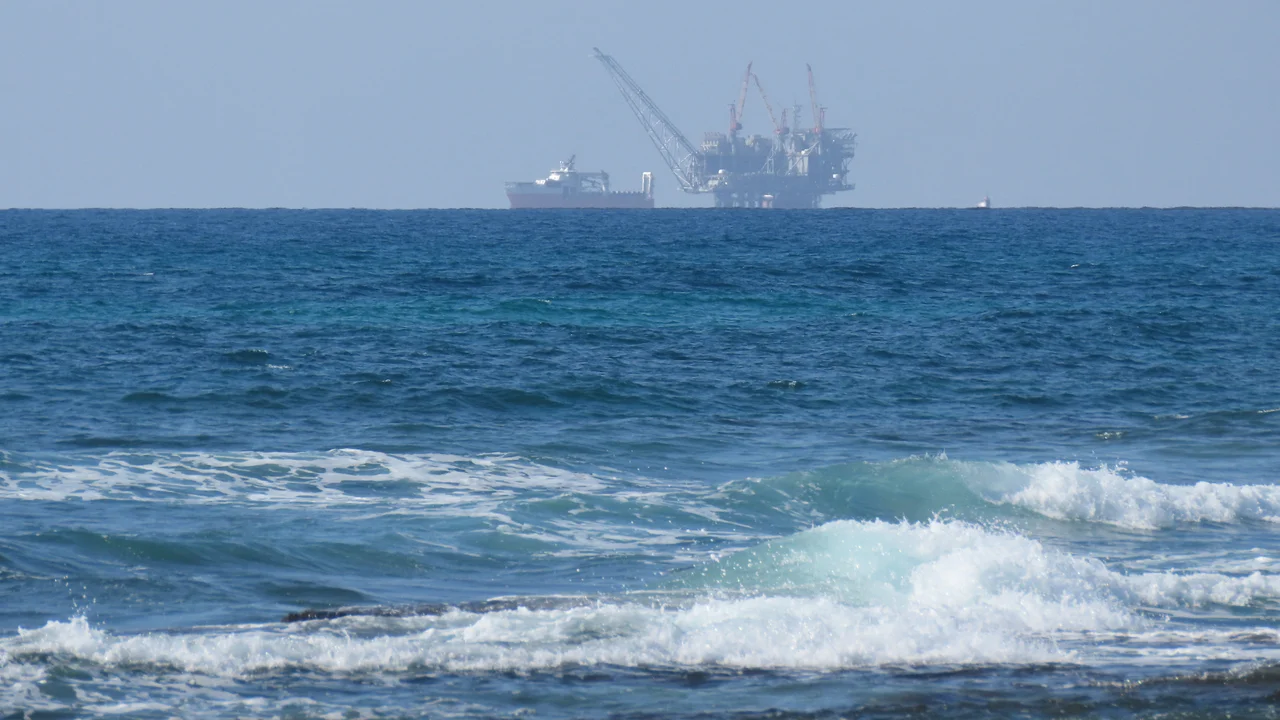
The decision by NewMed Energy to cancel a major gas supply agreement from the Leviathan reservoir to Dalia Power Energies has reignited a fierce debate over balancing state welfare against the commercial interests of natural gas conglomerates. While the Electricity Authority chairman voiced sharp criticism of the move, the Ministry of Energy remained conspicuously silent.
Commercial Drivers and Global Market Pressures
The fundamental business driver behind expanding exports is straightforward: domestic gas prices hover around 4.5 dollars per million BTU, whereas global market prices exceed 7 dollars. However, narrow commercial considerations fail to account for long-term energy security, future electricity costs, and the critical need to preserve reserves for coming generations. The Economist has previously warned against severe global shortages of liquefied natural gas, price volatility, and geopolitical vulnerability. The war in Ukraine, the cessation of Russian pipeline supplies, Middle Eastern tensions, and seasonal winter demand have turned global markets into a volatile pricing rollercoaster.
Because liquefied natural gas facilities are expensive and complex, output cannot be scaled up rapidly, meaning any surge in global demand immediately translates into higher prices. This reality amplifies the temptation for domestic gas producers to redirect more volume toward lucrative foreign markets. An energy ministry committee previously proposed interim recommendations capping export contracts below daily production capacity to guarantee domestic availability and force reservoir operators to compete for local clients.
The Leviathan-Dalia Dispute and Market Competition
Against this backdrop, the termination of the agreement between the Leviathan partnership and Dalia Power Energies stands out. Signed in May, the contract was designed to supply gas to Dalia's power plants starting in 2030, with an estimated value of approximately 6.7 billion dollars. Controlling stakeholders in Leviathan, namely NewMed Energy and Ratio Energies, argued that "suspensive conditions were not met," even though the Israel Competition Authority ultimately approved the transaction without conditions following prolonged regulatory delays.
The Leviathan reservoir has already secured export permits allowing it to send 131 billion cubic meters of gas to Egypt, a volume equivalent to roughly eight years of domestic consumption or 12 to 16 percent of proven reserves. When reservoir operators can sell massive quantities abroad at attractive prices, their incentive to offer competitive terms to domestic power producers drops significantly, weakening the bargaining power of the Israel Electric Corporation and private power stations.
Economic Benefits and Long-Term Risks
Exporting gas offers undeniable advantages, including justifying investments in production and infrastructure, boosting state revenues through taxes and royalties, and strengthening Israel's regional diplomatic standing. Yet these benefits do not negate the imperative to ensure that adequate supplies remain dedicated to the domestic market during routine operations and emergencies. The primary risk lies in eroding competition.
The two largest reservoirs, Tamar and Leviathan, are operated by the American energy giant Chevron, while the Karish reservoir is largely committed to existing contracts. If Leviathan stakeholders prioritize exports, power producers will face dwindling alternatives, and export pricing benchmarks will inevitably dictate domestic negotiations. Over the long term, accelerated gas extraction will deplete reserves faster, while population growth, water desalination, electric vehicles, and data centers continuously drive up local demand. Without new discoveries and rapid expansion of renewable energy and storage, Israel will eventually face costly imports of liquefied gas or alternative fuels.
Policy Measures and Regulatory Oversight
The government has previously established priority frameworks for the domestic market, pricing mechanisms, price caps of roughly 4.7 dollars per million BTU on specific contracts, and options to curtail exports starting in 2032. However, these measures will only succeed if applied to substantial volumes, enforced rigorously, and backed by genuine operational capacity to reroute gas domestically during shortages. Without strict enforcement, consumer protection remains a hollow promise.
Securing Israel's energy future requires mandatory domestic reserves, investments in onshore gas storage, strict antitrust oversight, expanded transmission infrastructure, accelerated deployment of renewables and battery storage, and regular reviews of export permits. Without these safeguards, short-term corporate profits for energy tycoons will inevitably translate into burdensome electricity costs for Israeli consumers.