The safest neighborhood in Israel vs. the most dangerous: "People don't walk around here at night"
The ynet crime index, based on police data analyzed by the Madlan company, found that the South Rothschild neighborhood in Tel Aviv has the highest number of offenses per thousand people - 460.8 - while in the 200 complex in Hod HaSharon the number is 200 times lower. "There is a sense of security for the children, everything here is invested in," said a resident of the neighborhood. In Tel Aviv, a woman who was attacked for no reason said: "She cursed me, shouted, and then poured things on me." And what is happening in your neighborhood? Search and find out.
Two ends of one Israeli reality: on one side, the South Rothschild neighborhood in Tel Aviv - a bustling entertainment hub full of businesses that is defined, according to the ynet crime index, as the most dangerous neighborhood in Israel. On the other side, the 200 complex in Hod HaSharon - a pastoral pearl that was crowned in the index as the safest neighborhood in the country. In both neighborhoods live an identical number of residents - 2,704 in South Rothschild compared to 2,657 in the 200 complex in Hod HaSharon - however, that is where the similarity between them ends. We went out to check how the different urban space makes all the difference between dealing with fear on the streets daily and a feeling of almost complete tranquility. Search and find out: what is happening in your neighborhood and city?
Finishing work at 16:00
The South Rothschild area in Tel Aviv has undergone a significant change in recent years. What was once a gray industrial area has become an urban space that attracts shops, designer boutiques, furniture and ceramic design studios, entertainment venues, wine, and music. However, alongside the renewal and the invested shops, there is also another reality. The South Rothschild neighborhood is considered the most dangerous neighborhood in Israel according to the ynet crime index, based on police data analyzed by the Madlan company. No less than 1,246 criminal offenses were committed here in 2025 - a rate of 460.8 per thousand people - and that is still a decrease of about 10% compared to last year. These data bring the neighborhood to the 779th and last place in the safety ranking, into which only neighborhoods with more than 2,500 residents were included. In conversations with those who work and live in the area, a picture emerges of a place where beauty and neglect, entertainment and fear, sometimes coexist just a few meters from each other.
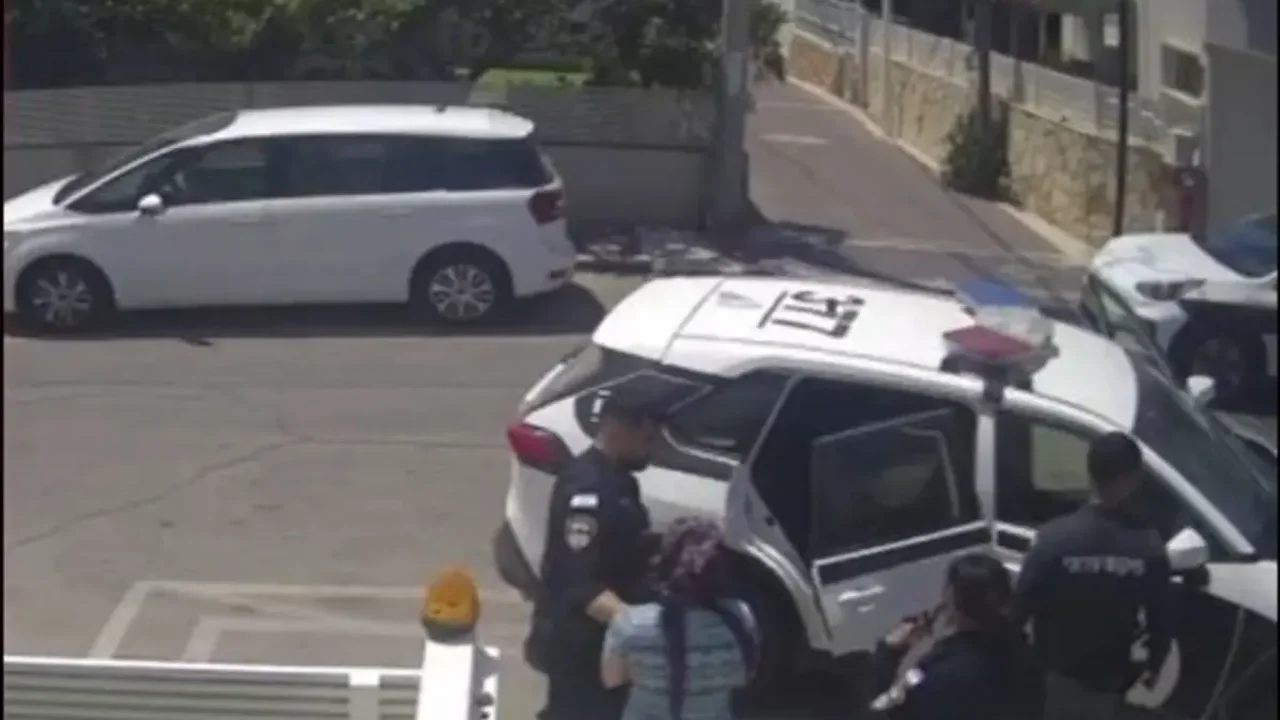
Alona, who works at a hummus place on 7 Levontin Street and has lived in the area for the last two years, knows both of these sides well. According to her, encounters with homeless people are part of the routine. On one of the nights, when she was returning from an outing and walking with her dog in the Allenby and Levontin area, she encountered a woman who began, according to her, to curse her for no reason. "I started to ignore, not to pay attention," she says. However, according to her, the woman continued to follow her, shouted, cursed, and even spat at her. "She just keeps following me, she curses me, starts shouting at me." At a certain stage, after Alona turned towards her, the woman poured on her, according to her, a substance that looked like yogurt and later another drink. Only then, she says, two young people who were in the area intervened and distanced the woman.
Even at a printing house in the area, they had to adapt the business to the reality on the street. Nati, who works there, tells about thefts and attempts to enter the business. He also tells about break-ins into vehicles in the area behind the business and about breaking windows to steal from inside them. Despite this, he emphasizes that during the day he does not feel fear. "At night, people don't walk around here," he says, adding that the employees finish the workday at four.
"The girls go out without worry"
The neighborhood chosen as the safest in Israel for 2025 is the 200 complex in Hod HaSharon. The neighborhood is located in the square between the streets Haim Weizmann, Zalman Shazar, Yitzhak Ben-Zvi, and Hankin. The complex is spread over about 190 dunams, which were previously agricultural land full of citrus orchards. The construction of the complex began in 1990, and its name is derived from the name of the TABA (City Building Plan) that was approved and called BAM/200, which became "complex 200". In the complex, there are about a thousand housing units in low-rise construction and high-rise apartment buildings, between which many trees and squares are scattered on residential streets that do not allow cars to enter them. In the center of the complex is the "Children's Path", in memory of the million and a half children who perished in the Holocaust.
In the whole of 2025, only six offenses were committed in the complex, an average of only 2.3 per thousand people. Shir Gilad, who lives in the complex, told ynet and "Yedioth Ahronoth" that she feels very safe in it. "It is very fun to live here, there is a sense of security for the children who go down to play without problems because there are no roads in the complex." Noa Levy claims that "the security here is excellent, but the prices are high. There is investment here in everything around, there is an internal path, everything is invested in, and there is a complex opposite. Everything is close here, there is a supermarket and Super-Pharm." Her sister, Noa Levy, notes that there is a fun atmosphere in the neighborhood. "I grew up here together with my sister from the beginning of the 2000s, and even when you go down with the dog, there is no fear because everyone already knows each other."
We met Noa Hirsch when she went down for a walk with the dog. She has lived in the neighborhood since 2019, after moving there with her family from Herzliya. "We came here with our three children because we fell in love with the complex. For me as a mother, it is a relief that when the girls go to friends in the complex, I have no worries because there is no road to cross on the way, and I know they are inside the community."