"The driver hit us at 174 km/h. My wife and daughter were killed instantly": Efraim Rimmel on the turning point in his life
Efraim Rimmel tells about the accident in which he lost his wife and baby daughter, coping with paralysis and his son's severe injury, and the hope he found in the depths of the deepest heartbreak. Watch the episode from the program "My Turning Point".
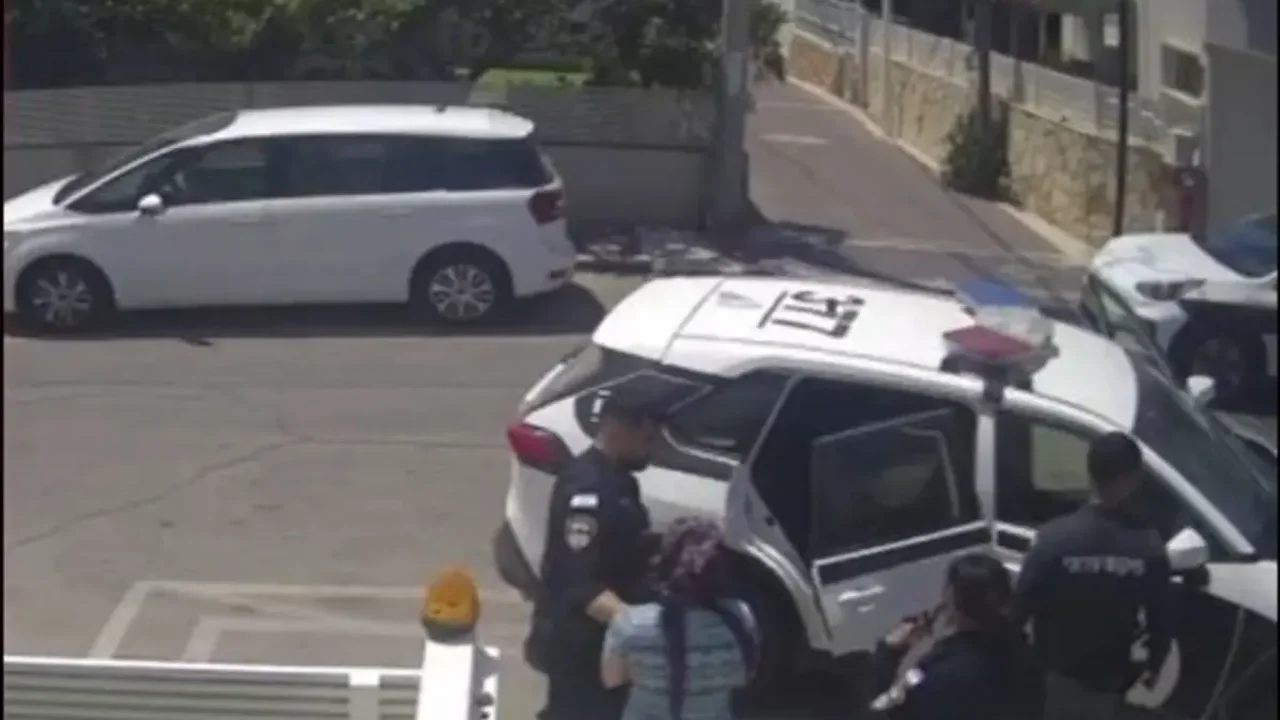
Almost six years ago, Efraim Rimmel was driving with his family from Jerusalem to their home. When the car was stopped at a red light at the Givat Ze'ev junction, near the Ofer camp, a driver who was traveling at a speed of 174 km/h hit them from behind.
"My wife Tzipi and my three-week-old daughter, Noam, were killed instantly," he says.
His son Itai, who was 12 at the time, was critically injured, and Rimmel himself was severely injured and left paralyzed from the middle of his abdomen down.
For two weeks, Rimmel was sedated and intubated at Shaare Zedek Hospital. During this time, the family members had to make a long series of difficult decisions. They took care of the children who remained at home, followed the condition of Itai, who was in intensive care for months, and dealt with the burial of Tzipi and Noam.
Only after he woke up did he begin to understand what had happened.
"The doctor started talking to me, to understand what I understand and what I remember," he recalls. "The next day he started with my injury, moved on to Itai's injury, and basically finished with the loss of Tzipi and Noam."
From that moment on, Rimmel was required to relearn life. To dress, to sit up, to move from the bed to the chair, to shower, and to manage using only his hands. At the same time, he dealt with the uncertainty surrounding Itai's condition and with his three other children, who had lost their mother and sister and were also forced to deal with the prolonged absence of their father and brother.
There is no answer to why this happened
Rimmel says that at first he tried to understand why such a disaster happened to him, but over time he reached a different realization.
"I don't know why this happened," he says. "I don't think I'm a righteous person who deserves such a trial or a wicked person who deserves punishment. I really don't know."
Precisely this lack of knowledge became for him a turning point in faith. The verse "For My thoughts are not your thoughts, nor are your ways My ways" took on a new meaning for him. It does not provide an answer to the pain, but gives it a framework of faith that there is a greater plan, even if a person is unable to understand it.
"The turning point of my life was the moment I realized there is no answer to why this happened," he says. "I believe there is logic within this madness, and that it didn't just happen because some driver decided to go wild on the road."
The pain does not disappear
Even the years that have passed since the accident have not erased the longing. "People like to say that time heals," says Rimmel, "but time causes you to miss them in other ways."
According to him, at the beginning of the journey, the pain was of an intensity that barely allowed him to breathe. Later it changed, but did not disappear. Sabbaths, holidays, family joys, and milestones continue to remind him of those who are not there.
"Tzipi and Noam are not here, and that is a pain that is present all the time," he says. "You have to choose what to do with this pain and how to deal with it."
For Rimmel, the choice is to continue living fully and meaningfully, even alongside the loss and the disability. "We need to live our lives in the most meaningful and best way, because we are here," he concludes. "And if we are here, then apparently the Almighty thought we have something to do. We need to do the best we are capable of, despite the pain."