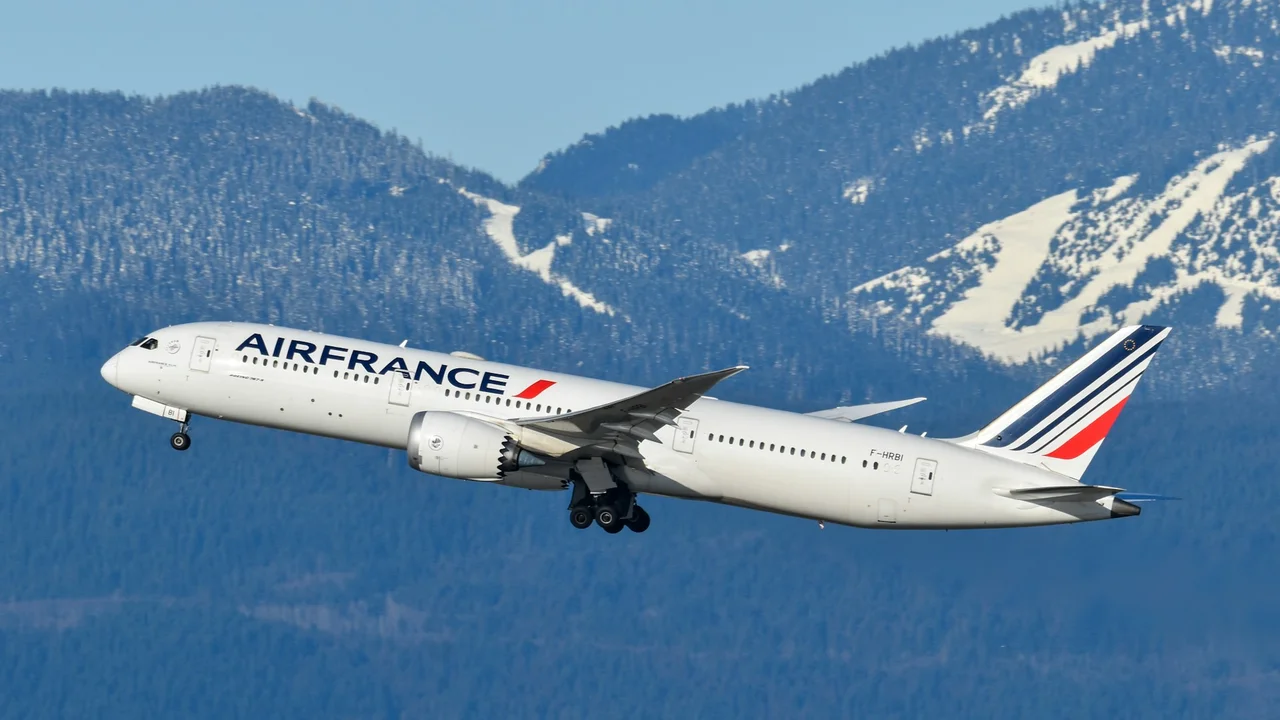
Air France and American Airlines Jets Narrowly Avoid Collision Over LAX
Two passenger jets narrowly avoided a mid-air collision near Los Angeles International Airport after an Air France Airbus deviated from its assigned route, reducing vertical separation to 122 meters.
Two passenger aircraft narrowly avoided a mid-air collision shortly after takeoff from Los Angeles International Airport early Saturday morning, according to reports. An Airbus aircraft operated by Air France veered off its assigned departure route and came dangerously close to an American Airlines Airbus, reducing the vertical separation between the two planes to approximately 122 meters. Combined, the two flights carried an estimated 500 passengers on board. Both aircraft managed to continue to their respective destinations, and no injuries were reported.
Air France Flight 28 was en route to Papeete in Tahiti, while the American Airlines flight had departed from an adjacent runway bound for Dallas-Fort Worth International Airport. As both planes were climbing, the Air France jet turned left away from its authorized flight path, drifting toward the trajectory of the U.S. carrier. Air traffic controllers quickly identified the hazard and issued urgent instructions to the flight crews to avert a disaster.
According to air traffic control audio recordings, the controller urgently directed the French crew to turn immediately to a heading of 270. Moments later, the controller warned the American Airlines crew of approaching traffic, noting that a plane was positioned at their 12 o'clock position at a distance of less than 1.6 kilometers while maintaining an altitude of roughly 610 meters. The American crew acknowledged the warning and complied with instructions to hold their altitude.
After the immediate danger subsided, the controller questioned the Air France crew over the radio regarding their unauthorized maneuver, asking why they had turned off the assigned departure route. After initially requesting time to respond, the pilot stated they had been cleared for the SUMMR TWO departure procedure. The controller noted a potential deviation from instructions and provided a contact number for a mandatory post-flight debriefing with aviation authorities, though officials noted such procedures do not automatically imply disciplinary action.
The U.S. Federal Aviation Administration is expected to review the incident to determine whether the flight crew failed to follow instructions and if further regulatory measures are warranted. At this stage, the exact reason for the navigational deviation remains unclear, and authorities have yet to formally confirm the launch of a full investigation.