The warning against returning to the 'conception': 'If incidents occur in two communities, one of them will have to manage alone'
Almost 3 years after the massacre, a report by the 'October Council' presents new testimonies and documents about the return to the mechanism that preceded the disaster. 'Whoever sees danger and is afraid to speak, it is a security failure in itself,' the report noted. A fighter in the Gaza sector also warned of a shortage of forces: 'We are at minimal staffing, and we are searching desperately for people to fill the gaps.'

Fighters with 'tied hands', observers, and silenced residents: testimonies that have not been heard before reveal warning lights about the return to October 6. The comprehensive report was published by the families of the 'October Council', who collected the testimonies of observers and fighters, alongside documents and conversations with security personnel in the Gaza envelope. 'If even today, whoever sees danger is afraid to speak, it is a security failure in itself,' the report stated.
Members of the 'October Council' organization, whose family members were harmed, kidnapped, or murdered on October 7, spoke with former senior IDF officials, as well as soldiers serving in regular and reserve duty on the border of the Gaza Strip or on Israel's northern borders. In the full report, they present seven warning lights - starting from maintaining the 'conception', which according to them only changed its form and still holds the top of the government. The report shows that while the Israel of 2023 relied on the assumption that Hamas was deterred and the threat was managed through force, today the threat is managed through arrangements such as the yellow line and reliance on international force: 'Hamas has not yet been disarmed and continues to recruit, produce, rehabilitate, and re-establish governance mechanisms,' the report stated. It was also written, as brought in the testimonies of the observers in the sector, that 'Hamas personnel are testing the IDF's response and the feeling that in some cases, operational approvals are delayed.'
Council families emphasize that they have received documentation from August 2026 of crossing the yellow line and attempts to collect intelligence, and even planting explosives beyond the line. According to them, according to an IDF report exposed this month, 14 violations were documented in one day, with 11 of them classified as 'a developing threat to our forces.' The report stated that 'fighters who spoke with the October Council describe a feeling that Hamas is systematically testing the borders and the IDF's response method.'
The report also seeks to emphasize the fact that Hamas was not completely dismantled, but only struck. This is alongside the erosion of manpower in the IDF. 'In recent months, plans have repeatedly come up to reduce the reserve force reinforcing the defense systems in the border communities,' it was claimed. 'After October 7, when the standby squads and security coordinators were in many places the first line of defense, any decrease in available force requires particularly strict examination.'
'They see danger and are afraid to speak'
However, one of the most difficult findings in the document does not appear on maps or in collected intelligence. It arises from dozens of conversations that the families belonging to the organization held with security officials and soldiers in various roles, who agreed to speak under conditions of anonymity. In the 'October Council', they noted in the report that the sources were afraid to be exposed following the influence of their commanders or out of fear of harm to their careers, budgets, or even consequences for their children. They noted that similarly, observers who warned before October 7 were silenced.
A., an officer and reserve fighter serving in Gaza, said: 'Don't let them tell you stories, don't beautify the reality again in the studios. We are meters away from the enemy, seeing him with our eyes - and the orders tie our hands. Instead of deciding, we are 'containing'. Instead of treating the root of the problem, we continue to manage the failure.'
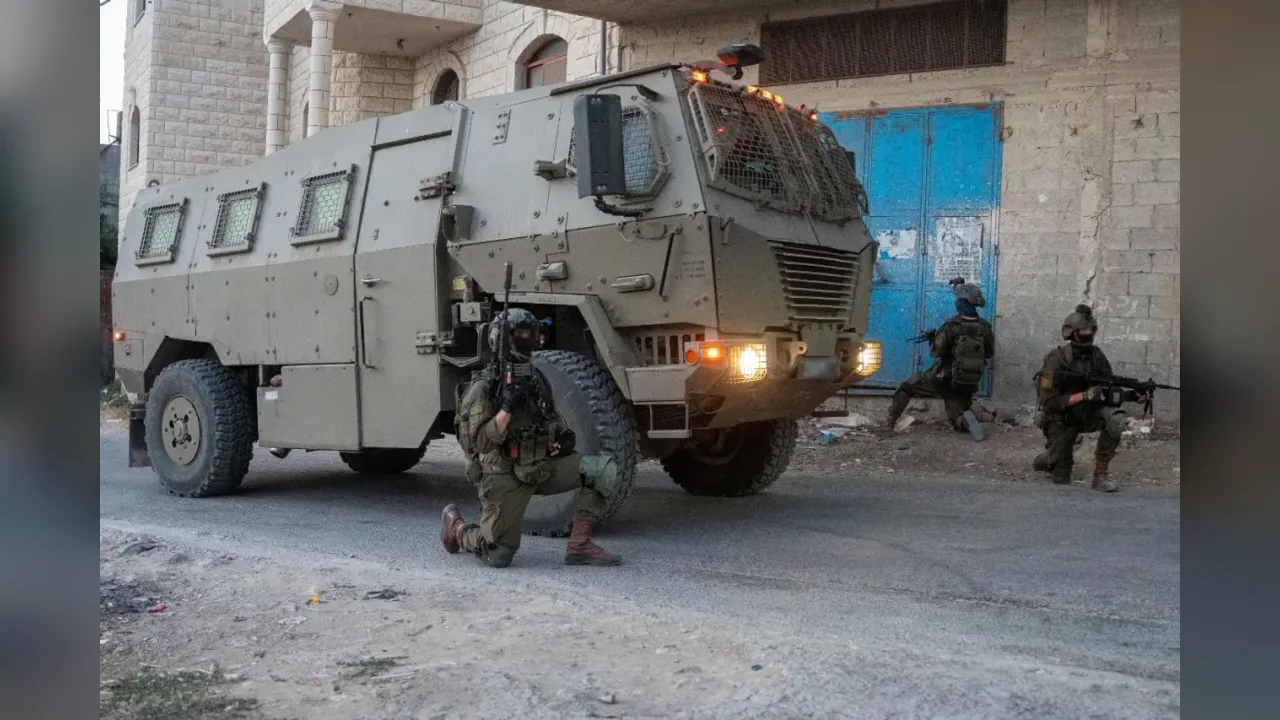
D., a fighter in a special unit operating in the Strip, also supported the claim: 'We see them in observations when they are on the yellow line and testing us. They are dealing with the land close to the line, planting things. We are forbidden to do anything. The terrorists are looking for exactly where we are weak. We see everything and we have no approval to respond.'
The events described in the report are backed by additional testimonies, from different units, such as that of fighter G. who said that 'they (Hamas terrorists) arrive, approach, cross the marking, test us, and collect intelligence. What destroys us most from within is that no one does anything about it. The answer from above is silence or an order to contain the event.'
Another fighter serving in the Strip described the heavy shortage of manpower: 'We are at minimal staffing, we are searching desperately for people to come and fill the gaps. They explained to us that if an event happens, we are a problem, and if two events happen in two communities, one of them will have to manage alone, at least for a certain period of time. All the time they say 'don't worry, we have the yellow line', but it is a fiction,' he said.
'Why is it there if no one is listening?'
Families of serving soldiers, and observers in particular, also described the fear that their children bring home from the base. Some of the organization's members, let us recall, are the parents of the observers who fell in battle in Nahal Oz.
'Hamas is carrying out repeated attempts with the goal of testing the Israeli response by crossing the yellow line,' said the mother of an observer serving in the Gaza sector. 'Only after a long time is approval for fire received, and then they disappear for a few hours or days and move to try elsewhere.'
Another mother described: 'The thought that she sits for hours in front of the screens, sees the danger approaching, and receives threats and silencing just breaks me from within. How is it logical that commanders who are supposed to protect her are scaring her? History is repeating itself before my eyes, and this time it is my daughter there.'
The mother of a former observer from the Hermon sector was quoted in the report saying that 'there was not one moment from the moment my daughter finished the course until the day of release that I felt that I had trust in the system and that there was someone to rely on. For a year and a half, they were promised again and again that they were moving to a rear base, but it didn't happen. They sat on the border line.'
The mother of a former observer from the West Bank sector also described that her daughter shared with her what was happening: 'She sat in observation and called for a force that was late to arrive, if at all. I kept asking 'why is she there if no one is listening?' She gave up on the desire to go to a commanders' course because she understood there was no point.'
The fear to speak comes from above, up to the most senior levels. Security officials claimed time and again that deterrence is collapsing - and were silenced.
The 'October Council' families attribute the report's findings also to conversations with former senior officials in the army and the security system, when one of them was quoted saying that before October 7, 'Netanyahu received over ten warnings, but it didn't move him. He claimed that we were exaggerating. Some of the warnings that Netanyahu received were focused on the Tishrei holidays. The question arises 'what did the cabinet do about it?''.
Even the former senior officials, according to the report, described in conversations the attempts to silence the system - up to the top. 'It is impossible to talk only about the fear of residents and soldiers because the fear to speak comes from above, up to the most senior levels,' claimed one of them, who according to the 'October Council' served in the past in one of the most sensitive positions in the security system. He said that 'the Prime Minister's emissaries are conducting a deterrence campaign. I say from knowledge: security officials claimed time and again that our deterrence is collapsing - and were silenced.'
G., another former senior official, backed the claim: 'People talk in the corridors much more freely than in the meeting rooms. Outside you hear doubts, criticism, and warnings. When the door closes and the ranks sit around a table, suddenly everyone is much more careful. The safest place to say 'you are wrong' should be the decision-making room,' he said.
Another senior official, currently serving in the security system, claimed in conversations that the focus on Iran diverted attention from Gaza. According to him, 'the decision to concentrate on the Iranian arena wasted billions on delusional projects while Hamas was strengthening. If the Prime Minister's decision was legitimate, the minimum is to explain and justify it in a state commission of inquiry to know if the decision-making considerations are correct even today.'
The report also quoted senior officials living in the Gaza envelope: 'One of the council members told me 'be quiet'. They told me that people wouldn't notice that the security situation is in shambles. That is exactly how we arrive at a disaster again.'
In the concluding testimony of the report, one of the current senior officials said that 'every citizen of Israel should ask themselves whether a combination of a political echelon that does not tell us the truth, together with the lack of a Knesset oversight mechanism, alongside officers who are afraid to speak - does not return him to October 6? Can we rely on a true reflection of the reality as it is happening?'.
Alongside the publication of the report, members of the 'October Council' held a press conference today, where testimonies presented in the report were also screened. Sharon Eshel, mother of the observer Roni Eshel, of blessed memory, said: 'I am a bereaved mother, who lost the most precious thing of all - but also a mother who refuses to be silent, because I am not prepared for another family to go through what we went through. You are receiving warnings from observers, from soldiers, and from officers who are in the field. These are the same voices that warned even before October 7. Do not ignore them. You will not be able to say later: I didn't know.'