Unlocking Kinusaiga: The Needle-Free Japanese Art Conquering Pardes Hanna
Discover kinusaiga, a needle-free Japanese art form taught by Eden Paz at Studio Landa in Pardes Hanna, turning fabric scraps into framed masterpieces.
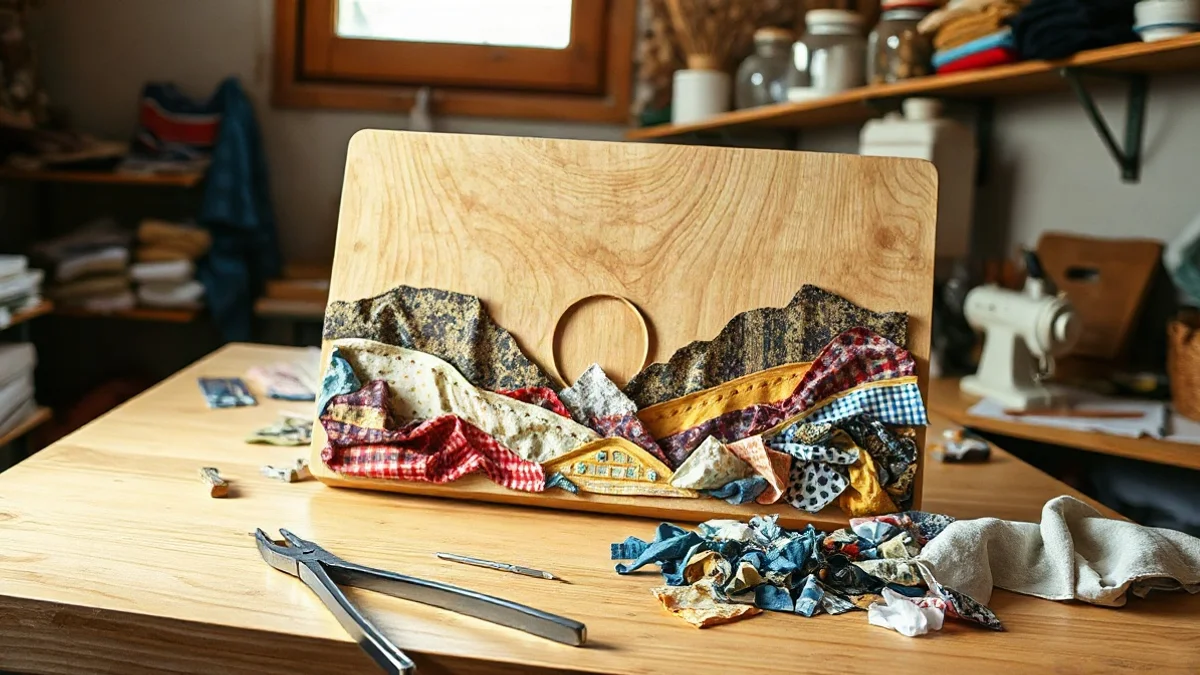
A scrap of fabric left over from cutting a garment can easily transform into a tiled rooftop, a delicate leaf, or a soft shadow falling across a face. At Studio Landa, tucked away in Pardes Hanna, textiles are meticulously chosen for their color, pattern, and texture. They are gently laid over a pre-grooved board, and their edges are tucked inside using a seam ripper. The groove holds the fabric firmly in place while outlining the contours of the image, allowing pieces to join together seamlessly without a single needle and thread until a framed artwork emerges.
Discovering Kinusaiga in Pardes Hanna
This intricate Japanese craft is known as kinusaiga. For 32-year-old Eden Paz, mastering and teaching the technique began as a creative solution for what to do with a massive collection of fabrics she had gathered over a decade. About a year ago, Paz opened Studio Landa, naming the creative space after her late grandmother. While she also teaches drawing and sculpting, kinusaiga has quickly become her signature workshop. Paz explains that after contracting a severe illness that resulted in a loss of sensation in her fingers, she could no longer sew. Unwilling to abandon her beloved textiles or discard her decade-old collection, she searched for alternative ways to work with fabric before discovering the Japanese art form.
The technique traces its origins to the late 1980s, when Japanese artist and illustrator Setsu Mano sought to expand the visual possibilities of illustration and painting using cloth. Adapting the traditional kimekomi method used for crafting Japanese dolls—where fabric edges are tucked into carved grooves on a doll's body—Mano transferred the principle onto flat picture surfaces. Her works often depicted old neighborhoods and streets in Japan, using vintage silk scraps from old kimonos to construct roofs, walls, and pathways. Paz embraced this sustainable philosophy, incorporating textile industry surplus and her own fabric collection into her studio workshops.
Creative Workshops and Sustainable Art
During Paz's workshops, participants work with pre-grooved boards and an assortment of fabric scraps, allowing them to bring landscapes, portraits, and botanical scenes to life. Because the tactile choices are entirely up to the creator, the exact same board can yield entirely different results. A patterned fabric might lend realistic veins to a leaf, while a glossy textile can completely alter how light appears to dance across the surface of water. The studio offers two-hour introductory sessions that include all materials and a framing kit, alongside weekly classes for those looking to hone their craft over time.
"I would love to reach as many people as possible, introducing them to a new creative technique, especially one that encourages recycling," Paz says. "On a personal level, I truly enjoy leading these workshops both in my studio and at external venues."
By eliminating the need for needles, threads, or prior artistic experience, kinusaiga opens the door for children and adults alike to explore textile art. For Paz, the fabrics she saved for ten years have finally found their true purpose, proving that discarded remnants can be reborn as striking visual masterpieces.