Why the Japanese Rainbow Method Dries Indoor Laundry Faster
Discover the Japanese rainbow method for indoor laundry drying. By arranging long items on the edges and short items in the center, airflow improves, reducing drying time and musty odors.
Winter rains bring a familiar household challenge: drying laundry indoors, dealing with damp clothes, and avoiding the dreaded musty odor. While electric tumble dryers offer a solution, they consume electricity and are not available in every home.
In Japan, where indoor drying is a common practice, households rely on a simple technique known as the "rainbow method." This method optimizes airflow to dry clothes efficiently without mechanical assistance.
How the Rainbow Method Works
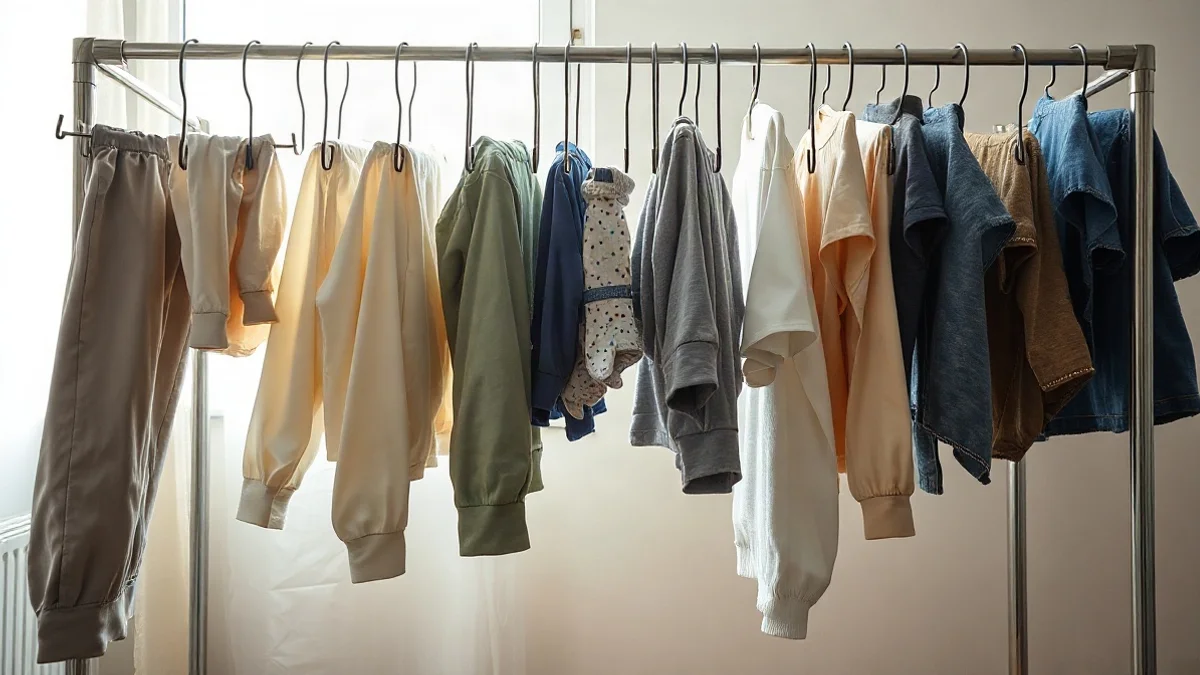
To apply the method correctly, arrange garments on the drying rack according to their length. Long items, such as trousers, long-sleeved shirts, and dresses, are hung on the outer edges of the rack. Shorter items, including socks, underwear, and small towels, are placed in the center.
When arranged properly, the bottom edges of the hanging garments form an inverted rainbow shape, leaving an open channel beneath the shorter items in the middle.
Why This Arrangement Accelerates Drying
When all garments are hung at the same uniform length, they form a dense wall of wet fabric that traps humid air inside. The rainbow arrangement creates an open pathway underneath, allowing air to circulate freely and carry moisture away.
According to tests cited by Grazia magazine, laundry hung using this arched configuration dried in four hours, compared to four and a half hours under standard arrangements. While not a miracle cure, faster drying significantly reduces the time available for mold and musty odors to develop.
Additional Tips for Indoor Drying
To maximize the effectiveness of the rainbow method, experts recommend several supplementary practices:
-
Transfer laundry to the rack immediately after the wash cycle ends without leaving it in the drum.
-
Shake each garment vigorously before hanging.
-
Maintain spacing between items whenever possible.
-
Hang towels with uneven lengths on either side rather than folding them directly in half.
-
Position the drying rack in an area with active airflow, such as near a slightly open window, a fan, or a dehumidifier.