Israel Upgrades David's Sling Air Defense to Counter Ballistic Missile Threats
Israel has upgraded its David's Sling air-defense system to counter diverse ballistic threats and sustain prolonged attacks, offering a cost-effective alternative to expensive interceptors amid depleting stockpiles.
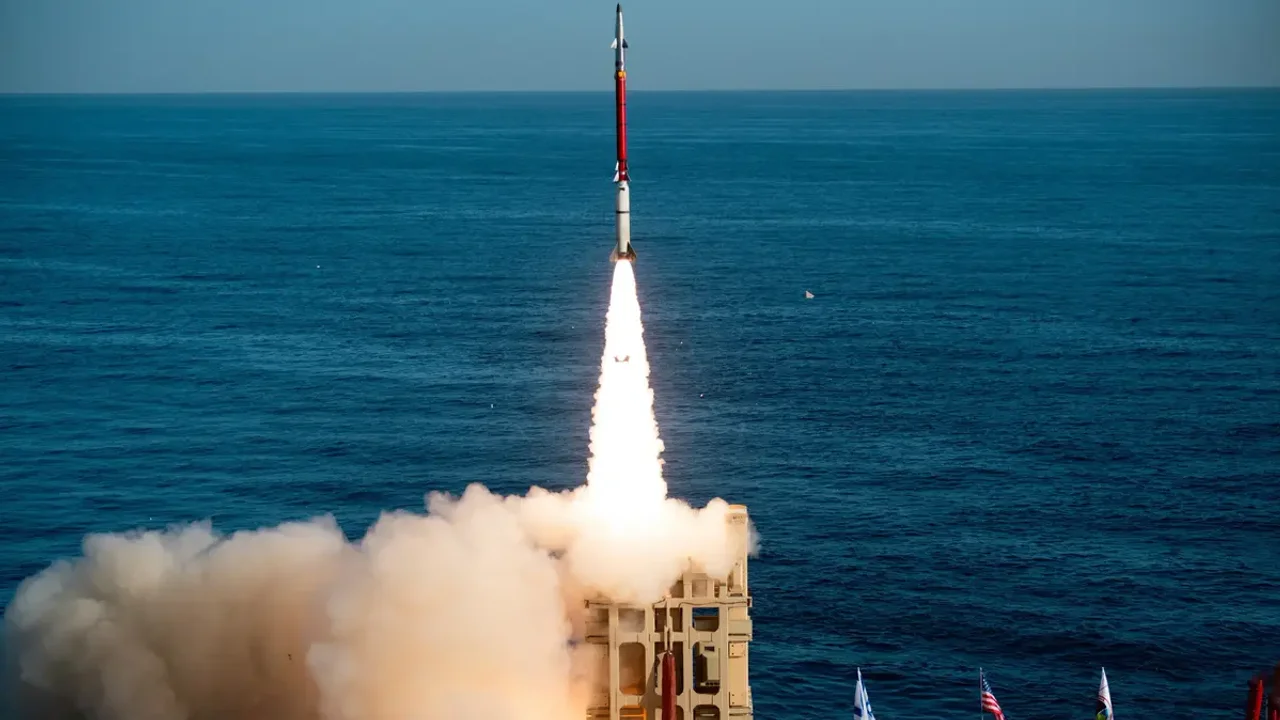
Israel has significantly upgraded its David's Sling air-defense system to counter a broader array of ballistic threats and sustain prolonged multi-week campaigns, according to a senior researcher within the Israeli Air Force's aerial defense array. Traditionally serving as the middle tier in Israel's multi-layered defense architecture, David's Sling has undergone technological enhancements aimed at addressing a core strategic dilemma confronting both Jerusalem and Washington: while precision strikes launched by adversaries and regional militant groups have become increasingly inexpensive and accessible, interceptor missiles remain exceptionally costly and stockpiles are rapidly depleting.
Unlike Washington's approach of securing long-term funding commitments to stimulate production of expensive interceptors such as the Patriot PAC-3—which can exceed four million dollars per unit—Israel has prioritized affordability and high-volume manufacturing. The Magic Wand interceptor utilized by David's Sling, jointly developed by Rafael Advanced Defense Systems and RTX, costs approximately one million dollars. This price point is roughly one-third the cost of an Arrow 3 missile, which forms the upper tier of Israel's defense grid. According to industry insiders, Rafael and RTX possess the manufacturing capacity to produce thousands of interceptors annually in Israel alongside an additional 2,500 units in the United States for both Iron Dome and David's Sling systems.
Strategic Adjustments and Operational Gaps
Uzi Rubin, the founding director of the Defense Ministry's Homa missile defense organization and currently a senior researcher at the Jerusalem Institute for Strategy and Security, noted the evolution of tactical requirements. "When we developed the first generations of kinetic missile defense, the prevailing concept was that we were dealing with a small number of threats, not hundreds or thousands. Now we have to invent inexpensive kinetic interceptors," Rubin explained. While advanced upper-tier systems such as Arrow 3 remain indispensable, a more robust and cost-effective middle tier provides greater operational flexibility. Industry assessments indicate that Israel is uniquely positioned to pioneer and scale this capability independently.
The intense missile barrages launched earlier in the year exposed notable vulnerabilities in existing defensive coverage. During Iranian missile launches targeting Arad and Dimona, interceptors missed their targets, resulting in significant structural damage and dozens of injuries. The senior Air Force researcher emphasized that while these intense engagements revealed operational gaps, they simultaneously supplied military planners with vast quantities of empirical data, enabling engineers to rapidly upgrade defense algorithms and response protocols within days.
International Demand and Global Supply Pressures
Israel's indigenous missile defense solutions have also attracted substantial international interest, particularly among European nations expanding their defense arsenals following Russia's invasion of Ukraine. Finland and Greece have placed orders for David's Sling, while Germany has integrated the Arrow 3 system into its national defense network. Meanwhile, the United States faces severe production bottlenecks in meeting global demand for Patriot PAC-3 interceptors. Ukrainian President Volodymyr Zelensky has stated that his country requires 350 interceptors monthly to repel Russian aerial assaults, an amount that dwarfs total annual manufacturing output.
Western intelligence estimates indicate that despite ongoing military countermeasures, Iran retains an extensive ballistic missile arsenal comprising at least 1,700 missiles, with current production rates estimated at approximately 50 missiles per month. This persistent threat matrix, coupled with interceptor inventory constraints, continues to shape strategic planning and defense calculations across the region.